
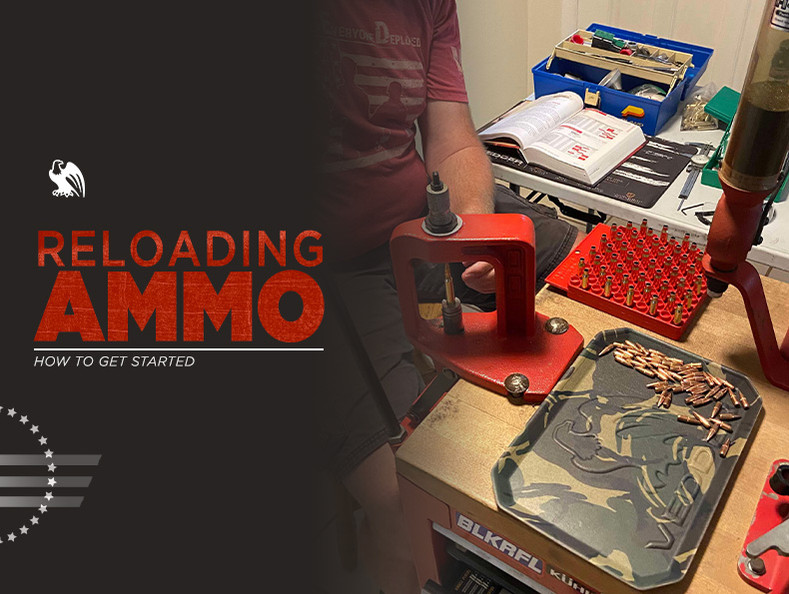
Reloading Ammunition for Beginners: Essential Tools, Expert Tips, and Proven Techniques for Getting Started
In This Article
- Reloading vs Handloading: Understanding the Critical Differences
- Why Reload Ammunition? The Compelling Benefits Explained
- Is Reloading Your Own Ammunition Difficult?
- Essential Equipment and Supplies Needed to Reload Ammunition
- What Types of Ammunition Can Be Successfully Reloaded?
- Step-by-Step Guide: How to Reload Ammunition Safely and Effectively
- Understanding Handload Reliability and Safety Considerations
- Getting Started with Your Reloading Journey
- Frequently Asked Questions About Ammunition Reloading
- Final Thoughts and Recommendations
Reduce, reuse, recycle… cartridges?
While we’re not technically discussing bullets themselves, the practice of reusing and reloading cartridge casings is absolutely viable! Firearms enthusiasts have been reloading ammunition practically since the invention of metallic cartridges in the mid-19th century. Although countless shooters initially embrace this craft as an effective method to reduce range expenses, there exists a multitude of additional compelling reasons to explore this rewarding skill.
Mastering the art of ammunition reloading requires a modest investment of time and dedication, but the returns are exceptionally worthwhile. It represents an outstanding approach to dramatically reduce shooting costs, engineer custom-tailored rounds optimized for your specific firearms, or simply acquire an engaging new hobby that ensures you’re perpetually prepared for any shooting scenario.
Reloading Ammunition for Beginners: Essential Tools, Expert Tips, and Proven Techniques for Getting Started
This comprehensive guide on reloading ammunition for beginners will thoroughly cover everything you need to understand to embark on your reloading journey. From the substantial benefits of loading your own cartridges to the specialized equipment you’ll require, by the conclusion of this article, you’ll possess the knowledge necessary to transform a dedicated corner of your workspace into a fully-functional reloading station.
However, before we proceed, an important disclaimer is necessary. This article serves educational and informational purposes exclusively. As with all activities related to firearms and ammunition, reloading can present inherent dangers, and you should invariably consult an official reloading manual or seek guidance from an experienced professional before attempting any reloading procedures. Now, let’s explore the fascinating world of ammunition reloading!
Reloading vs Handloading: Understanding the Critical Differences
When discussing the craft of manufacturing your own ammunition, two prevalent terms frequently emerge in conversation: reloading and handloading. While these terms sound remarkably similar (and admittedly share considerable overlap), there exist some noteworthy distinctions between them that merit clarification and understanding.
Reloading specifically designates the process of recovering previously fired brass casings and repurposing them by installing fresh bullets, new primers, and measured gunpowder charges so these components can be fired again. Hence, the descriptive term “reloading” – you’re literally loading the casing again.
So, what precisely constitutes handloading ammunition?
Technically speaking, handloading functions as an umbrella term that encompasses all manual ammunition assembly processes, including the reloading of used cartridge cases. That said, within shooting communities, it’s more commonly employed to describe the meticulous craft of assembling brand-new cartridges using entirely new components rather than recycling any portion of previously fired ammunition.
Therefore, while all reloading activities constitute handloading, not all handloading necessarily involves reloading. Clear as crystal?
Long-time shooting enthusiast and seasoned handloading hobbyist John Shoup, who has dedicated decades to perfecting his craft and developing his expertise, eloquently breaks down the practical distinction between these two terms.
“People are notoriously careless about leaving brass everywhere at shooting ranges. So if I go collect some of those discarded casings and simply manufacture them into basic plinking ammunition, that’s reloading,” he explained thoughtfully. “But if I’m deliberately purchasing a substantial quantity of new brass, or even carefully selected used brass, all bearing the same lot number, and attempting to manufacture exact clones of each round with meticulous precision, that’s handloading. It’s fundamentally different – you’re striving to be exceptionally precise about every aspect. The factory-produced stuff you purchase is simply inferior to what I can manufacture with careful attention. And when I conceptualize it that way, I don’t think of it as mere reloading. I think of it as true handloading.”
Now that we’ve thoroughly clarified that distinction, let’s discuss some of the compelling reasons why you might want to explore handloading for yourself.
Why Reload Ammunition? The Compelling Benefits Explained
Is hand reloading genuinely worth the investment of time, money, and effort? Absolutely, without question. There exist numerous compelling reasons why you might want to pursue this rewarding hobby. We’ll outline the most prevalent and persuasive reasons below:
To Save Substantial Money on Ammunition Costs
One of the most significant motivating factors that draws people into ammunition reloading is the potential for substantial cost savings. Quality ammunition, particularly premium defensive or match-grade cartridges, commands premium prices. And if you’re training extensively and regularly, it’s genuinely painful to watch all those spent brass casings disappear into the trash bin, representing wasted money and resources. Consequently, the prospect of reusing those casings and potentially reducing your ammunition expenditures by half or more is understandably quite enticing and appealing.
That being acknowledged, handloading ammunition still requires financial investment – you cannot create something from nothing. However, the result is undeniably worthwhile, especially when you factor quality considerations into the equation.
“A lot of people rationalize, ‘Well, it costs me X amount of money to reload. I can purchase factory ammunition for that same price.’ And you’re absolutely right, you can,” Shoup observed. “You can’t beat basic Remington Core-Lokt prices at $30 per box. But what you’re actually manufacturing is comparable to premium Nosler Trophy Grade ammunition, which retails for $60 per box or more. So for the equivalent price as basic hunting ammunition, you can produce top-of-the-line, premium-quality ammunition.”
Which naturally brings us to our next compelling point…
Customization & Enhanced Accuracy
The other major reason shooting enthusiasts choose to handload ammunition is that it empowers them to create completely custom cartridges tailored to their specific needs. Competitive shooters, in particular, frequently embrace handloading so they can meticulously adjust powder charges, experiment with different bullet seating depths, test various primer types, and fine-tune other variables until they discover the perfect, most accurate cartridge for their specific firearm and shooting style. Subsequently, they can consistently recreate that exact, precise round of ammunition so that performance remains consistent every single time. There’s genuinely a whole science behind precision handloading.
But aren’t cartridges manufactured by major ammunition companies sufficiently consistent? Why bother investing the considerable time to manufacture your own ammunition when Winchester operates an entire factory with sophisticated quality control systems in place?
The truth is, most factory-produced ammunition isn’t nearly as precise as you might reasonably assume.
“I’ve conducted extensive experimentation,” Shoup revealed. “I’ve carefully measured factory ammunition specifications. I’ve measured the overall length of cartridges, I’ve carefully dumped the powder out and weighed the powder charges, measured the brass dimensions, and they vary quite substantially. It’s all within acceptable specification ranges, but it’s definitely not exact. Factory ammunition varies considerably more than you would initially think it would.”
This variance doesn’t matter significantly when it comes to reloading basic plinking rounds for casual range practice, but if you’re genuinely trying to achieve maximum accuracy and consistency for competition or precision shooting, it’s absolutely worth the time and effort investment.
The other compelling reason you might want to handload custom cartridges is if the specific rounds you’re seeking are no longer in commercial production or have become extremely difficult to locate and purchase. This scenario is considerably more common than one might initially assume, especially if you own rare, vintage, or uncommon firearms chambered in obsolete calibers.
To Prepare for Any Situation
Do you maintain a stockpile of MREs and preserved foods? Are you the proud owner of a comprehensively stocked bug-out bag? Are you prepared to live off the grid for an extended period if circumstances require it?
If you answered “yes” to any of those questions, ammunition reloading is definitely an essential skill for you to develop.
We inhabit an increasingly unpredictable world. Part of being genuinely prepared for any eventuality is possessing the ability to provide for yourself and your family independently. The capability to reload your own ammunition not only enables you to protect yourself and your loved ones but also provides the means to hunt and feed your family during extended emergencies or supply disruptions.
On a less intense note, we have experienced significant ammunition shortages periodically over recent years, and possessing the ability to handload your own ammunition means you won’t have to cease training simply because factory ammunition has become scarce or prohibitively expensive.
Because It’s Genuinely Enjoyable!
Finally, and perhaps most importantly, handloading ammunition is genuinely fun and satisfying! Not only does it represent an excellent “rainy day activity” that’s productive and engaging, but once you delve into the intricacies of customizing ammunition to your precise preferences, you can really experiment creatively to create a one-of-a-kind, high-quality product that’s genuinely fun to showcase at the range. Handloading easily ranks among the most enjoyable, productive, and rewarding hobbies any shooting enthusiast can pursue.
“A lot of people don’t want to get into reloading because they believe they don’t have the time or patience, and that’s perfectly acceptable. You can pursue something else – it’s definitely not for everybody,” Shoup acknowledged. “But a tremendous number of people really take immense pride in what they’ve accomplished and created.”
Is Reloading Your Own Ammunition Difficult?
Yes and no – it depends on your perspective and expectations. As with acquiring any new skill, reloading ammunition can certainly be challenging to learn initially, since there are numerous processes, specialized terminology, and tools to familiarize yourself with. That being said, the actual mechanical process of handloading is relatively straightforward and systematic.
The most challenging aspect of the entire endeavor is learning how to do it properly in the first place, which is precisely where a comprehensive reloading handbook becomes absolutely invaluable. Handloading does require meticulous attention to detail, considerable patience, and precision accuracy, which can pose challenges for some individuals, but once you thoroughly understand the process, it’s actually a fairly accessible hobby to master.
Reloading Ammunition for Beginners: Essential Tools, Expert Tips, and Proven Techniques for Getting Started
The learning curve is considerably easier if you have an experienced mentor to demonstrate the procedures and guide you through the process, but if you’re learning independently, don’t worry or feel discouraged. It’s still a reasonably simple skill to acquire, so long as you’re extremely careful to follow the instruction manual precisely and completely.
Essential Equipment and Supplies Needed to Reload Ammunition
Reloading ammunition isn’t something you can accomplish with a pair of pliers and enthusiastic determination… It requires specialized equipment specifically designed for this precise purpose.
But how much financial investment are we discussing here?
RCBS, a leading manufacturer of reloading equipment, estimates it requires approximately $300-500 to get started with basic reloading, though you can certainly invest considerably more depending on the specific equipment you select and the level of sophistication you desire. And there are admittedly a fair number of tools required for comprehensive reloading operations.
However, the encouraging news is that once you’ve acquired all your major components and equipment, you shouldn’t need to replace them for an exceptionally long time, if ever. You’ll obviously need to continuously purchase consumable items like gunpowder, primers, and bullets, of course (unless you want to cast your own bullets, but that’s an entirely different discussion for another day). Beyond those consumables, most quality reloading tools represent a one-time purchase that will serve you for decades.
If you prefer to keep things simple and streamlined, you can purchase a comprehensive reloading kit from Guns Parts Store that includes most of the essential items you’ll need to begin. Alternatively, if you’re somewhat more selective and particular, you can build your own custom setup piece by piece. Some of the most respected brands and sources for quality reloading products include Hornady, RCBS, Lyman, and Lee Precision. Shop around carefully to find what fits your budget and personal preferences. The critical thing is that you invest in quality tools that can reliably get the job done correctly and safely!
Here’s everything you need to get started with ammunition reloading:
Comprehensive Instruction Manual: The number one most important item you’ll need to reload safely is a thorough, detailed instruction manual. These invaluable guides provide all the foundational information you need to successfully handload, including comprehensive step-by-step instructions on how to properly assemble your ammunition. It also includes critical information on powder types, the precise powder charge you need for your specific caliber, safe pressure limits, and troubleshooting guidance. It’s an absolutely invaluable resource that you MUST have before beginning any reloading operations. Never attempt to reload without consulting proper reference materials.
Reloading Press: A reloading press serves as the centerpiece of any reloading setup, functioning as the primary tool that assembles cartridges by pressing together brass casings, primers, powder, and bullets. Different types of presses (single-stage, turret, or progressive) vary significantly in complexity, speed, and efficiency, but all handle the essential steps of resizing cases and seating bullets. Single-stage presses are ideal for beginners, while progressive presses suit high-volume reloaders.
Reloading Bench: This should go without saying, but you’ll absolutely need a dedicated space to work safely and efficiently. A reloading bench provides a stable, dedicated workspace where reloaders can securely mount their press and systematically organize their tools and components. You’ll want one that’s exceptionally sturdy, reasonably spacious, and offers ample storage for components and supplies. You can purchase reloading benches specifically designed for this purpose, or you can get somewhat creative with your setup.
“I set my bench up on a rolling toolbox, which actually works remarkably well. It’s admittedly a little bit crowded up top, but I can roll the entire setup into a closet somewhere and store it away when not in use. And then I have all the drawers in the toolbox available for organizing all my supplies and components,” Shoup explained. “I also strongly suggest you invest time to set up your bench in an ergonomic fashion for maximum efficiency, comfort, and general flow of your reloading operation.”
Tumbler/Case Cleaner: Tumblers are used to thoroughly clean brass casings before reloading to remove powder residue, dirt, carbon buildup, and tarnish. Clean brass not only looks better but also functions more reliably and allows you to better inspect cases for defects.
Precision Scale: This one may seem obvious, but a precision scale is used to accurately weigh your powder charges. The difference between a reloading scale and the one in your bathroom is that reloading scales are extraordinarily precise, often measuring down to a tenth of a grain or less. Digital scales offer convenience, while beam scales provide reliability without batteries.
Cartridge Dies: Dies are specialized precision tools that are installed in your press to perform specific operations like resizing, expanding, bullet seating, and crimping. They are caliber-specific and play an absolutely essential role in ensuring that cartridges fit properly in the firearm chamber and function reliably. Quality dies from Guns Parts Store ensures consistent, safe ammunition.
Primer Catcher: The primer catcher is a container that collects used primers when they’re removed from cases during the resizing step, helping to keep your workspace clean and organized while preventing old primers from causing jams or contamination issues.
Hand Priming Tool: This specialized tool is used to seat new primers into the primer pocket of the case, offering a more controlled and tactile feel than priming directly on the press. Hand priming tools allow reloaders to position primers more precisely and consistently, reducing the risk of misfires or malfunctions while providing better feedback.
Primer Brush/Pocket Cleaner: Primer brushes and primer pocket cleaners are small, specialized tools used to thoroughly clean primer pockets inside the cartridge case. Although they work somewhat differently, both are highly effective, so choose whichever you prefer to accomplish the task. Removing residue from previous firings helps primers seat consistently and uniformly, ensuring proper ignition and reliability.
Case Tray/Reloading Block: The case tray, also called a reloading block, holds cases upright during various stages of reloading, helping to keep them organized and preventing spills. It’s particularly helpful when loading large batches, preventing powder spills, and ensuring each case is processed properly through every step.
Case Trimmer: A case trimmer shortens cases to the correct specified length after multiple reloadings, as brass cases naturally elongate with repeated firings due to the pressures involved. Maintaining proper case length is critical for safety and reliability.
Chamfer/Deburring Tool: This dual-purpose tool smooths the inner and outer edges of trimmed cases, making bullet seating considerably easier and helping to prevent bullet deformation or damage during the seating process.
Primer Tray: The primer tray is a flat, round tray that helps orient primers all facing the same direction before seating, simplifying the loading process and dramatically reducing the chance of installing a primer upside-down. This tray also helps arrange the primers to prevent you from touching them with your hands, as finger oils can damage primers and affect reliability.
Case Lube/Lube Pad: Case lubricant reduces friction during the resizing operation, preventing cases from getting stuck in the die – a frustrating problem that can damage equipment. A lube pad is often used to apply a thin, even coat of lubricant on cases, especially critical for bottleneck rifle cartridges.
Powder Funnel: The powder funnel ensures that all powder goes directly into the cartridge case without spilling, wasting powder, or creating a mess. It’s also extremely helpful for pouring any leftover powder back into its original container, as powder should never be stored in the powder measurer between sessions.
Powder Measurer: The powder measurer holds your gunpowder and dispenses precise, consistent amounts of powder for each cartridge to keep all your rounds uniform and safe. Consistency is absolutely critical for both safety and accuracy.
Powder Trickler: The powder trickler adds individual powder granules to your scale one at a time, making it considerably easier to control powder weight for consistent, accurate loads. This is an invaluable tool to use if you’re pursuing ultra-precise rounds for competition or long-range shooting.
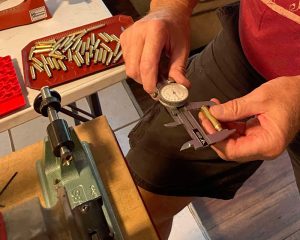
Dial Caliper: Precision calipers measure case length, overall cartridge length, and other critical dimensions to ensure they meet exacting safety and performance standards. Digital or dial calipers are both excellent choices.
Kinetic Bullet Puller: This tool safely disassembles completed rounds by removing the bullet from the case, allowing reloaders to salvage components if an error is made or if adjustments are needed. It’s an essential safety tool that every reloader should own.
EDC Tray: One critically important yet frequently underrated aspect of successful reloading is maintaining your work area clean, organized, and efficient. An everyday carry tray is a compact, organized storage solution for reloading tools, ammunition components, and small accessories. Trust us, you’ll definitely want one to keep your workspace functional. Guns Parts Store offers excellent organizational solutions for reloaders.

Reloading Ammunition for Beginners: Essential Tools, Expert Tips, and Proven Techniques for Getting Started
Cartridge Components: Before you can accomplish anything, you’ll obviously need the four main components of any metallic cartridge. Brass casings are the cases that hold all the components together and contain the pressure. Bullets are the projectiles that are propelled downrange when the gun is fired. Primers ignite the powder charge, initiating the combustion process, and gunpowder is the propellant fuel that creates the necessary pressure to drive the bullet out of the barrel at high velocity. Each component has a specific, critical role, and together they create a complete, functional round of ammunition. Gun Parts Store stocks all the components you need for successful reloading.
What Types of Ammunition Can Be Successfully Reloaded?
The encouraging news is that virtually any type of centerfire ammunition can be successfully reloaded, and most brass cases can be reused anywhere from 5-20 times or even more, depending on the powder charge, pressure levels, and how carefully you process them, according to RCBS and other manufacturers.
The primary exception to this general rule is rimfire ammunition. Rounds like .22 LR, .22 WMR, and .17 HMR aren’t typically reloaded, as their thin cases are permanently deformed after firing, making it extremely difficult, impractical, and potentially dangerous to reload. The primer compound in rimfire ammunition is also contained within the folded rim itself, making repriming essentially impossible with conventional equipment. So while you could theoretically reload rimfire rounds with specialized equipment, it’s exceptionally tricky, not cost-effective, and definitely not recommended – especially for those new to the ammunition reloading endeavor.
Other than rimfire cartridges, you can find reloading dies for virtually every centerfire cartridge that has ever been commercially manufactured, meaning you can handload any type of ammunition your heart desires. Yes, this even includes shotgun shells, which use a somewhat different process but are absolutely reloadable with the proper equipment available from Gun Parts Store.
Step-by-Step Guide: How to Reload Ammunition Safely and Effectively
The exact process that goes into reloading ammunition depends significantly on your specific caliber, the type of press you’re using, and the tools you have available. So while it’s always absolutely advisable to refer to your comprehensive reloading guide for the exact procedures needed for what you’re doing, here is a detailed, high-level overview that covers the fundamental basics of the reloading process.
1. Acquire Your Brass Casings
The first thing you need to do is decide where you’re going to source your brass casings. There are several ways to accomplish this. First, if you’re planning to handload some high-end, precision rounds for competition or hunting, you may want to purchase brand-new casings, which is totally acceptable and often preferred. Second, if you’re looking to save money and genuinely “recycle” previously fired rounds, you’ll need to collect spent casings either from your last visit to the shooting range or from other shooters who were too lazy or indifferent to pick them up (more brass for you!). Many ranges also sell once-fired brass at reasonable prices.
2. Prepare the Casings Thoroughly
Next, you’ll want to get your casings properly prepared and ready to be reloaded. The very first thing you should do is carefully sort your brass. Visually inspect each casing to ensure they are all the same caliber and that none of them are too damaged to
Error: network error

Write a comment
Your email address will not be published. All fields are required