

Mastering Firearm Anatomy: The Ultimate Comprehensive Guide to Gun Components
Mastering Firearm Anatomy: The Ultimate Comprehensive Guide to Gun Components
Whether you're embarking on your journey as a first-time firearm owner or seeking to deepen your existing knowledge of weaponry, comprehending the fundamental components of firearms is essential for responsible ownership and optimal performance. Developing a thorough understanding of gun parts and their intricate mechanical functions will not only empower you to make informed decisions when selecting a firearm that perfectly aligns with your specific requirements, but this comprehensive knowledge will also dramatically enhance your overall shooting proficiency, safety awareness, and confidence at the range or in the field. However, the world of firearms is vast and complex. In this exhaustive, in-depth guide, Gun Parts Store will meticulously break down the complete anatomy of various firearm categories, including semi-automatic pistols, classic revolvers, precision rifles, and versatile shotguns. By the time you conclude this comprehensive article, you'll possess an authoritative understanding of firearm component nomenclature and their specific operational functions, positioning you firmly on the path toward becoming a more educated, responsible, and self-assured shooting enthusiast. So, let's embark on this fascinating exploration and delve deep into the captivating world of firearm components and mechanical systems!
Mastering Firearm Anatomy: The Ultimate Comprehensive Guide to Gun Components
What Are the Different Categories of Firearms?
Before we examine the specific components of each firearm type, let's establish a foundational understanding of the different categories of guns we'll be comprehensively covering throughout this guide. Pistols: These compact, handheld firearms are specifically engineered to be operated and discharged with a single hand. The vast majority of contemporary pistols feature semi-automatic operation, meaning they automatically extract the spent cartridge case, eject it from the weapon, and chamber a fresh round after each shot is fired. These represent the most prevalent type of handguns utilized today and are the standard sidearms you'll observe most law enforcement officers and civilian concealed carry permit holders employing for personal protection. (Think: the iconic Walther PPK carried by James Bond in countless films.) Revolvers: Another distinct category of handgun, revolvers are immediately recognizable by their characteristic rotating cylinder that contains multiple chambers, each holding a single round of ammunition. Although not as ubiquitous in modern times, many individuals still choose to carry revolvers for concealed carry purposes, as they're renowned for their mechanical simplicity, reliability, and ease of operation, particularly for shooters with limited hand strength. (You know, like the legendary single-action revolvers featured prominently in your favorite John Wayne or Clint Eastwood western classics.) Read More: Do People Still Carry Revolvers? Rifles: These are long-barreled firearms specifically designed to be fired from the shoulder position, typically employed for precision long-range shooting applications and hunting various game animals. There are actually numerous distinct types of rifles with varying action types and intended purposes, which we'll explore in greater detail later in this comprehensive guide (for now, envision anything from the iconic AR-15 platform featured in Scarface to the classic Winchester 1892 lever-action rifle seen in The Magnificent Seven). Shotguns: Also classified as long guns, shotguns are distinctly characterized by their unique capability to fire shells containing either multiple projectiles (shot pellets) or a single large projectile (slug). Shotguns are frequently employed for hunting waterfowl and upland game, competitive trap and skeet shooting, and even home defense applications due to their devastating close-range effectiveness. (You may recognize these powerful firearms from memorable action sequences in Terminator 2 and Jurassic Park.) Now that we've established a fundamental understanding of the primary categories of firearms, let's thoroughly explore the specific components of each type in meticulous detail.Fundamental Components of a Firearm
Although each distinct type of firearm possesses its own unique design characteristics and specialized components, there are certain fundamental parts that are universally found across virtually all firearms. In this comprehensive section, Gun Parts Store will cover all the standard components that you'll encounter in every type of handgun or long gun, and then we'll examine the specialized pieces that distinguish each category in subsequent sections.Frame/Receiver
The frame, alternatively known as the receiver, constitutes the main structural body of any firearm, serving as the foundational platform to which all other components are either attached or housed within. It's typically manufactured from durable metal alloys (such as steel or aluminum) or high-strength polymer materials and contains the critical firing mechanism components. In handguns, the frame incorporates the grip portion, while in long guns, it connects to the stock assembly. The frame also frequently houses the magazine well in firearms that utilize detachable box magazines for ammunition storage.Barrel
The barrel is the precision-machined metal tube through which the projectile travels when the firearm is discharged. The barrels of most rifles and many handguns feature rifling on the interior surface, meaning they contain spiral grooves that impart rotational spin to the bullet as it travels down the bore, dramatically improving accuracy, stability, and effective range during flight. Shotgun barrels are typically smooth-bore (without rifling), though some specialty models designed for slug ammunition have rifled barrels. The length, diameter (caliber), and construction quality of the barrel can significantly affect a firearm's ballistic performance, accuracy potential, and legal classification under various firearms regulations. Read More: What Is Rifling, and Why Does It Matter?Muzzle
The muzzle represents the front terminus of the barrel where the projectile exits the firearm and begins its flight toward the target.Breech
The breech is the rear terminus of the barrel that connects directly to the action mechanism. It is the critical opening through which ammunition cartridges or shells are loaded into the chamber.Trigger
The trigger is the lever mechanism that, when deliberately pulled rearward by the shooter's finger, initiates the complete firing sequence. It's mechanically connected to the firing mechanism housed inside the frame or receiver. The weight (measured in pounds of pressure required) and feel characteristics of the trigger pull can profoundly impact shooting accuracy, precision, and overall comfort during extended shooting sessions. Triggers can be single-action designs, requiring the hammer to be manually cocked before each shot can be fired, or a double-action configuration, which both cocks and releases the hammer with a single continuous pull of the trigger.Trigger Guard
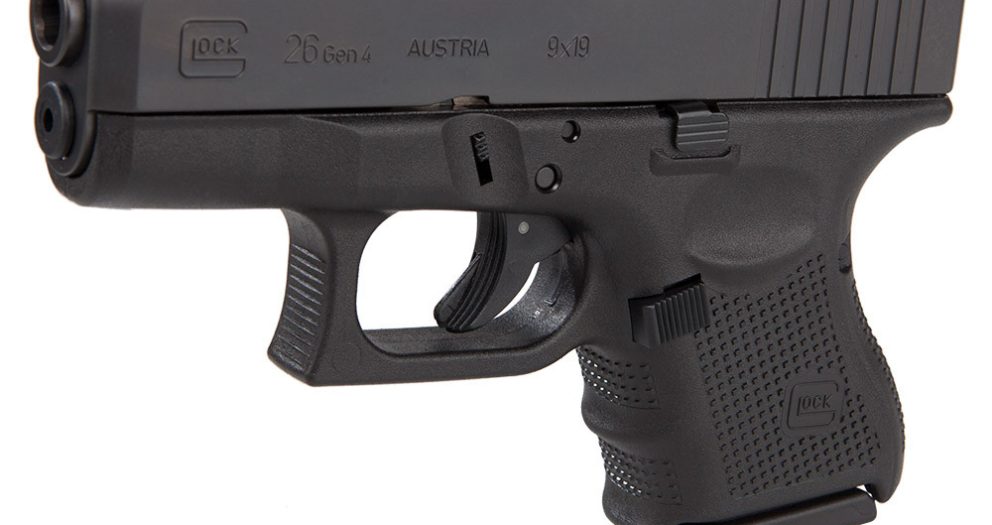
The trigger guard is a protective loop of metal or polymer material that surrounds the firearm's trigger. This essential safety feature of the frame is specifically designed to prevent accidental discharge by protecting the trigger from unintended contact with foreign objects, clothing, or fingers when the firearm is being carried or handled.Grip/Stock
In handguns, the grip is the ergonomically designed portion of the frame that you firmly hold onto when firing the weapon. In long guns, this component is called the stock. It's engineered to provide a secure, comfortable, and consistent hold, often featuring aggressive texturing, stippling, or traditional checkering patterns to enhance grip stability and control, particularly during recoil or in adverse weather conditions. Stocks in rifles and shotguns extend rearward to the shooter's shoulder, helping to absorb and distribute recoil forces while providing a stable shooting platform for improved accuracy.Sights
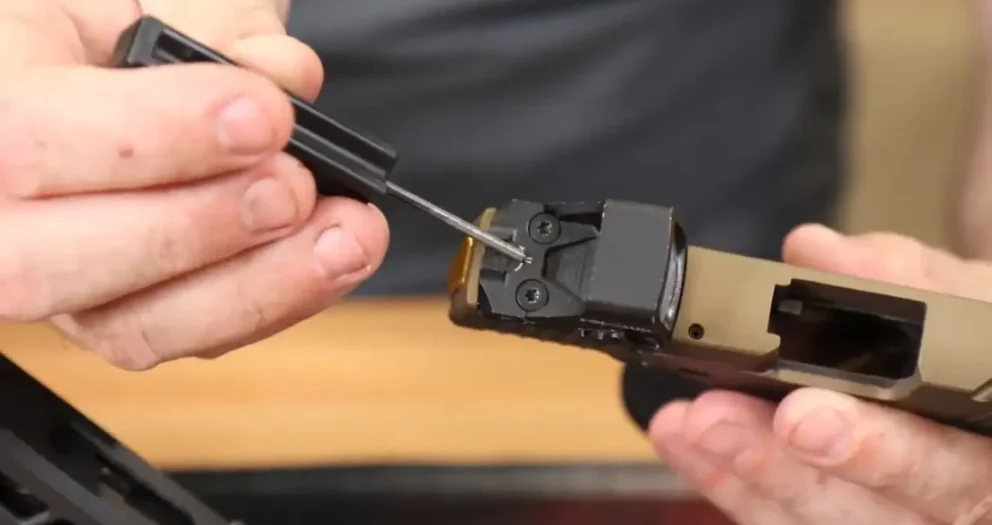
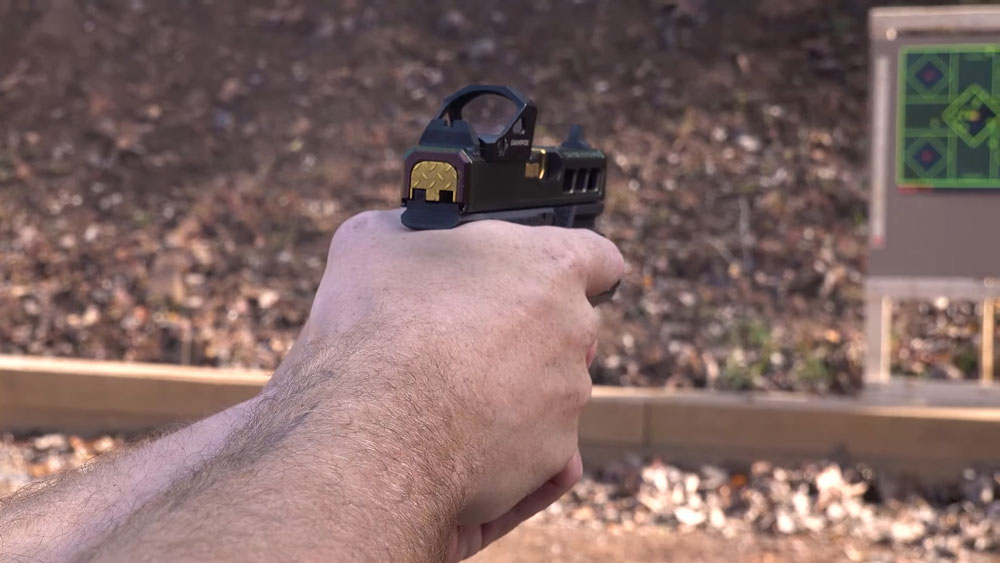
Sights are aiming devices that help the shooter properly align the firearm with the intended target. They can range from simple fixed iron sights (consisting of a front post and rear notch) to fully adjustable target sights, high-visibility fiber optic sights, or sophisticated mounting systems designed for optical devices like magnified scopes, holographic sights, or red dot reflex sights. The complexity, precision, and type of sights can vary dramatically depending on the weapon's intended use, whether that's close-quarters defensive shooting, precision long-range marksmanship, or hunting applications.Hammer
The hammer is a pivotal component found in many traditional firearms that's responsible for striking the firing pin or, in some older designs, directly striking the primer of a cartridge to initiate ignition. In external hammer designs, it's clearly visible on the exterior of the firearm and can often be manually cocked by the shooter's thumb. In hammerless designs, the hammer is completely enclosed within the frame or slide assembly, providing a smoother, snag-free profile that's particularly advantageous for concealed carry applications. Some key points about hammers:- In single-action firearms, the hammer must be manually cocked before each shot can be fired.
- In double-action guns, pulling the trigger both cocks and releases the hammer in one continuous motion.
- Some modern weapons, particularly many contemporary semi-automatic pistols, use a striker-fired system instead of a traditional hammer. A striker is essentially a spring-loaded firing pin that combines the functions of both a hammer and a firing pin into a single streamlined component.
Action
The action represents the heart and soul of any firearm, comprising the integrated parts that load ammunition, fire the cartridge, and eject spent casings or shells. It's essentially the complete operating system of the gun that makes it function. There are several distinct types of actions, including:- Bolt-action: Common in precision rifles, where a manually operated bolt handle is used to load and eject rounds.
- Lever-action: Uses a lever mechanism to cycle the action, typically found in some classic rifles and carbines.
- Pump-action: Often seen in shotguns, where a sliding forend is manually operated to cycle the action.
- Semi-automatic: Uses the energy generated from the fired round to automatically eject the spent case and load a fresh round.
- Break-action: Hinges open at the breech to allow loading and unloading, common in some shotguns and single-shot hunting rifles.
- Revolver-action: Uses a rotating cylinder to sequentially align chambers with the barrel for firing.
Safety
Many firearms, though certainly not all, feature one or more safety mechanisms specifically designed to prevent unintended discharge. The location, type, and method of operation of the safety can vary considerably between different firearm manufacturers and models. Some common types include manual thumb safeties, grip safeties that must be depressed to fire, trigger safeties integrated into the trigger itself, and firing pin blocks that prevent forward movement unless the trigger is fully pressed.Firing Pin/Striker
The firing pin or striker is the critical component that strikes the primer of the cartridge with sufficient force, initiating the firing sequence that ignites the powder charge. In traditional hammer-fired guns, the firing pin is typically a separate component that is struck by the falling hammer. In modern striker-fired weapons, the striker itself acts as the firing pin, eliminating the need for a separate hammer component.Chamber
The chamber is the precisely machined portion of the barrel where the cartridge or shell sits immediately before firing. It's manufactured to exacting tolerances to match the specific caliber or gauge of ammunition the firearm is designed to safely use. In revolvers, the rotating cylinder contains multiple individual chambers, each capable of holding one round.Ejector/Extractor
These complementary components work in tandem to remove spent cartridge casings from the chamber after firing. The extractor typically grips onto the rim or extractor groove of the cartridge case, while the ejector provides the mechanical force necessary to expel the case from the firearm. In break-action firearms, these mechanisms may operate manually when the action is opened by the shooter.Ejection Port
This is a precisely located opening in the receiver or slide where spent cartridge cases are forcefully ejected after firing, clearing the action for the next round to be chambered.Magazine
A magazine is a mechanical device or designated holding area where ammunition is stored within a firearm. The primary purpose of a magazine is to hold multiple rounds of ammunition in a spring-loaded stack, ready for sequential feeding into the chamber of the gun. There are several distinct types of magazines:- Box magazines: These can be either detachable (removable from the firearm) or integral to the weapon's design. They're extremely common in many modern rifles and semi-automatic pistols.
- Tubular magazines: Often found in shotguns and some lever-action rifles, these hold ammunition in a cylindrical tube typically located beneath the barrel.
- Drum magazines: These are high-capacity, cylindrical magazines sometimes used with certain rifles or shotguns, capable of holding significantly more ammunition than standard box magazines.
- Internal magazines: Built permanently into the firearm and often loaded through the top of the action or through a loading gate, common in some bolt-action and lever-action rifles.
- Revolving cylinders: While not typically called magazines in technical terminology, the cylinders in revolvers serve an analogous purpose of holding multiple rounds ready for sequential firing.
Magazine Well
The magazine well is the precisely shaped opening in the frame or receiver where the magazine is inserted during loading. It's specifically designed with beveled or flared edges to guide the magazine smoothly and efficiently into place so it can properly feed ammunition into the chamber without binding or misalignment.Sear
The sear is a critical internal component that holds the hammer or striker in the fully cocked position under spring tension until the trigger is deliberately pulled by the shooter. When the trigger is activated and moves rearward, the sear releases its engagement, allowing the hammer to fall forward or the striker to move forward rapidly, striking the firing pin and igniting the primer of the chambered cartridge to fire the weapon.Components of a Semi-Automatic Pistol
Semi-automatic pistols are exceptionally popular handguns known for their compact size, high capacity, ease of use, and rapid-fire capability. Let's comprehensively break down the key components of a typical semi-automatic pistol that distinguish it from other firearm types.Magazine Release
This is a button or lever mechanism, typically located near the base of the grip on the frame, that, when pressed or manipulated, allows the magazine to be quickly removed from the pistol for reloading with fresh ammunition or unloading for safe storage.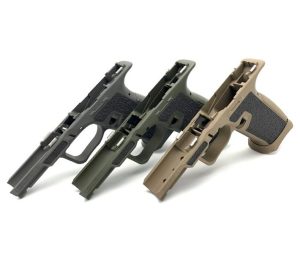
Mastering Firearm Anatomy: The Ultimate Comprehensive Guide to Gun Components