Gun Parts | Gun Parts For Sale | Parts Of A Gun

Search

Need help? SALES@GUNPARTS.US
Reloading Ammunition for Beginners: Essential Tools, Expert Tips, and Proven Techniques for Getting Started

Reloading Ammunition for Beginners: Essential Tools, Expert Tips, and Proven Techniques for Getting Started

Reloading Ammunition for Beginners: Essential Tools, Expert Tips, and Proven Techniques for Getting Started

In This Article

  • Reloading vs Handloading: Understanding the Critical Differences
  • Why Reload Ammunition? The Compelling Benefits Explained
  • Is Reloading Your Own Ammunition Difficult?
  • Essential Equipment and Supplies Needed to Reload Ammunition
  • What Types of Ammunition Can Be Successfully Reloaded?
  • Step-by-Step Guide: How to Reload Ammunition Safely and Effectively
  • Understanding Handload Reliability and Safety Considerations
  • Getting Started with Your Reloading Journey
  • Frequently Asked Questions About Ammunition Reloading
  • Final Thoughts and Recommendations
Reduce, reuse, recycle... cartridges?While we're not technically discussing bullets themselves, the practice of reusing and reloading cartridge casings is absolutely viable! Firearms enthusiasts have been reloading ammunition practically since the invention of metallic cartridges in the mid-19th century. Although countless shooters initially embrace this craft as an effective method to reduce range expenses, there exists a multitude of additional compelling reasons to explore this rewarding skill.Mastering the art of ammunition reloading requires a modest investment of time and dedication, but the returns are exceptionally worthwhile. It represents an outstanding approach to dramatically reduce shooting costs, engineer custom-tailored rounds optimized for your specific firearms, or simply acquire an engaging new hobby that ensures you're perpetually prepared for any shooting scenario.
Reloading Ammunition for Beginners: Essential Tools, Expert Tips, and Proven Techniques for Getting Started

Reloading Ammunition for Beginners: Essential Tools, Expert Tips, and Proven Techniques for Getting Started

This comprehensive guide on reloading ammunition for beginners will thoroughly cover everything you need to understand to embark on your reloading journey. From the substantial benefits of loading your own cartridges to the specialized equipment you'll require, by the conclusion of this article, you'll possess the knowledge necessary to transform a dedicated corner of your workspace into a fully-functional reloading station.However, before we proceed, an important disclaimer is necessary. This article serves educational and informational purposes exclusively. As with all activities related to firearms and ammunition, reloading can present inherent dangers, and you should invariably consult an official reloading manual or seek guidance from an experienced professional before attempting any reloading procedures. Now, let's explore the fascinating world of ammunition reloading!

Reloading vs Handloading: Understanding the Critical Differences

When discussing the craft of manufacturing your own ammunition, two prevalent terms frequently emerge in conversation: reloading and handloading. While these terms sound remarkably similar (and admittedly share considerable overlap), there exist some noteworthy distinctions between them that merit clarification and understanding.Reloading specifically designates the process of recovering previously fired brass casings and repurposing them by installing fresh bullets, new primers, and measured gunpowder charges so these components can be fired again. Hence, the descriptive term "reloading" – you're literally loading the casing again.So, what precisely constitutes handloading ammunition?Technically speaking, handloading functions as an umbrella term that encompasses all manual ammunition assembly processes, including the reloading of used cartridge cases. That said, within shooting communities, it's more commonly employed to describe the meticulous craft of assembling brand-new cartridges using entirely new components rather than recycling any portion of previously fired ammunition.Therefore, while all reloading activities constitute handloading, not all handloading necessarily involves reloading. Clear as crystal?Long-time shooting enthusiast and seasoned handloading hobbyist John Shoup, who has dedicated decades to perfecting his craft and developing his expertise, eloquently breaks down the practical distinction between these two terms."People are notoriously careless about leaving brass everywhere at shooting ranges. So if I go collect some of those discarded casings and simply manufacture them into basic plinking ammunition, that's reloading," he explained thoughtfully. "But if I'm deliberately purchasing a substantial quantity of new brass, or even carefully selected used brass, all bearing the same lot number, and attempting to manufacture exact clones of each round with meticulous precision, that's handloading. It's fundamentally different – you're striving to be exceptionally precise about every aspect. The factory-produced stuff you purchase is simply inferior to what I can manufacture with careful attention. And when I conceptualize it that way, I don't think of it as mere reloading. I think of it as true handloading."Now that we've thoroughly clarified that distinction, let's discuss some of the compelling reasons why you might want to explore handloading for yourself.

Why Reload Ammunition? The Compelling Benefits Explained

Is hand reloading genuinely worth the investment of time, money, and effort? Absolutely, without question. There exist numerous compelling reasons why you might want to pursue this rewarding hobby. We'll outline the most prevalent and persuasive reasons below:

To Save Substantial Money on Ammunition Costs

One of the most significant motivating factors that draws people into ammunition reloading is the potential for substantial cost savings. Quality ammunition, particularly premium defensive or match-grade cartridges, commands premium prices. And if you're training extensively and regularly, it's genuinely painful to watch all those spent brass casings disappear into the trash bin, representing wasted money and resources. Consequently, the prospect of reusing those casings and potentially reducing your ammunition expenditures by half or more is understandably quite enticing and appealing.That being acknowledged, handloading ammunition still requires financial investment – you cannot create something from nothing. However, the result is undeniably worthwhile, especially when you factor quality considerations into the equation."A lot of people rationalize, 'Well, it costs me X amount of money to reload. I can purchase factory ammunition for that same price.' And you're absolutely right, you can," Shoup observed. "You can't beat basic Remington Core-Lokt prices at $30 per box. But what you're actually manufacturing is comparable to premium Nosler Trophy Grade ammunition, which retails for $60 per box or more. So for the equivalent price as basic hunting ammunition, you can produce top-of-the-line, premium-quality ammunition."Which naturally brings us to our next compelling point...

Customization & Enhanced Accuracy

The other major reason shooting enthusiasts choose to handload ammunition is that it empowers them to create completely custom cartridges tailored to their specific needs. Competitive shooters, in particular, frequently embrace handloading so they can meticulously adjust powder charges, experiment with different bullet seating depths, test various primer types, and fine-tune other variables until they discover the perfect, most accurate cartridge for their specific firearm and shooting style. Subsequently, they can consistently recreate that exact, precise round of ammunition so that performance remains consistent every single time. There's genuinely a whole science behind precision handloading.But aren't cartridges manufactured by major ammunition companies sufficiently consistent? Why bother investing the considerable time to manufacture your own ammunition when Winchester operates an entire factory with sophisticated quality control systems in place?The truth is, most factory-produced ammunition isn't nearly as precise as you might reasonably assume."I've conducted extensive experimentation," Shoup revealed. "I've carefully measured factory ammunition specifications. I've measured the overall length of cartridges, I've carefully dumped the powder out and weighed the powder charges, measured the brass dimensions, and they vary quite substantially. It's all within acceptable specification ranges, but it's definitely not exact. Factory ammunition varies considerably more than you would initially think it would."This variance doesn't matter significantly when it comes to reloading basic plinking rounds for casual range practice, but if you're genuinely trying to achieve maximum accuracy and consistency for competition or precision shooting, it's absolutely worth the time and effort investment.The other compelling reason you might want to handload custom cartridges is if the specific rounds you're seeking are no longer in commercial production or have become extremely difficult to locate and purchase. This scenario is considerably more common than one might initially assume, especially if you own rare, vintage, or uncommon firearms chambered in obsolete calibers.

To Prepare for Any Situation

Do you maintain a stockpile of MREs and preserved foods? Are you the proud owner of a comprehensively stocked bug-out bag? Are you prepared to live off the grid for an extended period if circumstances require it?If you answered "yes" to any of those questions, ammunition reloading is definitely an essential skill for you to develop.We inhabit an increasingly unpredictable world. Part of being genuinely prepared for any eventuality is possessing the ability to provide for yourself and your family independently. The capability to reload your own ammunition not only enables you to protect yourself and your loved ones but also provides the means to hunt and feed your family during extended emergencies or supply disruptions.On a less intense note, we have experienced significant ammunition shortages periodically over recent years, and possessing the ability to handload your own ammunition means you won't have to cease training simply because factory ammunition has become scarce or prohibitively expensive.

Because It's Genuinely Enjoyable!

Finally, and perhaps most importantly, handloading ammunition is genuinely fun and satisfying! Not only does it represent an excellent "rainy day activity" that's productive and engaging, but once you delve into the intricacies of customizing ammunition to your precise preferences, you can really experiment creatively to create a one-of-a-kind, high-quality product that's genuinely fun to showcase at the range. Handloading easily ranks among the most enjoyable, productive, and rewarding hobbies any shooting enthusiast can pursue."A lot of people don't want to get into reloading because they believe they don't have the time or patience, and that's perfectly acceptable. You can pursue something else – it's definitely not for everybody," Shoup acknowledged. "But a tremendous number of people really take immense pride in what they've accomplished and created."

Is Reloading Your Own Ammunition Difficult?

Yes and no – it depends on your perspective and expectations. As with acquiring any new skill, reloading ammunition can certainly be challenging to learn initially, since there are numerous processes, specialized terminology, and tools to familiarize yourself with. That being said, the actual mechanical process of handloading is relatively straightforward and systematic.The most challenging aspect of the entire endeavor is learning how to do it properly in the first place, which is precisely where a comprehensive reloading handbook becomes absolutely invaluable. Handloading does require meticulous attention to detail, considerable patience, and precision accuracy, which can pose challenges for some individuals, but once you thoroughly understand the process, it's actually a fairly accessible hobby to master.
Reloading Ammunition for Beginners: Essential Tools, Expert Tips, and Proven Techniques for Getting Started

Reloading Ammunition for Beginners: Essential Tools, Expert Tips, and Proven Techniques for Getting Started

The learning curve is considerably easier if you have an experienced mentor to demonstrate the procedures and guide you through the process, but if you're learning independently, don't worry or feel discouraged. It's still a reasonably simple skill to acquire, so long as you're extremely careful to follow the instruction manual precisely and completely.

Essential Equipment and Supplies Needed to Reload Ammunition

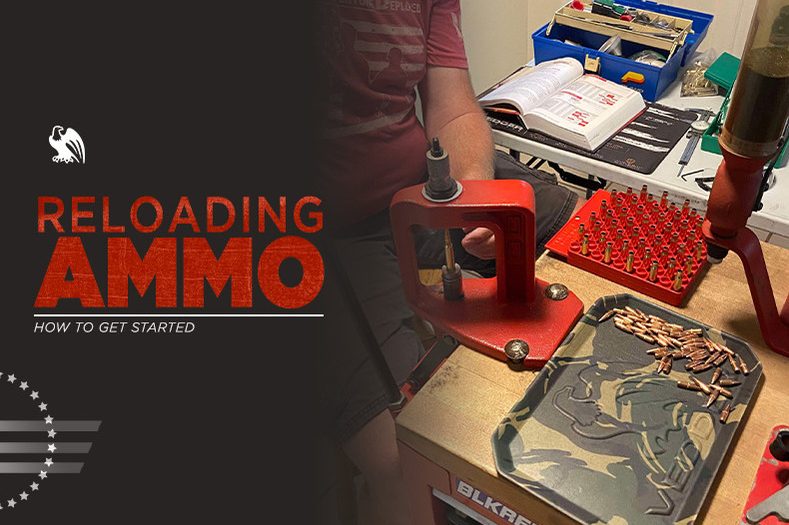
Reloading ammunition isn't something you can accomplish with a pair of pliers and enthusiastic determination... It requires specialized equipment specifically designed for this precise purpose.But how much financial investment are we discussing here?RCBS, a leading manufacturer of reloading equipment, estimates it requires approximately $300-500 to get started with basic reloading, though you can certainly invest considerably more depending on the specific equipment you select and the level of sophistication you desire. And there are admittedly a fair number of tools required for comprehensive reloading operations.However, the encouraging news is that once you've acquired all your major components and equipment, you shouldn't need to replace them for an exceptionally long time, if ever. You'll obviously need to continuously purchase consumable items like gunpowder, primers, and bullets, of course (unless you want to cast your own bullets, but that's an entirely different discussion for another day). Beyond those consumables, most quality reloading tools represent a one-time purchase that will serve you for decades.If you prefer to keep things simple and streamlined, you can purchase a comprehensive reloading kit from Guns Parts Store that includes most of the essential items you'll need to begin. Alternatively, if you're somewhat more selective and particular, you can build your own custom setup piece by piece. Some of the most respected brands and sources for quality reloading products include Hornady, RCBS, Lyman, and Lee Precision. Shop around carefully to find what fits your budget and personal preferences. The critical thing is that you invest in quality tools that can reliably get the job done correctly and safely!Here's everything you need to get started with ammunition reloading:Comprehensive Instruction Manual: The number one most important item you'll need to reload safely is a thorough, detailed instruction manual. These invaluable guides provide all the foundational information you need to successfully handload, including comprehensive step-by-step instructions on how to properly assemble your ammunition. It also includes critical information on powder types, the precise powder charge you need for your specific caliber, safe pressure limits, and troubleshooting guidance. It's an absolutely invaluable resource that you MUST have before beginning any reloading operations. Never attempt to reload without consulting proper reference materials.Reloading Press: A reloading press serves as the centerpiece of any reloading setup, functioning as the primary tool that assembles cartridges by pressing together brass casings, primers, powder, and bullets. Different types of presses (single-stage, turret, or progressive) vary significantly in complexity, speed, and efficiency, but all handle the essential steps of resizing cases and seating bullets. Single-stage presses are ideal for beginners, while progressive presses suit high-volume reloaders.Reloading Bench: This should go without saying, but you'll absolutely need a dedicated space to work safely and efficiently. A reloading bench provides a stable, dedicated workspace where reloaders can securely mount their press and systematically organize their tools and components. You'll want one that's exceptionally sturdy, reasonably spacious, and offers ample storage for components and supplies. You can purchase reloading benches specifically designed for this purpose, or you can get somewhat creative with your setup."I set my bench up on a rolling toolbox, which actually works remarkably well. It's admittedly a little bit crowded up top, but I can roll the entire setup into a closet somewhere and store it away when not in use. And then I have all the drawers in the toolbox available for organizing all my supplies and components," Shoup explained. "I also strongly suggest you invest time to set up your bench in an ergonomic fashion for maximum efficiency, comfort, and general flow of your reloading operation."Tumbler/Case Cleaner: Tumblers are used to thoroughly clean brass casings before reloading to remove powder residue, dirt, carbon buildup, and tarnish. Clean brass not only looks better but also functions more reliably and allows you to better inspect cases for defects.Precision Scale: This one may seem obvious, but a precision scale is used to accurately weigh your powder charges. The difference between a reloading scale and the one in your bathroom is that reloading scales are extraordinarily precise, often measuring down to a tenth of a grain or less. Digital scales offer convenience, while beam scales provide reliability without batteries.Cartridge Dies: Dies are specialized precision tools that are installed in your press to perform specific operations like resizing, expanding, bullet seating, and crimping. They are caliber-specific and play an absolutely essential role in ensuring that cartridges fit properly in the firearm chamber and function reliably. Quality dies from Guns Parts Store ensures consistent, safe ammunition.Primer Catcher: The primer catcher is a container that collects used primers when they're removed from cases during the resizing step, helping to keep your workspace clean and organized while preventing old primers from causing jams or contamination issues.Hand Priming Tool: This specialized tool is used to seat new primers into the primer pocket of the case, offering a more controlled and tactile feel than priming directly on the press. Hand priming tools allow reloaders to position primers more precisely and consistently, reducing the risk of misfires or malfunctions while providing better feedback.Primer Brush/Pocket Cleaner: Primer brushes and primer pocket cleaners are small, specialized tools used to thoroughly clean primer pockets inside the cartridge case. Although they work somewhat differently, both are highly effective, so choose whichever you prefer to accomplish the task. Removing residue from previous firings helps primers seat consistently and uniformly, ensuring proper ignition and reliability.Case Tray/Reloading Block: The case tray, also called a reloading block, holds cases upright during various stages of reloading, helping to keep them organized and preventing spills. It's particularly helpful when loading large batches, preventing powder spills, and ensuring each case is processed properly through every step.Case Trimmer: A case trimmer shortens cases to the correct specified length after multiple reloadings, as brass cases naturally elongate with repeated firings due to the pressures involved. Maintaining proper case length is critical for safety and reliability.Chamfer/Deburring Tool: This dual-purpose tool smooths the inner and outer edges of trimmed cases, making bullet seating considerably easier and helping to prevent bullet deformation or damage during the seating process.Primer Tray: The primer tray is a flat, round tray that helps orient primers all facing the same direction before seating, simplifying the loading process and dramatically reducing the chance of installing a primer upside-down. This tray also helps arrange the primers to prevent you from touching them with your hands, as finger oils can damage primers and affect reliability.Case Lube/Lube Pad: Case lubricant reduces friction during the resizing operation, preventing cases from getting stuck in the die – a frustrating problem that can damage equipment. A lube pad is often used to apply a thin, even coat of lubricant on cases, especially critical for bottleneck rifle cartridges.Powder Funnel: The powder funnel ensures that all powder goes directly into the cartridge case without spilling, wasting powder, or creating a mess. It's also extremely helpful for pouring any leftover powder back into its original container, as powder should never be stored in the powder measurer between sessions.Powder Measurer: The powder measurer holds your gunpowder and dispenses precise, consistent amounts of powder for each cartridge to keep all your rounds uniform and safe. Consistency is absolutely critical for both safety and accuracy.Powder Trickler: The powder trickler adds individual powder granules to your scale one at a time, making it considerably easier to control powder weight for consistent, accurate loads. This is an invaluable tool to use if you're pursuing ultra-precise rounds for competition or long-range shooting.Dial Caliper: Precision calipers measure case length, overall cartridge length, and other critical dimensions to ensure they meet exacting safety and performance standards. Digital or dial calipers are both excellent choices.Kinetic Bullet Puller: This tool safely disassembles completed rounds by removing the bullet from the case, allowing reloaders to salvage components if an error is made or if adjustments are needed. It's an essential safety tool that every reloader should own.EDC Tray: One critically important yet frequently underrated aspect of successful reloading is maintaining your work area clean, organized, and efficient. An everyday carry tray is a compact, organized storage solution for reloading tools, ammunition components, and small accessories. Trust us, you'll definitely want one to keep your workspace functional. Guns Parts Store offers excellent organizational solutions for reloaders.
Reloading Ammunition for Beginners: Essential Tools, Expert Tips, and Proven Techniques for Getting Started

Reloading Ammunition for Beginners: Essential Tools, Expert Tips, and Proven Techniques for Getting Started

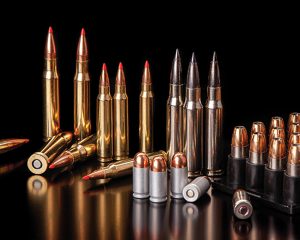
Cartridge Components: Before you can accomplish anything, you'll obviously need the four main components of any metallic cartridge. Brass casings are the cases that hold all the components together and contain the pressure. Bullets are the projectiles that are propelled downrange when the gun is fired. Primers ignite the powder charge, initiating the combustion process, and gunpowder is the propellant fuel that creates the necessary pressure to drive the bullet out of the barrel at high velocity. Each component has a specific, critical role, and together they create a complete, functional round of ammunition. Gun Parts Store stocks all the components you need for successful reloading.

What Types of Ammunition Can Be Successfully Reloaded?

The encouraging news is that virtually any type of centerfire ammunition can be successfully reloaded, and most brass cases can be reused anywhere from 5-20 times or even more, depending on the powder charge, pressure levels, and how carefully you process them, according to RCBS and other manufacturers.The primary exception to this general rule is rimfire ammunition. Rounds like .22 LR, .22 WMR, and .17 HMR aren't typically reloaded, as their thin cases are permanently deformed after firing, making it extremely difficult, impractical, and potentially dangerous to reload. The primer compound in rimfire ammunition is also contained within the folded rim itself, making repriming essentially impossible with conventional equipment. So while you could theoretically reload rimfire rounds with specialized equipment, it's exceptionally tricky, not cost-effective, and definitely not recommended – especially for those new to the ammunition reloading endeavor.Other than rimfire cartridges, you can find reloading dies for virtually every centerfire cartridge that has ever been commercially manufactured, meaning you can handload any type of ammunition your heart desires. Yes, this even includes shotgun shells, which use a somewhat different process but are absolutely reloadable with the proper equipment available from Gun Parts Store.

Step-by-Step Guide: How to Reload Ammunition Safely and Effectively

The exact process that goes into reloading ammunition depends significantly on your specific caliber, the type of press you're using, and the tools you have available. So while it's always absolutely advisable to refer to your comprehensive reloading guide for the exact procedures needed for what you're doing, here is a detailed, high-level overview that covers the fundamental basics of the reloading process.

1. Acquire Your Brass Casings

The first thing you need to do is decide where you're going to source your brass casings. There are several ways to accomplish this. First, if you're planning to handload some high-end, precision rounds for competition or hunting, you may want to purchase brand-new casings, which is totally acceptable and often preferred. Second, if you're looking to save money and genuinely "recycle" previously fired rounds, you'll need to collect spent casings either from your last visit to the shooting range or from other shooters who were too lazy or indifferent to pick them up (more brass for you!). Many ranges also sell once-fired brass at reasonable prices.

2. Prepare the Casings Thoroughly

Next, you'll want to get your casings properly prepared and ready to be reloaded. The very first thing you should do is carefully sort your brass. Visually inspect each casing to ensure they are all the same caliber and that none of them are too damaged toError: network error 
Slide Stop vs Slide Release: Is There a Difference and Does It Even Matter?

Slide Stop vs Slide Release: Is There a Difference and Does It Even Matter?

Slide Stop vs Slide Release: Is There a Difference and Does It Even Matter?

In This Article

  • Understanding Slide Lock vs Slide Release vs Slide Stop Terminology
  • The Functional Mechanics Behind Your Pistol's Slide Control Lever
  • Should I Utilize the Slide Lock Mechanism to Release the Slide?
  • Manufacturer Perspectives on Slide Control Nomenclature
  • Training Considerations and Operational Techniques
  • Final Thoughts and Recommendations
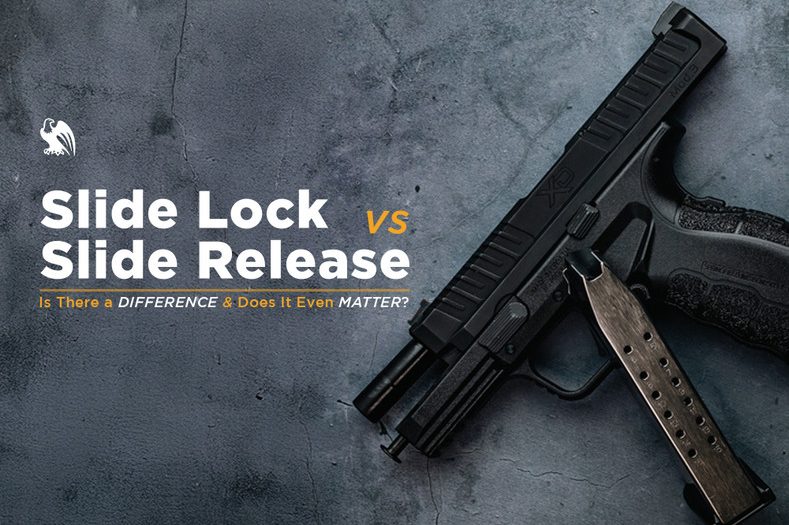
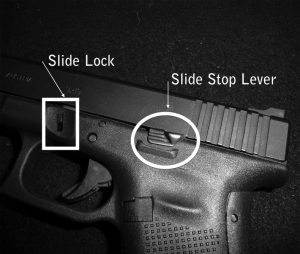
If you've immersed yourself in the firearms community for even a brief period, you've undoubtedly discovered that passionate debates surrounding various weapon features, components, and operational methodologies are remarkably commonplace. Among these contentious discussions, the slide stop versus slide release controversy stands as one of the most heated and polarizing topics within shooting circles.A slide stop, alternatively referenced as a "slide lock," "slide catch," "slide lever," or, most controversially, a "slide release," represents a compact tab or lever mechanism integrated into virtually all semi-automatic handguns. This critical component is engineered to secure the slide in its rearward position when necessary and, depending on the specific firearm's design philosophy, facilitate the slide's forward movement to return the weapon to battery condition.However, if these various terminologies are employed interchangeably to describe an identical mechanical component, what drives such fervent debate surrounding our nomenclature choices, and does the distinction genuinely carry significance?At Guns Parts Store, we believe in empowering firearm enthusiasts with comprehensive knowledge about every component of their weapons. When examining this issue objectively, whether you designate this mechanism as a slide lock, slide stop, or slide release isn't nearly as consequential as certain individuals within the community suggest. Nevertheless, this controversy transcends mere semantic preferences; it's intrinsically connected to operational techniques, individual shooter preferences, and even the fundamental design philosophies that firearm manufacturers embrace when engineering their products. Comprehending the contextual framework behind this argument facilitates a broader conversation regarding training methodologies and optimal weapon utilization practices. Let's explore this topic thoroughly.

Understanding Slide Lock vs Slide Release vs Slide Stop Terminology

Regardless of your preferred nomenclature, the slide lock mechanism (or whatever designation resonates with you) fulfills two primary operational functions: securing the slide in its open position when your magazine reaches empty status and, contingent upon the specific design implementation, releasing the slide to facilitate its return to battery configuration.
Slide Stop vs Slide Release: Is There a Difference and Does It Even Matter?

Slide Stop vs Slide Release: Is There a Difference and Does It Even Matter?

This dual-purpose functionality represents the epicenter from which much of the controversy emanates. Certain manufacturers engineer this lever predominantly as a slide release mechanism, incorporating textured surfaces or extended profiles to accelerate operational speed and enhance shooter efficiency. Conversely, other manufacturers emphasize their role as a slide stop, prioritizing secure slide retention when the magazine achieves empty status.

Manufacturer Nomenclature Standards

The terminology "slide stop" appears to receive preferential treatment from the majority of firearms manufacturers throughout the industry. Glock, for instance, officially designates this mechanism as a "slide stop," with prestigious manufacturers including Smith & Wesson, Walther, CZ, Ruger, Kimber, and Beretta following this nomenclature convention. Heckler & Koch and Taurus, alternatively, classify it as a slide release lever, while Sig Sauer employs the designation "slide catch lever" in their technical documentation.So... does this component constitute a slide stop or slide release? Or does it represent something entirely distinct from either classification? Should we even concern ourselves with these distinctions, provided the mechanism functions reliably? Honestly, your chosen terminology for this particular firearm component remains entirely within your discretion. If technical accuracy represents your priority, consult your specific firearm manufacturer's official documentation to determine their designated nomenclature. Since the preponderance of companies reference it as a slide stop, that designation probably represents the most objectively accurate terminology.At Guns Parts Store, we recognize that shooters develop personal preferences based on their operational experience. You can alternatively determine your preferred terminology based on your typical usage patterns. If you predominantly utilize this mechanism to secure the slide in its rearward position, designations like slide lock or slide stop make logical sense. If you more frequently employ it to release the slide and restore the weapon to battery condition following magazine depletion, calling it a slide release seems perfectly reasonable.Regardless of your choice, anticipate encountering self-proclaimed experts at shooting ranges who will critique your terminology selection. Consequently, you might as well adopt whatever designation feels instinctively correct to you. Provided you comprehend how to operate this mechanism safely and correctly, the specific terminology you employ doesn't genuinely matter. If manufacturers themselves apply different nomenclature to describe identical mechanisms, we as shooters certainly possess that same prerogative!

The Functional Mechanics Behind Your Pistol's Slide Control Lever

Understanding the mechanical operation of this component provides valuable context for the ongoing debate. When your semi-automatic pistol's magazine follower reaches its uppermost position after the final round is chambered and fired, it engages the slide stop lever, forcing it upward into a notch machined into the slide's underside. This mechanical interaction locks the slide in its rearward position, providing the shooter with tactile and visual confirmation that the magazine has been depleted.This open-slide condition serves multiple practical purposes beyond simply indicating an empty magazine. It facilitates rapid magazine changes during competitive shooting or defensive scenarios, allows for visual chamber inspection to confirm the weapon is unloaded, and provides an opportunity to address potential malfunctions or conduct maintenance procedures.The release function operates through either of two methods, depending on the shooter's preference and training background. The first method involves manually depressing the slide stop lever downward, which disengages it from the slide's retention notch, allowing the recoil spring to drive the slide forward into battery. The alternative method requires the shooter to grasp the slide's rear serrations, pull the slide slightly rearward to disengage the slide stop, then release the slide to allow spring tension to carry it forward.

Should I Utilize the Slide Lock Mechanism to Release the Slide?

As previously mentioned, one of the most contentious aspects of the slide stop versus slide release debate centers on the question of whether shooters should release their slide using the slide lever mechanism or through manual manipulation of the slide itself.

The Manual Racking Philosophy

One established school of thought maintains that manually racking the slide provides superior reliability by ensuring complete return to battery condition. Proponents of this methodology assert that utilizing the lever to release the slide could potentially result in malfunctions, particularly with certain firearm designs or under adverse conditions. They argue that relying exclusively on the slide lever can cultivate detrimental habits that may prove problematic during high-stress defensive encounters.This perspective emphasizes that manually grasping and manipulating the slide provides the shooter with greater tactile feedback, allowing them to feel whether the slide has fully returned to battery and is properly chambered a round. Additionally, this technique remains consistent across all semi-automatic pistol platforms, regardless of manufacturer-specific design variations in slide stop lever placement, size, or operational characteristics.Advocates of manual slide manipulation also highlight that this method proves more reliable when operating the weapon with compromised hand strength, wearing gloves, or when the shooter's hands are wet, bloody, or otherwise contaminated, conditions that might reasonably occur during defensive scenarios.

The Slide Release Lever Philosophy

Conversely, numerous experienced shooters and instructors advocate that utilizing the lever represents a faster and more efficient approach during high-stress situations, particularly when your firearm features a modern lever specifically engineered to successfully return the pistol to battery without reliability concerns."The argument can be made that if your gun cannot use the slide stop as a slide release, your gun is under-engineered and you need a superior firearm. Even if your preferred method of sending the gun back into battery involves grabbing the slide, pulling to the rear, and releasing, you should train for one-handed shooting scenarios," firearm expert Joshua Gillem articulated in a comprehensive ConcealedCarry.com article.
Slide Stop vs Slide Release: Is There a Difference and Does It Even Matter?

Slide Stop vs Slide Release: Is There a Difference and Does It Even Matter?

This perspective emphasizes that depressing the slide stop lever requires less gross motor movement, potentially shaving critical fractions of seconds from reload times during competitive shooting or life-threatening defensive encounters. Proponents note that modern pistol designs from reputable manufacturers are specifically engineered to accommodate slide release lever operation without compromising reliability.Furthermore, the slide release technique proves particularly advantageous during one-handed operation scenarios, whether due to injury, while maintaining control of a flashlight, or when managing other tactical considerations. Attempting to rack a slide one-handed presents significantly greater challenges than simply depressing a lever with your thumb.

The Guns Parts Store Perspective

Ultimately, the optimal answer depends upon your specific firearm's design characteristics, your developed technique, and your personal comfort level with each methodology. Modern pistols from quality manufacturers are typically engineered to accommodate both operational methods reliably, so whichever approach works most effectively for you and your particular weapon platform represents the appropriate choice for your circumstances.At Guns Parts Store, we emphasize that the critical factor isn't which method you select, but rather that you practice your chosen technique extensively until it becomes instinctive, automatic muscle memory. Consistency in training and technique development far outweighs the theoretical advantages of either methodology.We recommend experimenting with both approaches during range sessions to determine which feels more natural and reliable with your specific firearm. Some pistol designs feature slide stop levers that are easily accessible and provide positive engagement, making the lever release method highly practical. Other designs incorporate smaller, more recessed levers that prove challenging to manipulate under stress, making manual slide racking the more pragmatic choice.

Training Considerations and Operational Techniques

Beyond the basic debate over terminology and release methodology, several additional training considerations deserve attention when developing proficiency with your pistol's slide control mechanism.

Ambidextrous Operation Capabilities

Many modern pistols incorporate ambidextrous slide stop levers or offer aftermarket components that provide bilateral operation capabilities. For left-handed shooters or those training for support-hand operation, understanding how your specific firearm's slide stop functions from either side represents crucial knowledge.

Extended Slide Stop Levers

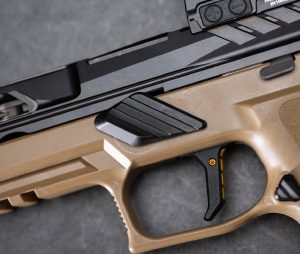
The aftermarket firearms accessories industry offers extended slide stop levers for numerous popular pistol platforms. These enhanced components provide increased surface area for manipulation, potentially facilitating faster operation for shooters who prefer the lever release method. However, extended levers also present increased potential for inadvertent engagement during firing, particularly for shooters with larger hands or those employing high thumb-forward grip techniques.At Guns Parts Store, we stock a comprehensive selection of OEM and aftermarket slide stop components for virtually every popular semi-automatic pistol platform, allowing you to customize your firearm's controls to match your operational preferences and hand dimensions.

Malfunction Clearance Procedures

Understanding your slide stop's operation proves essential when executing malfunction clearance drills. Certain malfunction types may require manually locking the slide to the rear using the slide stop to facilitate inspection or remediation. Conversely, some malfunctions might involve the slide stop inadvertently engaging during firing, requiring the shooter to recognize and address this specific issue.

One-Handed Operation Scenarios

As previously mentioned, developing proficiency with one-handed slide manipulation—both strong-hand and support-hand- represents an essential skill that every defensive pistol shooter should cultivate. The slide stop lever often provides the most practical method for one-handed slide release, particularly when operating with your support hand only.Practice techniques for one-handed slide locking typically involve using your belt, holster edge, boot heel, or other environmental features to press the slide rearward while simultaneously engaging the slide stop lever. These skills require dedicated practice but may prove invaluable during scenarios involving injury or other circumstances requiring one-handed weapon operation.

Manufacturer Perspectives on Slide Control Nomenclature

Examining how various manufacturers approach slide stop design and nomenclature provides valuable insight into the diverse philosophies within the firearms industry.

Glock's Approach

Glock designates their component as a "slide stop lever" in official documentation and emphasizes its primary function as a slide retention device. Glock's design philosophy incorporates a relatively small, unobtrusive lever that minimizes inadvertent engagement during firing while remaining accessible for intentional manipulation. The company's training materials traditionally emphasize manual slide racking over lever release, though modern Glock instructors acknowledge both methods as viable.

1911 Platform Heritage

The venerable 1911 pistol platform, designed by John Moses Browning over a century ago, features what most manufacturers and enthusiasts refer to as a "slide stop." The 1911's slide stop design incorporates a relatively prominent thumb-accessible lever that many shooters utilize for slide release, though traditional 1911 training emphasized manual slide manipulation. The 1911 platform's influence on subsequent pistol designs cannot be overstated, and many modern slide stop configurations trace their lineage to Browning's original concept.

Modern Striker-Fired Innovations

Contemporary striker-fired pistols from manufacturers like Smith & Wesson (M&P series), Walther (PPQ series), and others often feature enhanced slide stop levers with increased surface area and improved ergonomics specifically designed to facilitate rapid manipulation. These design choices suggest manufacturer recognition that many shooters prefer utilizing the lever for slide release, despite official nomenclature that may designate the component as a "slide stop."

Final Thoughts and Recommendations from Guns Parts Store

While certain individuals within the firearms community would argue that employing correct terminology regarding matters like the slide stop versus slide release debate carries significant importance, we at Guns Parts Store believe the most critical factor is comprehensively understanding what these components accomplish and how they function within your weapon system.Provided you possess the knowledge to operate your firearm safely and effectively, the specific terminology you employ only matters within the context of the particular conversation you're conducting. Consequently, we'll allow you to exercise your own judgment regarding nomenclature preferences.Whether you designate it as a slide lock, slide stop, slide release, or any alternative terminology, the fundamental principles of safe firearm handling, consistent training, and developing reliable muscle memory far outweigh semantic debates. What matters most is that you understand your specific pistol's operational characteristics, practice regularly with your chosen techniques, and can operate your weapon confidently under various conditions.

Quality Components from Guns Parts Store

At Guns Parts Store, we maintain an extensive inventory of OEM and aftermarket slide stops, slide releases, and related components for virtually every popular semi-automatic pistol platform available today. Whether you're seeking a replacement for a worn factory component, an upgraded extended lever for competition use, or ambidextrous controls for enhanced versatility, our knowledgeable staff can help you identify the optimal solution for your specific requirements.We stock components from industry-leading manufacturers and rigorously test aftermarket parts to ensure they meet our exacting standards for quality, reliability, and proper fit. Our commitment to customer satisfaction means we'll work with you to ensure you receive exactly the right component for your firearm and intended application.

Beyond Individual Components: Complete Firearm Solutions

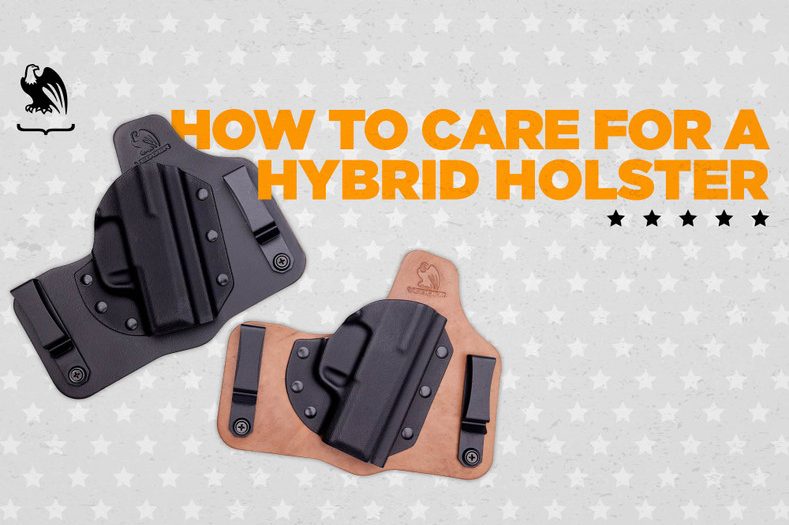
Whether you call it a slide lock, a slide stop, or anything else, securing your pistol in a high-quality holster remains essential for safety and comfort during concealed carry operations. If you're searching for a new inside-the-waistband (IWB), outside-the-waistband (OWB), or pocket carry holster, Guns Parts Store offers premium Kydex holsters that are custom-manufactured for your specific weapon of choice, ensuring a perfect fit and reliable retention.Our holster selection accommodates hundreds of popular pistol models, and our custom fabrication capabilities allow us to produce holsters for even obscure or uncommon firearms. Each holster undergoes rigorous quality control inspection to guarantee it meets our exacting standards for retention, comfort, and durability.

Comprehensive Firearm Accessories and Equipment

Interested in products beyond holsters and replacement parts? Guns Parts Store offers an extensive selection of firearm accessories, including weapon-mounted lights, laser aiming devices, first aid equipment, maintenance supplies, cleaning tools, and much more. Our carefully curated inventory includes only products that meet our stringent quality standards and provide genuine value to shooters.Browse our comprehensive selection of tactical apparel, reinforced gun belts engineered to support concealed carry, magazine carriers, ammunition storage solutions, and countless other accessories designed to enhance your shooting experience. Our knowledgeable staff possesses extensive real-world experience and can provide expert guidance to help you select the optimal equipment for your specific needs and applications.

Additional Resources and Expert Guidance

Guns Parts Store is committed to serving as more than simply a retail vendor; we strive to function as a comprehensive resource for firearm enthusiasts at every experience level. Our website features detailed product descriptions, installation guides, compatibility information, and educational content designed to help you make informed purchasing decisions and maximize the performance of your firearms.For questions regarding specific components, compatibility concerns, installation procedures, or general firearms-related inquiries, our customer service team stands ready to provide expert assistance. We're passionate about firearms and genuinely enjoy helping fellow enthusiasts optimize their equipment and develop their skills.Visit Guns Parts Store today to explore our complete inventory of pistol components, accessories, holsters, and equipment. Whether you're building a custom competition pistol, maintaining your everyday carry weapon, or simply exploring upgrades to enhance your shooting experience, we possess the parts, knowledge, and commitment to customer service that will ensure your complete satisfaction.Remember: regardless of what you call that little lever on your pistol, what truly matters is that you understand how it functions, practice with it regularly, and can operate your firearm safely and effectively when it matters most. Train consistently, shoot safely, and trust Guns Parts Store for all your firearms parts and accessories needs. 
Comprehensive Guide to Gun Parts: Understanding Gun Anatomy for Beginners

Comprehensive Guide to Gun Parts: Understanding Gun Anatomy for Beginners

Comprehensive Guide to Firearm Components: Understanding Gun Anatomy for Beginners

Table of Contents

  • Introduction to Firearm Anatomy
  • Classification of Firearms: Understanding Different Gun Types
  • Universal Firearm Components: Parts Common to All Guns
  • Semi-Automatic Pistol Components Explained
  • Revolver Anatomy: Classic Handgun Design
  • Rifle Components and Mechanisms
  • Shotgun Parts and Features
  • Why Understanding Firearm Components Matters
  • Conclusion
Whether you're contemplating acquiring your first firearm or seeking to deepen your understanding of weapons mechanics, comprehending the fundamental components of firearms is essential for any responsible gun owner or enthusiast.Mastering the intricate details of firearm anatomy and the operational principles behind each component will not only empower you to select a weapon that precisely aligns with your specific requirements, but this comprehensive knowledge can dramatically enhance your overall marksmanship experience, maintenance capabilities, and safety practices.However, the world of firearms encompasses an extensive array of information.In this exhaustive, detailed guide, we'll meticulously dissect the anatomical structure of various firearm categories, including semi-automatic pistols, revolvers, rifles, and shotguns. By the conclusion of this comprehensive article, you'll possess a thorough, authoritative understanding of firearm component nomenclature and their respective functions, establishing a solid foundation that will transform you into a more educated, confident, and responsible shooting enthusiast.Let's embark on this fascinating exploration into the intricate world of firearm components and mechanics!

Classification of Firearms: Understanding Different Gun Types

Before we examine the specific components of each firearm category, it's crucial to establish a foundational understanding of the different types of guns we'll be analyzing throughout this comprehensive guide.

Semi-Automatic Pistols: Modern Handgun Technology

These are compact, handheld firearms engineered to be operated and discharged using a single hand. The vast majority of contemporary pistols feature semi-automatic operation, meaning they automatically chamber the subsequent round following each discharge. These represent the most prevalent type of handguns utilized in modern times and are the standard sidearms you'll observe carried by the majority of law enforcement personnel and civilian concealed carry permit holders. (Envision: James Bond's iconic Walther PPK.)

Revolvers: Classic Handgun Design

Another distinct category of handgun, revolvers are characterized and distinguished by their rotating cylinder mechanism that contains multiple chambers for ammunition storage. Although not as ubiquitous in contemporary carry applications, numerous individuals continue to carry revolvers for personal protection, as these firearms are renowned for their mechanical simplicity, reliability, and ease of operation. (Picture the classic firearms featured in your favorite John Wayne or Clint Eastwood western films.)Related Reading: Do People Still Carry Revolvers for Self-Defense?

Rifles: Precision Long-Range Firearms

These are extended-barrel firearms specifically designed to be discharged from a shoulder-mounted position, typically employed for long-distance shooting applications and hunting pursuits. There exist numerous distinct rifle classifications and action types, which we'll explore in greater detail in subsequent sections (for now, visualize everything from the AR-15 platform featured in Scarface to the Winchester 1892 lever-action rifle showcased in The Magnificent Seven).

Shotguns: Versatile Scattergun Platforms

Also classified as long guns, shotguns are distinguished by their unique capability to discharge shells containing either multiple projectiles (shot) or a single large projectile (slug). Shotguns are frequently utilized for hunting waterfowl and upland game, competitive trap and skeet shooting, and home defense applications. (You may recognize these formidable firearms from memorable scenes in Terminator and Jurassic Park.)Now that we've established a fundamental comprehension of the primary firearm categories, let's conduct an in-depth exploration of the components that comprise each type in meticulous detail.

Universal Firearm Components: Parts Common to All Guns

Although each firearm category possesses its own distinctive design characteristics and specialized components, there exist certain fundamental parts that are universally present across virtually all firearms. In this comprehensive section, we'll examine all the standard components you'll encounter in every type of handgun or long gun, before proceeding to analyze the specialized pieces that differentiate them in subsequent sections.

Frame/Receiver: The Foundation of Every Firearm

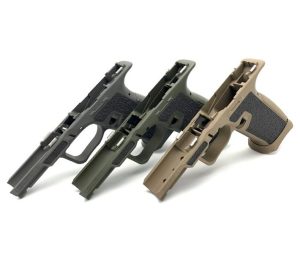
The frame, alternatively designated as the receiver, constitutes the primary structural body of any firearm, functioning as the foundational platform to which all other components are attached, mounted, or housed. It's typically manufactured from metal alloys (such as steel or aluminum) or advanced polymer materials and contains the critical firing mechanism. In handgun designs, the frame incorporates the grip section, while in long gun configurations, it connects to the stock assembly. The frame also frequently houses the magazine well in firearms that utilize detachable magazine systems. At Guns Parts Store, we offer premium replacement frames and receivers for virtually every firearm platform.
Comprehensive Guide to Gun Parts: Understanding Gun Anatomy for Beginners

Comprehensive Guide to Gun Parts: Understanding Gun Anatomy for Beginners

Barrel: The Projectile's Path

The barrel is the precision-engineered metal tube through which the projectile travels when the firearm is discharged. The barrels of most rifles and handguns feature rifling on the interior surface, meaning they contain spiral grooves that impart rotational spin to the bullet, dramatically improving accuracy, stability, and ballistic performance during flight. Shotgun barrels are typically smooth-bore in construction, though certain specialty models incorporate rifled barrels for slug ammunition. The length, material composition, and construction quality of the barrel can significantly influence a firearm's performance characteristics, accuracy potential, and legal classification under various regulations.Related Reading: What Is Rifling, and Why Does It Matter for Accuracy?

Muzzle: The Exit Point

The muzzle represents the forward terminus of the barrel where the projectile exits the firearm and begins its trajectory toward the target.

Breech: The Loading End

The breech is the rear terminus of the barrel that interfaces with the action mechanism. It constitutes the opening into which ammunition is loaded and positioned for firing.

Trigger: The Firing Initiation Mechanism

The trigger is the lever mechanism that, when deliberately pulled by the shooter, initiates the complete firing sequence. It's mechanically connected to the firing mechanism housed within the frame. The weight, travel distance, and tactile characteristics of the trigger pull can profoundly impact shooting accuracy, precision, and overall comfort. Triggers can be classified as single-action, requiring the hammer to be manually cocked before each discharge, or double-action, which both cocks and releases the hammer with a single continuous pull. Guns Parts Store carries an extensive selection of aftermarket triggers to enhance your firearm's performance.

Trigger Guard: Safety Protection

The trigger guard is a protective loop constructed of metal or polymer material that surrounds the firearm's trigger. This critical safety component of the frame is specifically designed to prevent accidental discharge by protecting the trigger from unintended contact with foreign objects, clothing, or inadvertent finger pressure.

Grip/Stock: The Control Interface

In handgun designs, the grip is the ergonomically shaped portion of the frame that you firmly hold when operating and firing the weapon. In long gun configurations, this component is designated as the stock. It's engineered to provide a secure, comfortable, and controllable hold, frequently featuring texturing, stippling, or checkering patterns to enhance grip stability and prevent slippage. Stocks in rifles and shotguns extend to interface with the shooter's shoulder, helping to absorb and dissipate recoil energy while providing a stable shooting platform for improved accuracy.

Sights: Aiming Systems

Sights assist the shooter in properly aligning the firearm with the intended target. They can range from simple fixed iron sights to sophisticated adjustable sights, fiber optic sight systems, or mounting platforms for advanced optics such as telescopic scopes, red dot sights, or holographic weapon sights. The complexity, precision, and type of sights can vary dramatically depending on the weapon's intended application and use case.

Hammer: The Striking Component

The hammer is a component present in numerous firearms that's responsible for striking the firing pin or, in certain designs, directly impacting the primer of a cartridge. In external hammer designs, it's visible on the exterior of the firearm and can typically be manually cocked. In hammerless designs, the hammer is enclosed within the frame or slide assembly, providing a smoother, snag-free profile. Several key characteristics of hammers include:
  • In single-action firearms, the hammer must be manually cocked before each shot
  • In double-action guns, pulling the trigger both cocks and releases the hammer in one continuous motion
  • Some modern weapons, particularly numerous semi-automatic pistol designs, utilize a striker instead of a traditional hammer. A striker is essentially a spring-loaded firing pin that combines the functions of both a hammer and a firing pin into a single streamlined component

Action: The Operating System

The action represents the mechanical heart of any firearm, comprising the integrated parts that load, fire, and eject cartridges or shells. It's essentially the complete operating system of the gun. There exist several distinct types of actions, including:
  • Bolt-action: Common in precision rifles, where a bolt is manually operated to load and eject rounds
  • Lever-action: Uses a lever mechanism to cycle the action, typically found in certain rifles and carbines
  • Pump-action: Often seen in shotguns, where a sliding forend is manually operated to cycle the action
  • Semi-automatic: Uses the energy generated from the fired round to automatically eject the spent case and chamber a new round
  • Break-action: Hinges open to allow loading and unloading, common in certain shotguns and hunting rifles
  • Revolver-action: Uses a rotating cylinder to sequentially align chambers with the barrel
Each type of action possesses its own unique mechanical system and operational characteristics, but all serve the fundamental function of readying the firearm for the subsequent shot.

Safety: Preventing Unintended Discharge

Many, though not all, firearms feature a safety mechanism specifically designed to prevent unintended discharge. The location, type, and operational method of the safety can vary substantially between different firearm models and manufacturers. Some common types include manual thumb safeties, grip safeties, trigger safeties, and firing pin blocks. Understanding your specific firearm's safety mechanisms is crucial for responsible ownership.

Firing Pin/Striker: Primer Ignition

The firing pin or striker is the component that strikes the primer of the cartridge, initiating the complete firing sequence and ignition process. In hammer-fired guns, the firing pin is typically a separate component that is struck by the hammer. In striker-fired weapons, the striker itself acts as the firing pin, creating a more streamlined mechanism.

Chamber: Cartridge Containment

The chamber is the precisely machined portion of the barrel where the cartridge or shell sits immediately before firing. It's manufactured to exacting tolerances to match the specific caliber or gauge of ammunition the firearm is designed to utilize. In revolver designs, the cylinder contains multiple individual chambers.

Ejector/Extractor: Spent Case Removal

These components work in coordinated tandem to remove spent cartridge casings from the chamber following firing. The extractor typically grips onto the rim of the cartridge case, while the ejector provides the mechanical force necessary to expel the case from the firearm. In break-action firearms, these mechanisms may operate manually when the action is opened.

Ejection Port: Case Exit Point

This is a precisely-positioned opening in the receiver where spent cartridge cases are forcefully ejected after firing, allowing them to clear the firearm.

Magazine: Ammunition Storage

A magazine is a device or designated holding area where ammunition is stored within a firearm. The primary purpose of a magazine is to hold ammunition in a ready state for feeding into the chamber of the gun. There exist several distinct types of magazines:
Comprehensive Guide to Gun Parts: Understanding Gun Anatomy for Beginners

Comprehensive Guide to Gun Parts: Understanding Gun Anatomy for Beginners

  • Box magazines: These can be detachable or integral to the weapon. They're common in many rifles and semi-automatic pistols
  • Tubular magazines: Often found in shotguns and some rifles, these hold ammunition in a tube typically located beneath the barrel
  • Drum magazines: These are high-capacity, cylindrical magazines sometimes used with rifles or shotguns
  • Internal magazines: Built into the firearm and often loaded through the top of the action, common in some rifles
  • Revolving cylinders: While not typically designated as magazines, the cylinders in revolvers serve a similar purpose of holding multiple rounds ready for firing
Magazines can vary dramatically in capacity, from just a few rounds to 30 or more, depending on the gun design, intended purpose, and legal restrictions in your jurisdiction. The type and capacity of a magazine can significantly affect a firearm's functionality, reload speed, and intended use. Guns Parts Store maintains an extensive inventory of magazines for all major firearm platforms.Related Reading: What's The Difference Between a Clip And a Magazine?

Magazine Well: Magazine Interface

The magazine well is the precisely-shaped opening in the frame or receiver where the magazine is inserted. It's designed with beveled edges to guide the magazine smoothly into its locked position so it can properly feed ammunition into the chamber during operation.

Sear: Trigger Mechanism Component

The sear is a critical internal component that holds the hammer or striker in the cocked position until the trigger is deliberately pulled by the shooter. When the trigger is activated, the sear releases, allowing the hammer to fall or the striker to move forward, striking the firing pin and igniting the primer of the cartridge to initiate the firing sequence.

Semi-Automatic Pistol Components Explained

Semi-automatic pistols are popular handguns renowned for their compact size, high capacity, and ease of operation. Let's conduct a detailed breakdown of the key components that comprise a semi-automatic pistol.

Magazine Release: Quick Reload Mechanism

This is a button or lever, typically located near the base of the grip or behind the trigger guard, that, when pressed or activated, allows the magazine to be rapidly removed from the pistol for reloading or unloading procedures.

Slide: The Reciprocating Assembly

The slide is the upper portion of the pistol that reciprocates back and forth during the firing cycle. It houses the barrel and contains the firing pin or striker assembly. When the pistol is discharged, the slide moves rearward under recoil force, extracting and ejecting the spent cartridge case. This rearward motion also cocks the hammer or striker and compresses the recoil spring, storing energy. As the slide returns forward, driven by the compressed recoil spring, it strips a new round from the magazine and chambers it, readying the pistol for the subsequent shot. The slide also typically houses the front and rear sight systems and may include serrations on its sides to provide enhanced grip when manually racking the slide.

Takedown Lever: Disassembly Control

This lever facilitates the field-stripping and disassembly of the pistol for routine cleaning, maintenance, and inspection. Its location and operational method vary between different pistol models and manufacturers.
Comprehensive Guide to Gun Parts: Understanding Gun Anatomy for Beginners

Comprehensive Guide to Gun Parts: Understanding Gun Anatomy for Beginners

Slide Stop: Slide Lock Mechanism

Also known as the slide release or slide lock, this lever holds the slide in the open position when the last round is fired from an empty magazine or when manually engaged by the shooter. Pressing or releasing it allows the slide to return forward, chambering a new round if a loaded magazine is inserted.

Accessory Rail: Tactical Mounting Platform

The accessory rail, often referred to as a Picatinny or Weaver rail, is a standardized mounting platform typically located under the barrel on the frame's dust cover. It allows for the secure attachment of various tactical accessories such as weapon-mounted lights, laser aiming devices, or other specialized equipment. This feature dramatically enhances the versatility of the pistol, making it highly adaptable for different operational uses and environmental conditions. Guns Parts Store offers a complete selection of rail-mounted accessories.

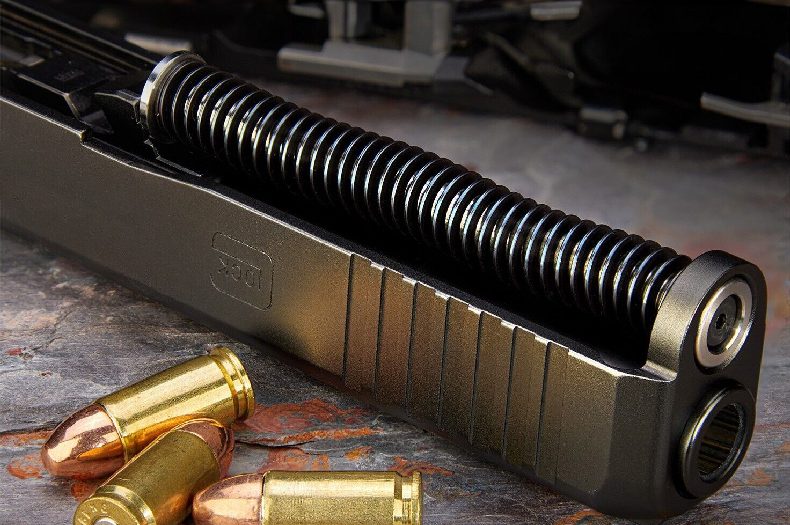
Guide Rod: Recoil Spring Support

The guide rod is a component that provides stability and precise guidance for the recoil spring assembly. It ensures smooth, consistent operation of the slide and helps maintain uniform spring pressure during the complete firing cycle. Some pistols feature captured guide rod assemblies, which combine the guide rod and recoil spring into a single integrated unit for easier disassembly and reassembly procedures.

Revolver Anatomy: Classic Handgun Design

Revolvers, with their iconic rotating cylinder mechanism, possess a unique set of components that distinguish them from semi-automatic pistols. Let's explore the specialized parts that comprise these classic, time-tested handguns.

Cylinder: The Ammunition Chamber Assembly

The cylinder is arguably the most distinctive and recognizable feature of a revolver. It's the rotating component that holds the ammunition, typically containing five to eight individual chambers, each holding one complete round of ammunition.

Ejector Rod: Spent Case Removal

The ejector rod is utilized to remove spent cartridges from the cylinder chambers. When pushed or activated, it engages the extractor mechanism, which simultaneously lifts all cartridges (spent or unfired) out of the cylinder for easy removal.

Cylinder Release: Cylinder Access Mechanism

This is a latch or button that, when activated, allows the cylinder to swing out laterally from the frame for loading, unloading, or cleaning procedures.

Crane: Cylinder Support Arm

The crane is the structural arm that the cylinder swings out on, allowing you to load and unload the revolver efficiently. It's a critical component that ensures proper alignment of the cylinder with the barrel and frame when the revolver is closed and ready to fire. The crane is attached to the frame and supports the complete weight of the cylinder, allowing it to pivot smoothly for easy access to the chambers.

Yoke: Cylinder Connection Point

The yoke, also known as the crane yoke or cylinder yoke, is part of the cylinder assembly that connects the cylinder to the crane. It supports the cylinder and allows it to rotate freely when the revolver is closed and the trigger is pulled. The yoke plays a crucial role in maintaining proper timing and precise alignment of the cylinder with the barrel and frame for safe, accurate operation.

Rifle Components and Mechanisms

Rifles are long guns specifically designed for accuracy and precision at extended ranges. They come in various types and action styles, from bolt-action to semi-automatic platforms. Let's break down the components that comprise a rifle in comprehensive detail.

Butt Stock: Shoulder Interface

This is the rear portion of the stock that rests firmly against your shoulder when firing. It often includes a butt plate or recoil pad to help manage and dissipate the rifle's recoil energy, improving shooter comfort and control.

Bolt: Cartridge Handling Mechanism

The bolt is a crucial component in many rifle actions, particularly in bolt-action rifle designs. It's responsible for loading a cartridge into the chamber, sealing the chamber during firing to contain pressure, extracting the spent cartridge case, and ejecting it from the rifle. The bolt typically consists of several integrated parts, including the bolt body, bolt handle, extractor, ejector, and firing pin. In semi-automatic rifles, the bolt may be part of a larger bolt carrier group assembly.

Gas System: Semi-Automatic Operation

In semi-automatic rifle designs, the gas system harnesses a portion of the high-pressure propellant gas from the fired cartridge to cycle the action automatically. This system typically includes a gas port drilled in the barrel, a gas block to redirect the gas, and either a gas tube (as in direct impingement systems like the AR-15) or a gas piston (as in piston-driven systems). The gas system is responsible for driving the bolt carrier rearward, which in turn extracts and ejects the spent cartridge case and chambers a fresh round from the magazine.

Handguard/Forend: Forward Grip Area

The handguard, also known as the forend, is the component of the rifle that surrounds and protects the barrel, providing a designated place to grip the rifle with the support hand. It serves multiple critical purposes: protecting the shooter's hand from the intense heat generated by the barrel during firing, providing a mounting surface for accessories such as lights, lasers, and vertical grips (in the case of railed handguards), and, in some precision designs, contributing to the overall accuracy of the rifle by minimizing barrel vibration and harmonics. Guns Parts Store stocks a wide variety of aftermarket handguards and forends.

Shotgun Parts and Features

Shotguns, another category of long guns, are versatile firearms known for their ability to fire multiple projectiles simultaneously or single large slugs. Let's break down the key components of a typical shotgun in detail.

Stock: The Shoulder Mount

Similar to rifles, the shotgun stock is the component you hold and shoulder when firing. It can be manufactured from traditional wood, modern polymer materials, or composite materials, each offering different characteristics in terms of weight, durability, and aesthetics.

Forend: Forward Grip

The forend is the forward portion of the stock that you grip with your non-trigger hand for control and stability. In pump-action shotgun designs, the forend slides back and forth along the magazine tube to manually cycle the action, ejecting spent shells and chambering fresh ones.

Cap/Latch: Forend Retention

Known as a magazine cap on most pump-action and semi-automatic shotguns, or a forend latch on break-action designs, this is the component that secures the forend to the gun and, in the case of magazine caps, also retains the magazine spring and follower.

Comb: Cheek Rest

The comb is the top portion of the stock where you rest your cheek when aiming, providing consistent eye alignment with the sights or rib. Proper comb height is crucial for accurate shooting.

Butt: Recoil Interface

The butt is the rear terminus of the stock that rests against your shoulder during firing. It often includes a recoil pad constructed of rubber or other shock-absorbing material to help absorb and dissipate the substantial recoil energy generated by shotgun shells.

Forcing Cone: Transition Area

This is the tapered section at the rear of the barrel that helps guide the shot charge smoothly from the chamber into the main barrel bore, reducing deformation of the shot pellets and improving pattern performance.

Choke: Pattern Control

The choke is a constriction at the muzzle end of the barrel that controls the spread pattern of the shot pellets. Chokes can be fixed (permanently installed) or interchangeable (screw-in), allowing for different shot patterns ranging from tight (full choke) to wide (cylinder bore), depending on the shooting application. Guns Parts Store offers an extensive selection of choke tubes for all major shotgun brands.

Rib: Sighting Plane

Many shotguns feature a raised rib along the top of the barrel, which provides a flat, elevated sighting plane and can help reduce glare and heat mirage during extended shooting sessions.

Magazine Tube: Shell Storage

The magazine tube is a tubular magazine located beneath the barrel in pump-action and semi-automatic shotgun designs. It stores additional shells, typically in a spring-loaded stack, ready to be fed into the action. The capacity of the magazine tube can vary depending on the shotgun model, barrel length, and local regulations. Some tactical shotguns may feature detachable box magazines instead of or in addition to a traditional magazine tube.

Lifter/Carrier: Shell Positioning Mechanism

The lifter, also known as the carrier, is a crucial component in pump-action and semi-automatic shotgun designs. It's responsible for raising the shell from the magazine tube and positioning it in precise alignment with the chamber. As the action is cycled, either manually in a pump-action or automatically in a semi-automatic, the lifter elevates the shell, allowing it to be pushed into the chamber by the bolt for firing.

Why Understanding Firearm Components Matters

Comprehensive knowledge of firearm anatomy provides numerous practical benefits for gun owners and enthusiasts:

Enhanced Safety Practices

Understanding how each component functions and interacts allows you to identify potential malfunctions, recognize when something isn't operating correctly, and handle firearms more safely in all situations.

Improved Maintenance Capabilities

Knowing the names and functions of each part enables you to properly clean, lubricate, and maintain your firearms, extending their service life and ensuring reliable operation when you need it most.

Better Purchasing Decisions

When you understand firearm components, you can make more informed decisions when purchasing new firearms or replacement parts, ensuring you select equipment that truly meets your specific needs and preferences.

Enhanced Shooting Performance

Understanding how components like triggers, sights, and actions work allows you to optimize your shooting technique and potentially upgrade components to improve your firearm's performance characteristics.

Effective Communication

Knowing proper terminology allows you to communicate effectively with gunsmiths, instructors, and other firearms enthusiasts, facilitating better learning and problem-solving.

Conclusion

Understanding the intricate components of firearms is an essential, foundational step in becoming a knowledgeable, responsible, and effective firearm owner. Whether you're interested in semi-automatic pistols, classic revolvers, precision rifles, or versatile shotguns, each type of weapon possesses its unique set of components that work together in harmony to create a functional, reliable, and effective firearm.For further education on the comprehensive terminology and language of the firearms world, explore additional resources on firearm nomenclature and operational principles to expand your knowledge base as a newcomer to the shooting sports.By thoroughly familiarizing yourself with firearm component names and their specific functions, you're not only enhancing your overall technical knowledge but also dramatically improving your ability to handle firearms safely, efficiently, and responsibly. This comprehensive understanding can help you make informed, intelligent decisions when choosing a firearm for any purpose, assist in proper maintenance and troubleshooting procedures, and contribute to significantly better shooting performance and accuracy.Guns Parts Store is your premier destination for all firearm components, replacement parts, accessories, and upgrades. Whether you need a replacement barrel, trigger assembly, magazine, or any other component, our extensive inventory and knowledgeable staff are here to assist you. We carry parts for all major firearm manufacturers and platforms, ensuring you can find exactly what you need to maintain, repair, or upgrade your firearms.Visit Guns Parts Store today to browse our comprehensive selection of firearm parts and accessories, or contact our expert staff for personalized assistance in finding the perfect components for your specific needs.Important Legal Disclaimer:This article is provided for informational and educational purposes only. Any activity involving firearms is inherently dangerous and could potentially result in property damage, serious injury, permanent disability, or death. All firearms must be handled in a responsible, safe manner and in strict accordance with all applicable federal, state, and local laws and regulations. Always follow the manufacturer's instructions and safety guidelines. The author and Guns Parts Store disclaim any responsibility for the accuracy, misuse of, or misinterpretation of information contained in this article. Always seek professional instruction and training before handling firearms. 
What Is a Ghost Gun? Your Complete Guide to Privately Made Firearms

What Is a Ghost Gun? Your Complete Guide to Privately Made Firearms

What Is a Ghost Gun? Your Complete Guide to Privately Made Firearms

Table of Contents

  • What Defines a Ghost Weapon?
  • Ghost Gun Legality Across the United States
  • Can Law Enforcement Trace Ghost Guns?
  • Manufacturing Methods for Ghost Guns
  • Reliability and Longevity of 3D-Printed Firearms
  • Federal Regulations and Compliance Requirements
  • State-Level Restrictions and Variations
  • Safety Considerations for Homemade Firearms
  • Final Thoughts and Key Takeaways
Whether you're a firearms enthusiast, hobbyist gunsmith, or simply someone who follows current events and legislative developments, you've undoubtedly encountered the term "ghost gun" in recent years. This terminology has become increasingly prevalent in media coverage, political discourse, and law enforcement discussions. However, despite the dramatic nomenclature, which might conjure images of supernatural weaponry or science fiction equipment, the reality of ghost guns is far more grounded and nuanced than sensationalized headlines might suggest.So what exactly constitutes a "ghost gun," and what are the legal parameters surrounding their manufacture and ownership?Ghost guns represent a category of homemade firearms constructed by individuals rather than licensed commercial manufacturers. These weapons can be assembled through various methods: utilizing comprehensive build kits, employing 3D printing technology, or acquiring individual components separately from multiple sources. The defining characteristic that earned these firearms their evocative nickname is that they're frequently unserialized and unregistered, creating significant challenges for law enforcement agencies attempting to trace their origins, ownership history, or chain of custody (hence the designation "ghost gun").While the construction of personal firearms is generally permissible under federal law, numerous regulations, restrictions, and compliance requirements must be meticulously observed. These legal parameters can vary substantially depending on your geographical location, the specific construction methods employed, the type of firearm being manufactured, and your individual legal status regarding firearm ownership.Throughout this comprehensive guide, we'll thoroughly examine what legally constitutes a ghost gun, explore the various manufacturing methodologies available to builders, discuss the complex legal landscape governing these weapons at both federal and state levels, address traceability concerns, and evaluate the reliability and safety considerations associated with homemade firearms.Important Legal Disclaimer: While our objective is to provide accurate, factual information based on current regulations and industry knowledge, this article serves educational and informational purposes exclusively. Gun Parts Store and the authors of this content are not legal professionals, attorneys, or authorized legal advisors. Furthermore, firearms laws are subject to frequent modifications, amendments, and reinterpretations at the federal, state, and local levels. Before undertaking any firearm construction project, you must independently research and verify all applicable federal, state, and local regulations directly through official government sources or by consulting with a qualified attorney specializing in firearms law. Compliance with all applicable laws is solely your responsibility, and failure to do so can result in severe criminal penalties, including substantial fines and imprisonment.

What Defines a Ghost Weapon?

In straightforward terms, ghost guns, officially classified as "privately made firearms (PMFs)" by the Bureau of Alcohol, Tobacco, Firearms, and Explosives (ATF), are firearms manufactured by any individual or entity other than a federally licensed weapons manufacturer. The colloquial term "ghost guns" emerged because these firearms have historically not been required to bear serial numbers or undergo registration processes, rendering them extraordinarily difficult for law enforcement agencies to track through traditional investigative methods.
What Is a Ghost Gun? Your Complete Guide to Privately Made Firearms

What Is a Ghost Gun? Your Complete Guide to Privately Made Firearms

The ATF provides the following official definition for privately made firearms:Official Ghost Gun Definition: "Privately made firearms are firearms (including a frame or receiver) that have been completed, assembled, or otherwise produced by a person other than a licensed manufacturer. PMFs are also made without a serial number placed by a licensed manufacturer at the time the firearm was produced."This definition, while legally precise, encompasses a remarkably broad spectrum of firearms and firearm components, particularly when addressing the technical and legal question of what precisely constitutes a "firearm" under federal law. To provide greater clarity and establish more specific regulatory categories, the ATF has identified ten distinct classifications of privately made firearms: pistols, revolvers, rifles, shotguns, frames or receivers, machine gun conversion devices (MCDs), destructive devices, machine guns, firearm silencers, and a catch-all category designated as "all other weapons."The legality of manufacturing and possessing each of these categories varies significantly. While numerous types of privately made firearms are entirely legal to construct and own under federal law (provided all applicable regulations are followed), others are strictly prohibited without specialized federal licensing, tax stamps, or other regulatory approvals. Additionally, state and local jurisdictions frequently impose their own restrictions, prohibitions, or additional requirements that may be more stringent than federal regulations. Consequently, thorough research into the specific laws applicable to your location and circumstances is essential before commencing any firearm construction project.

Ghost Gun Legality Across the United States

Understanding the intricate legal framework governing ghost guns should be your absolute highest priority if you're contemplating building one, considering purchasing components for one, or simply wish to engage in informed, educated discussions about this controversial topic. The legal landscape is complex, multilayered, and subject to ongoing evolution through legislative action and regulatory interpretation.A common misconception, often perpetuated through incomplete media coverage or political rhetoric, is that ghost guns exist in a completely unregulated legal vacuum. This belief is fundamentally incorrect and potentially dangerous for anyone acting upon it. At the federal level, homemade firearms are indeed legal to manufacture and possess for personal use under specific circumstances. However, this general permission does not grant blanket authorization to construct any type of weapon, using any methodology, in any location throughout the country, or by any individual, regardless of their legal status.Multiple federal statutes and regulatory agencies govern firearm manufacturing broadly, including the Gun Control Act of 1968, the National Firearms Act of 1934, and the Undetectable Firearms Act of 1988. These comprehensive legislative frameworks apply equally to ghost guns and traditionally manufactured firearms. Furthermore, state-level regulations, which vary dramatically from jurisdiction to jurisdiction, may impose additional restrictions, requirements, or outright prohibitions that supersede or supplement federal law.

Federal Legal Requirements and Restrictions

So what specific activities are legally permissible, and what actions cross the line into criminal conduct?Personal Legal Eligibility: First and foremost, to lawfully manufacture a privately made firearm, you must be an individual who is legally permitted to possess firearms in the first place. Federal law prohibits certain categories of individuals from possessing firearms or ammunition under any circumstances. These prohibited persons include: convicted felons, individuals with active domestic violence restraining orders, persons convicted of misdemeanor domestic violence offenses, unlawful users of or persons addicted to controlled substances, illegal aliens and non-immigrant visa holders (with limited exceptions), fugitives from justice, individuals who have been involuntarily committed to mental institutions or adjudicated as mentally defective, persons dishonorably discharged from the armed forces, and individuals who have renounced their United States citizenship.Weapon Type Restrictions: You must also ensure that the specific type of firearm you intend to manufacture is legal to own in your jurisdiction. Certain weapon categories, including machine guns (fully automatic firearms), short-barreled rifles (rifles with barrels shorter than 16 inches or overall length less than 26 inches), short-barreled shotguns (shotguns with barrels shorter than 18 inches or overall length less than 26 inches), destructive devices (including explosive ordnance and firearms with bores exceeding .50 caliber with limited exceptions), and suppressors (silencers), are heavily regulated under the National Firearms Act. These NFA items generally require registration with the ATF, payment of a $200 tax stamp, submission of fingerprints and photographs, and approval through an extensive background check process that can take many months.Some NFA items, particularly machine guns manufactured after May 19, 1986, are completely prohibited for civilian ownership regardless of the licensing or registration process. Before undertaking any firearm construction project, you must thoroughly understand which weapons fall under NFA regulation and comply with all applicable requirements. State laws may impose even more restrictive limitations on these and other firearm types.Detectability Requirements: It's critically important to understand the legal distinction between an "untraceable" firearm (one that is unserialized and unregistered) and an "undetectable" firearm (one that does not contain sufficient metal content to be identified by standard security screening equipment). Under the Undetectable Firearms Act of 1988, undetectable firearms are strictly prohibited at the federal level. Specifically, any firearm that walk-through metal detectors cannot detect or that doesn't generate an accurate image when subjected to airport X-ray machines is illegal to manufacture, possess, transfer, or receive.This means that any homemade firearm must contain at least 3.7 ounces of steel in a configuration that accurately represents the shape of a firearm when subjected to X-ray examination. Practically speaking, this requirement means that firearms cannot be constructed entirely from plastic, polymer, or other non-metallic materials. At a minimum, metal components such as barrels, firing pins, and other structural or functional elements must be incorporated into the design.Serialization and Registration Requirements: At the federal level, current regulations do not require individuals manufacturing firearms solely for personal use to mark those firearms with serial numbers, provided the firearms are genuinely intended for personal use and not for sale or distribution. However, this exemption is narrow and specific. If you are engaged in the business of manufacturing firearms for sale or profit, even occasionally or on a small scale, you are legally required to obtain a Federal Firearms License (FFL), mark all firearms with serial numbers according to ATF specifications, maintain detailed manufacturing and disposition records, and comply with all regulations applicable to licensed manufacturers.The determination of whether someone is "engaged in the business" of manufacturing firearms is fact-specific and considers factors including the frequency of sales, the builder's representations and marketing efforts, whether the activity is undertaken for profit, and the scale of operations. Even a single sale under certain circumstances could potentially trigger licensing requirements if it demonstrates intent to engage in business activities.Buy-Build-Shoot Kit Regulations: So-called "buy-build-shoot" kits, which are pre-packaged kits containing all or substantially all of the components (including a finished frame or receiver) necessary to assemble a functional firearm, are subject to specific regulations implemented in 2022. Because finished frames and receivers are now definitively classified as "firearms" under ATF regulations, sellers of these components and kits containing these components are required to possess a Federal Firearms License, conduct background checks on purchasers through the National Instant Criminal Background Check System (NICS), mark the frames or receivers with serial numbers, and maintain permanent records of these transactions exactly as they would for any fully assembled firearm.This regulatory change significantly impacted the availability and distribution of complete firearm kits and was specifically designed to close what regulators viewed as a loophole allowing individuals to acquire what were essentially complete firearms without background checks or serialization.

State-Level Restrictions and Variations

While federal law establishes a baseline regulatory framework applicable throughout the United States, individual states possess substantial authority to enact their own firearms regulations, which may be significantly more restrictive than federal requirements. Some states have implemented comprehensive ghost gun regulations that go far beyond federal law.States with Enhanced Ghost Gun Regulations: Several states, including California, Connecticut, Delaware, Hawaii, Maryland, Nevada, New Jersey, New York, Rhode Island, Washington, and the District of Columbia, have enacted specific legislation targeting privately made firearms. These laws vary in their specific provisions but commonly include requirements such as:
  • Mandatory serialization of all privately made firearms, even those manufactured for personal use
  • Registration of homemade firearms with state law enforcement agencies
  • Background checks are required before purchasing firearm parts or build kits
  • Prohibitions on possessing unserialized firearms, even if they were legally manufactured before serialization requirements took effect
  • Enhanced penalties for crimes committed with ghost guns
  • Restrictions on 3D printing firearm components
  • Limitations on the sale or transfer of homemade firearms
Importance of Local Compliance: Regardless of federal law, you must research and comply with all state and local regulations applicable to your specific location. Laws can vary not only between states but also between counties and municipalities within the same state. Some jurisdictions that generally permit firearm ownership may have specific ordinances restricting homemade firearms or certain construction methods.The legal landscape surrounding privately made firearms continues to evolve rapidly, with new legislation regularly proposed and enacted at the state and local levels. What may be legal in your jurisdiction today could become prohibited tomorrow, making ongoing awareness of legal developments essential for anyone involved in firearm construction or ownership.Legal Responsibility and Consequences: No matter what type of weapon you're manufacturing or what construction method you're employing, it is exclusively your responsibility to verify that you are operating within the bounds of all applicable laws. Ignorance of the law is not a defense to criminal prosecution. Violations of federal firearms laws can result in severe penalties, including imprisonment for up to ten years or more for certain offenses, substantial monetary fines reaching hundreds of thousands of dollars, permanent loss of firearm ownership rights, and creation of a permanent criminal record that can impact employment, housing, professional licensing, and numerous other aspects of life.Given the complexity of firearms law and the severity of potential consequences for violations, consulting with an attorney who specializes in firearms law before undertaking any firearm construction project is strongly advisable, particularly if you have any questions about the legality of your planned activities or your eligibility to possess firearms.

Can Law Enforcement Trace Ghost Guns?

By their fundamental nature and defining characteristics, ghost guns are firearms that are unregistered, unserialized, and unmarked at the time of their initial manufacture. This lack of traditional identifying information makes them extraordinarily difficult for law enforcement agencies to trace through conventional investigative methods. However, contrary to popular belief and media portrayals, tracing these firearms is not entirely impossible under all circumstances, depending on the specific facts of each case and the investigative resources available.Historical Context and Traditional Practices: The practice of manufacturing firearms at home represents a longstanding American tradition that predates the establishment of the United States itself. For centuries, gunsmiths, hobbyists, and firearm enthusiasts have crafted custom weapons for personal use, competition shooting, hunting, collecting, and simple enjoyment of the craft. This tradition is deeply rooted in American culture and is protected, to varying degrees, by the Second Amendment to the United States Constitution.However, the "untraceable" nature of these weapons has unfortunately made them increasingly appealing to certain criminal elements seeking to avoid the background check requirements, waiting periods, and paper trails associated with purchasing firearms through licensed dealers. Criminals prohibited from legally possessing firearms due to prior convictions, active warrants, or other disqualifying factors may view ghost guns as an attractive alternative to illegal straw purchases or black market acquisitions.Rising Recovery Rates and Law Enforcement Concerns: Statistical data compiled by the ATF demonstrates that incidents of privately made firearms being recovered at crime scenes and submitted to the Bureau for tracing have increased substantially since 2017. According to official ATF reports, this upward trend reflects both an actual increase in criminal use of these weapons and enhanced awareness and reporting of ghost guns by law enforcement agencies that have been specifically trained to identify and document these firearms.The rise in ghost gun recoveries has prompted intense debate among policymakers, law enforcement officials, gun rights advocates, and gun control proponents. This debate has resulted in significant legislative and regulatory changes at both federal and state levels, with supporters of enhanced regulation arguing that increased oversight is necessary to prevent criminal access to untraceable weapons, while opponents contend that such regulations infringe upon the constitutional rights of law-abiding citizens and do little to prevent determined criminals from obtaining weapons through illegal channels.2022 Regulatory Changes: In response to concerns about ghost gun traceability, the ATF implemented significant regulatory changes in 2022 that fundamentally altered the legal landscape for certain types of privately made firearms. Under these new regulations, finished frames and receivers are now definitively classified as "firearms" under federal law, even if they have not yet been assembled into complete, functional weapons.This classification change means that individuals and businesses selling finished frames or receivers, as well as kits containing these components, are now required to possess Federal Firearms Licenses, mark these components with serial numbers according to ATF specifications, conduct background checks on all purchasers, and maintain permanent acquisition and disposition records. These requirements were specifically designed to create a paper trail that would enable law enforcement to trace firearms even when they were assembled from kits or purchased components.Alternative Manufacturing Methods: Despite these regulatory changes, alternative methods for manufacturing ghost guns that do not require the purchase of finished frames or receivers continue to exist. Builders can still purchase unfinished frames or receivers (commonly known as "80% lowers" or "80% frames") that require additional machining, drilling, and finishing work to become functional firearm components. Because these unfinished components are not yet legally classified as firearms, they can generally be purchased without background checks, serial numbers, or FFL involvement (though some states have enacted specific regulations governing these items).Additionally, individuals with access to 3D printing technology, CNC milling equipment, or traditional metalworking tools can manufacture frames, receivers, and other firearm components entirely from raw materials without purchasing any regulated parts. These manufacturing methods require significantly more technical knowledge, specialized equipment, time, and effort compared to simply purchasing a complete kit, but they remain legally available to individuals who are not otherwise prohibited from possessing firearms.Investigative Techniques for Tracing Ghost Guns: While ghost guns lack the serial numbers that enable traditional firearm tracing through ATF databases, law enforcement agencies have developed alternative investigative techniques that can sometimes identify the origins, builders, or previous possessors of these weapons. These methods include:
  • Forensic examination of tool marks, manufacturing defects, and unique characteristics that may link a weapon to specific equipment or manufacturing locations
  • Analysis of digital evidence, including computer files, internet search histories, and online purchase records that may reveal firearm construction activities
  • Examination of 3D printer files, CNC machine programs, and CAD designs that may be stored on electronic devices
  • Tracing of component purchases through credit card records, shipping information, and retailer records
  • Analysis of fingerprints, DNA evidence, and other biological material that may be present on firearm components
  • Surveillance footage from retailers, shipping facilities, or other locations where components were purchased or received
  • Witness testimony and informant information regarding firearm construction activities
  • Social media posts, videos, or photographs depicting firearm construction or possession
While these investigative techniques can be effective in specific cases, they are generally more time-consuming, resource-intensive, and less reliable than traditional serial number tracing, which can often be accomplished in minutes through ATF databases.

Manufacturing Methods for Ghost Guns

Homemade firearms can be constructed through a diverse array of methodologies, techniques, and approaches. The specific process for manufacturing a ghost gun depends on numerous factors, including what type of firearm you're building, how you're sourcing your components, what tools and equipment you have available, your technical skill level, and your budget constraints.Basic Firearm Components: Regardless of the specific model or type, most firearms require the same fundamental components, though the exact parts and their configurations differ depending on whether you're constructing a pistol, rifle, shotgun, or other firearm type. Basic components typically include:
  • Frame or receiver (the serialized component that is legally considered the "firearm")
  • Barrel
  • Trigger mechanism and fire control group
  • Bolt or slide assembly
  • Magazine or ammunition feeding device
  • Grip or stock
  • Sights or optics mounting systems
  • Various springs, pins, and small parts
The quality, compatibility, and proper assembly of these components are critical to creating a safe, functional, and reliable firearm.Sourcing Components and Materials: When considering what materials and components are used in ghost gun construction, builders have several options for sourcing parts:Complete Build Kits: Many manufacturers and retailers offer comprehensive firearm build kits that contain all or most of the components necessary to assemble a complete, functional weapon. These kits are popular among builders because they ensure component compatibility, eliminate the need to source individual parts from multiple suppliers, and often include detailed assembly instructions or video tutorials.According to industry sources and retailers like Gun Parts Store, several categories of build kits are available in the marketplace:Complete Kits with Finished Receivers: These kits include every component necessary to build a firearm, including a finished, serialized frame or receiver. Because the finished frame or receiver is legally classified as a firearm, these kits must be purchased through a Federal Firearms License holder, require a background check, and are subject to all regulations applicable to complete firearms. The primary advantage of these kits is that they require minimal additional work or specialized tools, as the most technically challenging component (the frame or receiver) is already completed.80% Kits: These popular kits contain all necessary components to build a complete firearm, including an unfinished frame or receiver that is approximately 80% complete (hence the name). Because the frame or receiver is not yet finished to the point where it can function as part of a firearm, it is not legally classified as a firearm under federal law and can generally be purchased without a background check or FFL involvement (subject to state law variations).The remaining 20% of the manufacturing process is left to the builder, who must perform additional machining operations, including drilling holes for pins, milling out the fire control pocket, and other modifications necessary to make the frame or receiver functional. This work can be accomplished at home using drill presses, milling machines, router jigs, or specialized 80% jig systems designed to guide the builder through the process.The appeal of 80% kits lies in the combination of convenience (all parts are included and guaranteed to be compatible) and the ability to complete the firearm without background checks or serialization requirements under federal law. However, these kits require more technical skill, specialized tools, and time investment compared to kits with finished receivers.Parts Kits Without Receivers: Some kits include all components necessary to build a firearm except the frame or receiver. Builders purchasing these kits must separately acquire a frame or receiver, either by purchasing a finished, serialized component through an FFL, purchasing an unfinished 80% component, or manufacturing the frame or receiver themselves through 3D printing, CNC machining, or traditional fabrication methods.Individual Component Purchases: Instead of purchasing complete kits, some builders prefer to source individual components separately from various manufacturers, retailers, and suppliers. This approach offers maximum flexibility in terms of component selection, quality levels, and customization options, but requires more extensive knowledge of firearm design, component compatibility, and specifications.Gun Parts Store and similar retailers offer extensive inventories of individual firearm components, including barrels, triggers, slides, bolts, springs, pins, and countless other parts for virtually every popular firearm platform. This approach is particularly popular among experienced builders who are constructing custom firearms with specific performance characteristics or aesthetic preferences.3D Printing Technology: The emergence of affordable, consumer-grade 3D printing technology has revolutionized the landscape of homemade firearms by enabling individuals to manufacture complex firearm components at home using plastic filaments and digital design files. Numerous firearm designs, component models, and complete weapon systems have been developed by the 3D printing community and are available for download through various online repositories and forums.However, it's critical to understand that creating a truly safe, functional, and legal firearm using 3D printing technology is not as simple as downloading a file and pressing "print." Successful 3D printed firearms require careful material selection, optimal print settings, post-processing techniques, and, most importantly, the integration of metal components for structural integrity, functionality, and legal compliance with detectability requirements.Hybrid Approaches: Many builders employ hybrid approaches that combine 3D printed components with traditionally manufactured metal parts. For example, a builder might 3D print a frame or receiver while using commercially manufactured metal barrels, bolts, firing pins, and other critical components. This approach balances the customization and cost advantages of 3D printing with the strength, durability, and reliability of metal components.Traditional Fabrication Methods: Before the advent of 3D printing and readily available component kits, gunsmiths and hobbyists manufactured firearms using traditional metalworking techniques, including milling, turning, drilling, welding, and heat treating. These methods require substantial skill, expensive equipment, and extensive knowledge of metallurgy, but can produce firearms of exceptional quality that rival or exceed commercially manufactured weapons.Some dedicated craftsmen continue to employ these traditional methods, viewing firearm construction as a form of artistic expression and skilled craftsmanship rather than simply a means to acquire a functional weapon.

Reliability and Longevity of 3D-Printed Firearms

A 3D-printed firearm is one that was manufactured wholly or partially using additive manufacturing technology (3D printing). These weapons are indeed operational and capable of firing ammunition, but their reliability, durability, and longevity vary dramatically compared to traditionally manufactured firearms or even ghost guns assembled from quality metal components.Lifespan Variability: The operational lifespan of 3D-printed firearms can range from as few as a single round to several thousand rounds, depending on numerous interconnected factors. Firearms constructed primarily from plastic materials typically have significantly shorter lifespans than those incorporating substantial metal components. Variables affecting longevity include:
  • The percentage of the firearm that was 3D printed versus manufactured from metal
  • The specific firearm model and design (some designs distribute stress more effectively than others)
  • The caliber and power level of ammunition used (higher-pressure cartridges cause more stress and wear)
  • Print quality, including layer adhesion, infill density, and absence of defects
  • Build quality and assembly precision
  • CAD design optimization and engineering considerations
  • Filament material selection (different plastics have vastly different strength and temperature resistance properties)
  • Post-processing techniques, such as annealing, can significantly enhance the strength
  • Environmental factors, including temperature, humidity, and UV exposure
  • Usage patterns, maintenance practices, and storage conditions
Material Limitations: It's essential to understand that completely 3D-printed firearms, in which every single component is manufactured from plastic materials, are not viable long-term functional weapons according to technical analyses and real-world testing documented by industry publications and firearms testing organizations. At an absolute minimum, a metal barrel liner or tube is required to prevent catastrophic failure when the firearm is discharged.When a cartridge is fired, it generates extreme pressures (often exceeding 50,000 PSI for rifle cartridges) and temperatures (reaching several thousand degrees Fahrenheit). Plastic materials simply cannot withstand these forces repeatedly without degradation, deformation, or catastrophic failure. A plastic barrel will typically fail after very few shots, potentially causing serious injury to the shooter.Most functional 3D-printed firearms incorporate several metal components beyond just the barrel, including firing pins, springs, bolts or breech blocks, and structural reinforcements. These metal parts serve multiple purposes: they provide structural integrity in high-stress areas, enable proper mechanical function, extend the firearm's operational lifespan, and ensure compliance with federal detectability requirements under the Undetectable Firearms Act.Technical Complexity: Creating a safe, functional 3D-printed firearm requires substantial technical knowledge spanning multiple disciplines, including mechanical engineering, materials science, firearms design principles, and 3D printing optimization techniques. It is not a simple matter of downloading a file and printing it without modifications or considerations.Successful builders must understand concepts such as stress distribution, material properties under dynamic loading, thermal management, pressure containment, and failure modes. They must optimize print settings, including layer height, infill patterns and density, print speed, temperature settings, and cooling parameters. Post-processing techniques such as annealing (controlled heating and cooling to relieve internal stresses and improve strength) can dramatically improve the strength and durability of printed components.The 3D-printed firearms community has developed increasingly sophisticated designs that incorporate engineering principles to maximize strength while minimizing material usage and print time. However, even the most advanced designs require careful execution and quality control to produce safe, functional results.Comparison to Other Homemade Firearms: While 3D-printed firearms represent an innovative and evolving technology, it's important to maintain realistic expectations about their performance relative to other types of homemade firearms. Ghost guns assembled from quality metal or polymer components purchased from reputable manufacturers can approach or match the reliability and longevity of factory-produced firearms when carefully built to specifications by knowledgeable builders.However, even these higher-quality homemade weapons are not guaranteed to be as reliable as firearms assembled by professional manufacturers using industrial equipment, quality control processes, and rigorous testing protocols. The reliability of any homemade firearm depends critically on the quality of components used, the precision of assembly, the builder's technical knowledge and attention to detail, and adherence to proven designs and specifications.Safety Considerations: The potential for malfunction, component failure, or catastrophic failure is inherently higher with homemade firearms compared to professionally manufactured weapons, particularly with 3D-printed designs. Malfunctions can range from minor issues like failure to feed or extract to dangerous failures such as case ruptures, barrel obstructions, or receiver failures that can cause serious injury.Anyone building or using a homemade firearm should take extensive safety precautions, including:
  • Thoroughly researching proven designs and following established build procedures
  • Using quality components from reputable suppliers
  • Carefully inspecting all parts for defects, damage, or wear before assembly
  • Following proper assembly procedures and torque specifications
  • Conducting function checks and safety inspections before live firing
  • Starting with low-pressure ammunition and gradually working up to full-power loads
  • Wearing appropriate safety equipment, including eye and hearing protection
  • Being prepared for potential malfunctions and knowing how to safely clear them
  • Regularly inspecting the firearm for signs of wear, damage, or degradation
  • Retiring components or complete firearms that show signs of excessive wear or damage
The bottom line is that homemade firearms, whether 3D-printed or assembled from purchased components, require substantial knowledge, careful attention to detail, quality components, and realistic expectations about performance and reliability. They should never be viewed as equivalent to professionally manufactured firearms in terms of reliability, safety, or longevity.
What Is a Ghost Gun? Your Complete Guide to Privately Made Firearms

What Is a Ghost Gun? Your Complete Guide to Privately Made Firearms

Safety Considerations for Homemade Firearms

Beyond legal compliance, safety should be the paramount concern for anyone involved in manufacturing, possessing, or using homemade firearms. The potential consequences of firearm malfunctions or failures can be severe, including serious injury or death to the shooter or bystanders.Design and Engineering Considerations: Safe firearm construction begins with selecting proven, well-engineered designs that have been tested and validated by the firearms community. Experimental or untested designs carry substantially higher risks of malfunction or failure. Reputable designs typically include detailed specifications, material requirements, and assembly instructions that should be followed meticulously.Component Quality: The quality of components used in firearm construction directly impacts safety and reliability. Components from reputable manufacturers like those available through Gun Parts Store are manufactured to specific tolerances and material specifications designed to ensure safe operation. Substandard components, particularly critical parts like barrels, bolts, and fire control components, can fail catastrophically under the stresses of firing.Proper Tools and Equipment: Attempting to manufacture or assemble firearms without appropriate tools and equipment increases the risk of errors, improper fit, and unsafe conditions. Precision measuring instruments, proper torque wrenches, and specialized gunsmithing tools are often necessary to ensure components are properly fitted and assembled to specifications.Testing and Inspection: Before firing any homemade firearm with live ammunition, thorough function testing should be conducted using dummy rounds or snap caps to verify that all mechanical functions operate correctly. Visual inspection of all components, particularly high-stress areas, should be performed regularly to identify signs of wear, cracking, or deformation.Some builders employ progressive testing protocols, starting with reduced-power loads and gradually increasing to full-power ammunition while carefully inspecting the firearm after each firing session. This approach can help identify potential problems before they result in catastrophic failures.Ongoing Maintenance: Homemade firearms may require more frequent inspection and maintenance compared to factory-produced weapons, particularly those incorporating 3D-printed components or operating at the limits of material capabilities. Regular cleaning, lubrication, and inspection for wear or damage are essential to maintaining safe operation.Knowledge and Training: Perhaps most importantly, anyone building or using homemade firearms should possess substantial knowledge of firearm operation, safety principles, and proper handling techniques. Formal training from qualified instructors, extensive research, and mentorship from experienced builders can help prevent dangerous mistakes and unsafe practices.

Final Thoughts and Key Takeaways

Ghost guns, privately made firearms, or homemade weapons, regardless of the terminology used, represent a complex intersection of constitutional rights, technological innovation, public safety concerns, and evolving legal frameworks. Understanding this multifaceted topic requires moving beyond sensationalized headlines and political rhetoric to examine the facts, laws, and practical realities surrounding these firearms.Legal Summary: At the federal level, manufacturing firearms for personal use is generally legal for individuals who are not prohibited from possessing firearms, provided that the weapons being manufactured are themselves legal to own and all applicable regulations are followed. However, this general permission is subject to numerous exceptions, restrictions, and requirements that vary based on the type of weapon being manufactured, the methods used, and the builder's location and legal status.Recent regulatory changes, particularly the 2022 ATF rule classifying finished frames and receivers as firearms, have significantly impacted the ghost gun landscape by requiring serialization, background checks, and FFL involvement for certain types of build kits and components. However, alternative manufacturing methods that do not involve purchasing finished frames or receivers remain available to builders willing to invest additional time, effort, and resources.State laws vary dramatically, with some jurisdictions imposing minimal additional restrictions beyond federal requirements while others have enacted comprehensive ghost gun regulations, including mandatory serialization, registration, and enhanced penalties. Anyone considering building a homemade firearm must research and comply with all applicable federal, state, and local laws, as violations can result in severe criminal penalties.Technical Summary: Homemade firearms can be manufactured through various method,s including assembling purchased components, using build kits, 3D printing parts, or traditional fabrication techniques. The reliability, safety, and longevity of these weapons depend critically on the quality of components used, the precision of assembly, the builder's technical knowledge, and adherence to proven designs.While quality homemade firearms assembled from metal components can approach the reliability of factory-produced weapons, 3D-printed firearms typically have shorter lifespans and higher failure rates, particularly those constructed primarily from plastic materials. All homemade firearms carry inherently higher risks compared to professionally manufactured weapons and require realistic expectations, extensive safety precautions, and ongoing maintenance and inspection.The Hobbyist Perspective: For many individuals, building firearms represents a rewarding hobby that combines mechanical skills, technical knowledge, and appreciation for firearms craftsmanship. The satisfaction of creating a functional weapon from individual components, the educational value of understanding firearm mechanics and operation, and the ability to customize weapons to specific preferences and requirements make firearm building an appealing pursuit for enthusiasts.Gun Parts Store supports the rights of law-abiding citizens to engage in this traditional American practice while emphasizing the critical importance of legal compliance, safety consciousness, and responsible ownership. Whether you're building your first firearm or you're an experienced gunsmith, we're committed to providing quality components, reliable information, and support for the firearms community.Moving Forward Responsibly: If you're considering building a homemade firearm, approach the project with appropriate seriousness, respect for the legal framework, and commitment to safety. Take time to thoroughly research applicable laws at all levels of government, consult with legal professionals if you have any questions about compliance, invest in quality components from reputable suppliers, follow proven designs and assembly procedures, and never compromise on safety considerations.The firearms community has a collective responsibility to demonstrate that homemade firearms can be manufactured and used responsibly by law-abiding citizens. By prioritizing legal compliance, safety, and responsible ownership, we can preserve this traditional practice while addressing legitimate public safety concerns.Resources and Support: Gun Parts Store is committed to supporting responsible firearm builders with quality components, reliable information, and exceptional customer service. Whether you're sourcing individual parts for a custom build, looking for a complete kit, or seeking advice on component compatibility and specifications, our knowledgeable team is here to assist you.Looking for a reliable, custom-fit holster for your completed build or any firearm in your collection? Visit our Holsters by Gun Model page to find premium Kydex holsters precisely tailored to your specific firearm model. Not sure which holster configuration is right for your needs and carry preferences? Take advantage of our interactive comparison tool to view different holster models side-by-side and filter options by specific features, carry positions, and attachment methods.Additionally, explore our comprehensive Resources Page for expert gear recommendations, detailed concealed carry guides, state-specific legal information, maintenance tutorials, and exclusive content designed to elevate your entire carry system and enhance your knowledge as a responsible firearm owner.Remember: This article provides general information for educational purposes only and should not be construed as legal advice. Laws governing firearms are complex, subject to change, and vary by jurisdiction. Always consult applicable laws directly and consider seeking guidance from a qualified attorney before undertaking any firearm-related activities. Your safety and legal compliance are your personal responsibility.Gun Parts Store is your trusted partner for quality firearm components, expert advice, and support for the responsible firearms community. Build responsibly, shoot safely, and carry confidently. 

The Complete Guide to Hybrid Holster Care and Maintenance

The Complete Guide to Hybrid Holster Care and Maintenance

The Complete Guide to Hybrid Holster Care and Maintenance

Hybrid holsters represent an exceptional choice for firearm enthusiasts seeking the optimal balance between comfort and longevity for everyday concealed carry applications. However, to ensure your holster continues to provide reliable service and protection, implementing a comprehensive maintenance routine is essential.When properly maintained and cared for, a premium hybrid holster will deliver outstanding performance for numerous years, even under the rigors of daily carry conditions. Regular conditioning of the leather components, combined with diligent cleaning and maintenance of both the thermoplastic shell and backing material, will significantly extend your holster's functional lifespan while preserving its aesthetic appeal.Throughout this comprehensive guide, we'll provide detailed instructions on the proper techniques for cleaning, storing, and performing routine maintenance on your hybrid holster. These proven methods will ensure your carry system continues functioning flawlessly while maintaining its professional appearance for years to come. At Gun Parts Store, we're committed to helping you get the most from your investment in quality carry gear.

Understanding Hybrid Holster Construction: What Makes Them Unique?

You're likely familiar with traditional Kydex holsters and classic leather holsters as standalone options. A hybrid holster ingeniously combines the best attributes of both materials into a single, superior carry solution. These innovative designs merge the exceptional security and precision retention of a molded Kydex shell with the unparalleled comfort and proven durability of a premium leather backing.
The Complete Guide to Hybrid Holster Care and Maintenance

The Complete Guide to Hybrid Holster Care and Maintenance

This distinctive combination has earned recognition as one of the most comfortable configurations available for concealed carry applications. The comfort advantage stems from multiple factors: the expansive leather backing offers natural flexibility that conforms to your body's contours, while the broader surface area effectively distributes your firearm's weight across a larger area, eliminating uncomfortable pressure points that plague narrower holster designs.While hybrid holsters can be manufactured using a Kydex shell paired with nylon or alternative synthetic backing materials, genuine leather remains the superior choice. Premium leather not only matches Kydex in durability and longevity but also provides superior comfort and develops a distinguished character over time that synthetic materials simply cannot replicate.

Premium Materials Make the Difference

At Gun Parts Store, we understand that exceptional holsters begin with exceptional materials. Quality hybrid holsters are crafted using premium 10- to 12-ounce cowhide or horsehide leather for the backing component. The finest horsehide backings utilize genuine Horween leather, which has established an unmatched reputation as the industry's gold standard—and for compelling reasons.Manufactured from full-grain leather featuring inherent moisture-resistance properties, Horween leather boasts a superior fiber structure that delivers enhanced natural durability. Additionally, it develops a stunning marbled appearance that becomes more distinguished with age, creating a unique aesthetic that sets it apart from conventional leather alternatives.The thermoplastic shell component of premium hybrid holsters is constructed from .080" Kydex® material. This lightweight yet remarkably durable semi-flexible thermoplastic undergoes precision heat-molding to create an exact fit for your specific firearm model. This custom-fit approach ensures your weapon remains completely safe and secure when holstered, providing the retention and protection that responsible concealed carry demands.

Comprehensive Hybrid Holster Care Instructions

Maintaining a hybrid holster in optimal condition requires dedicated attention to both of its primary components: the Kydex shell and the leather backing. Each material has unique care requirements that must be understood and implemented for maximum longevity.
The Complete Guide to Hybrid Holster Care and Maintenance

The Complete Guide to Hybrid Holster Care and Maintenance

Kydex Shell Maintenance and Cleaning

Caring for your holster's Kydex shell is remarkably straightforward, requiring minimal time and effort. For routine cleaning maintenance, simply wipe the shell's surface with a slightly dampened cloth to eliminate surface-level debris, dust, and residue. Exercise caution to avoid excessive contact with the leather backing during this process, as moisture can potentially damage the leather over time.Performing this simple cleaning procedure regularly serves multiple important purposes. It removes microscopic particles and debris that may have infiltrated the holster's interior, helping prevent gradual wear and potential damage to your firearm's finish. This preventive maintenance is far easier than addressing finish damage after it occurs.When confronting more visible dirt, grime, or stubborn residue, employ a soft cloth with lukewarm water and mild soap to wash your holster's Kydex shell thoroughly. Again, carefully avoid the leather backing during this process. After washing, ensure you dry the shell completely and thoroughly to prevent unsightly water spots from forming on the surface.For more intensive cleaning situations requiring deeper attention, utilize a short, stiff-bristled brush to gently scrub the shell with soapy water. Apply moderate pressure in circular motions to dislodge embedded debris, then rinse thoroughly under running water to remove all soap residue. Pat the shell dry immediately with a clean, absorbent cloth.Most mild detergents and general-purpose multipurpose cleaners perform admirably for Kydex cleaning applications. However, certain cleaning products can actually inflict more damage than benefit to thermoplastic materials and should be strictly avoided. Some chemicals can cause discoloration, surface degradation, or even structural weakening of the Kydex material. For a comprehensive list of recommended and prohibited cleaning products, consult the official guidelines provided by Kydex manufacturers.

Leather Backing Care and Preservation

The leather backing of your hybrid holster will deliver service life comparable to its Kydex shell when you implement proper care protocols. Fortunately, leather maintenance doesn't require extensive effort or specialized knowledge, just consistent attention to fundamental principles.Keeping leather clean and completely dry represents the single most critical factor in ensuring it maintains its integrity and appearance for years of reliable service. Moisture is leather's primary enemy, as it can cause the material to stiffen, crack, or develop mold and mildew in extreme cases.To clean your holster's leather backing effectively, simply wipe it down using a soft, dry cloth made from microfiber or a similar non-abrasive material. Avoid using soap, water, or other liquid cleaning products on the leather portion as much as practically possible. These substances can gradually degrade the leather's natural oils and protective properties, causing it to become brittle and crack over time. Once leather develops cracks, restoration options are extremely limited, and the damage is essentially permanent.

Leather Conditioning: Essential for Longevity

Applying a high-quality leather conditioner once every three to six months (with frequency adjusted based on usage patterns) should prove sufficient to maintain your holster's leather in excellent condition. The conditioning process is simple but important for long-term leather health.To properly condition your holster's leather backing, first ensure the leather surface is completely clean and dry. Any dirt or moisture present during conditioning can become trapped beneath the conditioner, potentially causing problems. Next, dispense a small amount of quality leather conditioner onto a soft cloth. Never apply conditioner directly to the leather surface, as this can result in uneven application and over-saturation.Rub the conditioner into the leather using gentle circular motions, working the product into the material's pores and grain structure. Allow adequate time for complete absorption, typically 15-30 minutes, depending on the conditioner formulation and leather type. Once the conditioner has been fully absorbed, take a clean, dry cloth and give the leather a quick buffing to remove any excess product and restore a subtle sheen.Leather conditioner serves multiple valuable purposes beyond simple maintenance. It's an excellent method for keeping your hybrid holster looking lustrous and professionally maintained, but it also represents the most effective approach for minimizing the appearance of marks or scratches in the leather while preventing new blemishes from forming. While conditioning won't make existing marks completely disappear, it allows you to smooth and blend them until they contribute to a unique and distinguished "patina" in the leather, a characteristic that many leather enthusiasts actually prize as evidence of a well-used, quality product.

Eliminating Squeaking Issues in Hybrid Holsters

When discussing leather products, squeaking noises are an unfortunately common occurrence, particularly when leather interfaces with metal hardware components. The friction between these materials during movement can create audible squeaks that prove quite irritating. Walking around with a persistent squeak accompanying your every step can be genuinely frustrating, and it certainly compromises the discretion that concealed carry is meant to provide.Fortunately, this common problem has a relatively simple and effective solution. Regularly conditioning your holster's leather backing, as described in the previous section, will substantially reduce the likelihood of squeaking by keeping the leather supple and reducing friction. The conditioner acts as a lubricant of sorts, allowing the leather to move more smoothly against metal components.If you continue experiencing squeaking issues even after implementing a regular conditioning schedule, we recommend applying a modest amount of unscented baby powder to any problematic areas. Focus particularly on locations behind the metal clips or surrounding the hardware attachment points, as these areas typically generate the most friction. The powder acts as a dry lubricant, filling microscopic gaps and reducing the friction that causes squeaking sounds. This simple intervention should help restore the silence and your sanity during daily carry.

Optimal Cleaning Frequency for Hybrid Holsters

If you're wondering about the ideal frequency for cleaning your hybrid holster, the straightforward answer is "whenever it appears dirty or has been exposed to contaminants." However, the more detailed answer, and likely the information you're seeking, is that with regular daily use, you should perform a thorough wipe-down of your holster at minimum once monthly.A more comprehensive inspection and deep cleaning should be conducted every three to four months, or more frequently as circumstances dictate. If you utilize your holster every single day for extended periods, you'll likely discover that regular maintenance is required more often than if you wear it only occasionally or intermittently.Certain environmental conditions and usage scenarios may necessitate more frequent cleaning intervals as well. If you reside in a hot or humid climate, for example, a weekly cleaning regimen may prove necessary during the summer months when perspiration and moisture exposure increase dramatically. The same principle applies to individuals who carry in grittier work environments or outdoor situations where dirt, dust, sand, and debris may regularly contact their holster.When left dirty and unattended, accumulated grime can act as an abrasive compound, rubbing against your firearm's finish and causing unnecessary wear, scratches, or even corrosion over time. This type of damage is entirely preventable through regular cleaning, making it well worth the minimal time investment required.

Performing Routine Maintenance and Repairs on Hybrid Holsters

It's relatively uncommon for a well-constructed hybrid holster to require any significant maintenance or repairs. However, occasionally you may need to replace a worn screw, switch out a belt clip for a different carry configuration, buff out a scratch or scuff mark in the leather backing, or make other minor repairs to keep your holster performing at its absolute best.At Gun Parts Store, we offer a wide variety of replacement parts and accessories that you can use to upgrade, customize, or replace the current hardware on your holster. Whether you need new screws, alternative clip options, or other components, having access to quality replacement parts ensures your holster can be maintained indefinitely.The most important consideration when performing any hardware replacement or adjustment is to use a quality threadlocker product, such as Turbo-Fuse™ Blue Threadlocker, to ensure your holster's hardware won't gradually loosen over time due to the constant movement and vibration that occurs during daily carry. Loose hardware can compromise retention, create rattling noises, or even result in hardware loss.Threadlocker is also highly beneficial whenever you're adjusting your holster's retention tension, cant angle, or ride height positioning. Once you've achieved your preferred configuration through careful adjustment, applying threadlocker ensures you won't need to worry about readjusting again due to hardware loosening. This "set it and forget it" approach saves time and ensures consistent performance.To maintain organization and cleanliness while making adjustments or performing repairs, a dedicated gun cleaning mat or EDC (Everyday Carry) tray can prove invaluable. These accessories provide a clean, protected work surface while keeping small parts organized and preventing them from rolling away or getting lost during maintenance procedures.

Proper Storage Techniques for Hybrid Holsters

The most effective method for reducing wear and extending the service life of a hybrid holster, encompassing both the Kydex shell and the leather backing, is minimizing its exposure to harsh environmental elements. Implementing proper storage practices is essential for maintaining your holster in optimal condition between uses.

Environmental Factors to Avoid

Heat and humidity represent a hybrid holster's most formidable enemies. Direct sunlight exposure and elevated temperatures can cause leather to lose its natural moisture content, becoming dry, stiff, and eventually cracked over time. Similarly, prolonged contact with moisture or high humidity can cause leather to absorb water, leading to swelling, stiffening, mold growth, and eventual deterioration.Kydex material may also sustain damage when exposed to extreme heat conditions. As a moldable thermoplastic, Kydex can lose its precisely formed shape when subjected to high temperatures for extended periods. This is particularly concerning because the custom fit that makes your holster secure and functional depends entirely on maintaining that molded shape. Once Kydex has deformed due to heat exposure, it typically cannot be restored to its original configuration without professional re-molding.

Ideal Storage Conditions

The optimal location for storing your hybrid holster is in a room-temperature, climate-controlled environment with moderate humidity levels. A bedroom dresser, closet shelf, or dedicated storage area away from windows and heat sources represents an ideal storage location.If circumstances require you to leave your holster in a potentially hot location, such as your vehicle, do your absolute best to minimize direct exposure to extreme temperatures. Store the holster under the seat, in the glove compartment, or in a center console rather than on the dashboard or rear deck, where direct sunlight and heat concentration are most intense. Even these protected locations aren't ideal for extended storage, but they're significantly better than direct exposure.Beyond temperature and humidity considerations, storing your hybrid holster in a secure location away from sharp or abrasive objects can help prevent surface scratches, scuffs, and other cosmetic damage that detracts from your holster's appearance. Dresser drawers, dedicated closet spaces, or a purpose-built EDC tray all work excellently for this purpose. Some carriers prefer to keep their holster attached to their carry belt even when not in use, which is acceptable provided the storage location meets the environmental criteria discussed above.

Summary: Maximizing Your Hybrid Holster's Lifespan

Regular cleaning and diligent maintenance of a hybrid holster will substantially extend its functional lifespan while ensuring it continues looking and performing exceptionally for many years of reliable service. The key maintenance practices include routinely wiping down your holster's Kydex shell to remove debris, regularly conditioning its leather backing to maintain suppleness and prevent cracking, and storing it away from heat, humidity, and direct sunlight to prevent environmental damage.These maintenance procedures require minimal time investment, typically just a few minutes monthly for routine care, but deliver substantial returns in terms of holster longevity, performance consistency, and aesthetic preservation. By implementing the care techniques outlined in this comprehensive guide, you're protecting your investment while ensuring your concealed carry system remains reliable and comfortable.At Gun Parts Store, we're committed to providing not only premium holsters and firearm accessories but also the knowledge and resources you need to maintain your equipment properly. We understand that quality gear deserves quality care, and we're here to support you throughout your ownership experience.

Explore Our Complete Selection at Gun Parts Store

Looking for a reliable, custom-fit holster that's built to last? Visit Gun Parts Store's Holsters by Gun Model page to discover our extensive selection of Kydex and hybrid holsters precisely tailored to your specific firearm model. Our comprehensive inventory ensures you'll find the perfect carry solution regardless of what you carry.Not sure which holster configuration is right for your needs and preferences? Take advantage of our interactive comparison tool to view different holster models side-by-side and filter options by specific features, carry positions, and other criteria. This powerful tool makes it easy to identify the ideal holster for your unique requirements.Additionally, explore Gun Parts Store's comprehensive Resources Page for expert gear recommendations, detailed concealed carry guides, maintenance tutorials, and exclusive content designed to elevate your entire carry system. We're dedicated to providing the information and products you need to carry confidently and responsibly every single day.Whether you're a seasoned concealed carry practitioner or just beginning your journey, Gun Parts Store is your trusted partner for quality holsters, replacement parts, accessories, and expert guidance. Visit us today to discover why discerning firearm owners choose Gun Parts Store for all their holster and carry gear needs. 
Should You Carry A Pocket Holster? A Comprehensive Guide from Gun Parts Store

Should You Carry A Pocket Holster? A Comprehensive Guide from Gun Parts Store

Should You Carry A Pocket Holster? A Comprehensive Guide from Gun Parts Store

In This Article

  • How Does a Pocket Holster Function?
  • Compelling Advantages of Pocket Holster Carry
  • Is Pocket Carry Safe? Addressing Safety Concerns
  • Popular Firearms for Pocket Holster Carry
  • Essential Considerations When Selecting Pocket Holsters
  • Pocket Holster Maintenance and Care
  • Legal Considerations for Pocket Carry
  • Final Thoughts: Is Pocket Carry Right for You?
Pocket holsters represent an exceptional solution for discreetly carrying compact-framed firearms. They serve as a practical alternative to traditional waistband holster systems for numerous compelling reasons. Implementing a pocket holster dramatically broadens your concealed carry possibilities and provides unprecedented flexibility in how you protect yourself and your loved ones.The concealed carry community maintains diverse perspectives regarding pocket holsters. Some individuals harbor concerns about their safety profile, while others question their practical utility in defensive scenarios. Conversely, a substantial segment of responsible gun owners enthusiastically embrace them as their preferred carry method. At Gun Parts Store, we're committed to furnishing you with comprehensive, unbiased information about pocket holsters, empowering you to make an educated decision about whether this carry method aligns with your lifestyle, needs, and personal defense philosophy.Pocket carry stands as one of the most time-honored methodologies for concealed firearm transportation and remains among the most straightforward approaches available to responsible gun owners. Unlike other carry systems, no dedicated gun belt is necessary; you simply insert your firearm into an appropriately designed holster, position it securely within your pocket, and you're prepared for your day. However, before we delve into the intricate details and nuanced considerations surrounding pocket holsters, let's establish a foundational understanding of their operational mechanics and design principles.

How Does a Pocket Holster Function?

Pocket holsters leverage the natural friction and compression forces generated by your pocket fabric to maintain your holster and firearm securely positioned within your pocket while simultaneously facilitating smooth, unobstructed drawing when needed. Characteristically, these specialized holsters are engineered for use with compact-framed pistols, as these firearms offer superior concealability and generate minimal bulk within a pocket compared to their full-sized counterparts.
Should You Carry A Pocket Holster? A Comprehensive Guide from Gun Parts Store

Should You Carry A Pocket Holster? A Comprehensive Guide from Gun Parts Store

Various manufacturers approach pocket holster design with different philosophies and engineering solutions, each bringing unique innovations to address the fundamental challenges of pocket carry. Quality pocket holsters incorporate several critical design elements that distinguish superior products from inferior alternatives. The most effective designs feature a textured or rubberized exterior surface that creates substantial friction against pocket fabric, preventing the holster from being inadvertently drawn alongside the firearm during defensive deployment.Advanced pocket holster designs incorporate specialized retention features such as integrated hooks or catches that engage the pocket edge during the drawing motion, ensuring the holster remains securely in place while the firearm is extracted smoothly. Many premium models also include reinforced trigger guard coverage that maintains its rigid structure even under compression, providing an additional safety layer by preventing any foreign objects from accessing the trigger mechanism.The interior of quality pocket holsters typically features smooth, low-friction materials that facilitate effortless firearm insertion and removal while protecting the firearm's finish from scratches and wear. Some sophisticated designs incorporate adjustable retention systems that allow users to customize the draw resistance according to their preferences and specific firearm characteristics.Beyond basic pocket carry functionality, versatile pocket holster designs often include additional mounting options such as integrated eyelets or attachment points. These features enable users to secure their holstered firearm inside purses, bags, briefcases, or vehicle compartments, dramatically expanding the holster's utility across various carry scenarios and lifestyle situations.Optional enhancements available on premium pocket holsters may include ergonomic thumb tabs that facilitate single-handed unholstering through a simple thumb press motion, curved body profiles that conform naturally to leg contours for enhanced concealment and comfort, and ambidextrous designs that accommodate both right-handed and left-handed shooters without compromise.At Gun Parts Store, we understand that pocket holsters serve a vital role in maintaining smaller-framed firearms concealed within pockets or secured within purses and bags. The most effective pocket holster designs incorporate multiple features working synergistically: friction-generating exterior surfaces that anchor the holster during drawing, specialized hooks or catches that engage pocket edges, optional eyelets for alternative mounting configurations, and available thumb tabs or anatomical curves that optimize both drawing efficiency and concealment effectiveness.

Compelling Advantages of Pocket Holster Carry

We've established the fundamental concept underlying pocket holster utility and examined its operational mechanics, but let's explore the specific, practical advantages that make pocket carry an attractive option for many responsible gun owners. Understanding these benefits will help you determine whether pocket carry aligns with your particular circumstances, lifestyle requirements, and concealed carry objectives.
Should You Carry A Pocket Holster? A Comprehensive Guide from Gun Parts Store

Should You Carry A Pocket Holster? A Comprehensive Guide from Gun Parts Store

Wardrobe Flexibility and Comfort

The first significant advantage addresses a common practical concern that affects countless concealed carriers: wardrobe compatibility. If you prefer not to wear belts regularly, or if your clothing choices frequently lack belt loops, pocket carry offers an elegant solution. Whether wearing a belt feels uncomfortable or restrictive, or you simply don't consider it necessary for your daily attire, pocket holsters eliminate this requirement.This advantage becomes particularly relevant when wearing formal or business attire such as dresses, skirts, tailored slacks, or other garments where traditional waistband holsters prove impractical or impossible to implement effectively. A pocket holster seamlessly integrates into your front pocket, or alternatively can be secured within a purse or bag, providing consistent carry capability regardless of your clothing selections.

Professional and Formal Occasions

Another compelling scenario involves situations requiring elevated dress standards. Perhaps you're attending important business meetings, formal dinners, holiday celebrations, weddings, or other events demanding sophisticated attire. In these circumstances, compact firearms prove significantly easier to conceal effectively, and positioning them discreetly within a pocket prevents telltale printing or bulging along your waistline that might compromise concealment or create social awkwardness.Professional environments often present unique concealment challenges where traditional carry methods may prove inadequate or inappropriate. Pocket carry allows you to maintain your personal defense capabilities while presenting a polished, professional appearance that meets workplace expectations and social norms. The discrete nature of pocket carry ensures your defensive preparedness remains your private business, not a topic of office conversation or concern.For comprehensive guidance on maintaining concealed carry capability while dressed in formal or business attire, Gun Parts Store offers extensive resources addressing the nuances of professional concealed carry, including clothing selection strategies, holster positioning techniques, and movement considerations that preserve both concealment and accessibility.

Health and Physical Comfort Considerations

The final major advantage we'll examine concerns individuals facing health challenges or physical limitations. Perhaps carrying on your waistband creates discomfort due to back problems, hip issues, abdominal sensitivities, previous injuries, surgical recovery, or chronic conditions that make waistband pressure problematic or painful.Pocket holsters provide an excellent alternative that may prove substantially more suitable and comfortable for individuals dealing with these challenges. The holster rests comfortably within your pocket without applying direct pressure against your hips, lower back, or abdomen, eliminating the discomfort that waistband carry can generate for those with physical sensitivities or medical conditions.Additionally, individuals with mobility limitations may find pocket access more natural and less physically demanding than reaching behind the hip or around to the appendix position. The straightforward pocket access can be accomplished with less twisting, bending, or stretching, making it a more accessible option for those with a restricted range of motion.

Additional Practical Benefits

Beyond these primary advantages, pocket carry offers several supplementary benefits worth considering. The simplicity and speed of deployment, simply dropping a holstered firearm into your pocket, makes pocket carry one of the fastest methods for arming yourself when leaving home. There's no need for careful positioning, belt threading, or adjustment of multiple retention devices.Pocket carry also provides excellent concealment in vehicle environments where seated positions can cause waistband-carried firearms to print obviously or create uncomfortable pressure points. The pocket position remains accessible and comfortable whether standing, sitting, or driving, maintaining consistent carry comfort throughout your daily activities.Furthermore, pocket carry offers psychological comfort for many carriers who appreciate the ability to casually rest their hand near or on their firearm in potentially threatening situations without drawing attention or appearing overtly defensive. This natural hand position allows for rapid response if necessary while maintaining a relaxed, non-threatening appearance.In summary, numerous compelling reasons support choosing pocket holster carry. While this method doesn't suit everyone's needs or preferences, many responsible gun owners find it exceptionally comfortable and a highly viable alternative when they prefer not to wear belts, when dressing for formal or professional occasions, when managing health issues or physical limitations, or when seeking maximum simplicity and concealment in their daily carry routine.

Is Pocket Carry Safe? Addressing Safety Concerns

The straightforward answer is unequivocal: when utilized properly with quality equipment, pocket holsters are absolutely safe. You may have encountered pocket holsters mentioned in discussions or online forums, and unfortunately, they're sometimes referenced in negative contexts. Some individuals question their safety profile or express concerns about their defensive viability. At Gun Parts Store, we're committed to dispelling misconceptions and providing factual, evidence-based information about pocket holster safety.
Should You Carry A Pocket Holster? A Comprehensive Guide from Gun Parts Store

Should You Carry A Pocket Holster? A Comprehensive Guide from Gun Parts Store

Trigger Protection: The Critical Safety Element

The paramount consideration when evaluating any pocket holster is comprehensive trigger guard coverage. A quality holster will provide complete, rigid protection for the entire trigger and trigger guard area without exception. But why does this feature carry such critical importance? With a holster that fully encapsulates and protects the trigger mechanism, you can be confident that no foreign objects, keys, coins, pens, lint, or fabric can inadvertently contact the trigger and cause an unintentional discharge.Complete trigger protection is essential for ensuring your safety and the safety of those around you while pocket carrying. The trigger guard coverage must maintain its rigid structure even under compression or when the pocket fabric bunches or folds during normal movement. Inferior holsters may feature inadequate trigger coverage or use materials that collapse under pressure, creating dangerous situations where trigger access becomes possible.When Gun Parts Store evaluates and recommends pocket holsters, we prioritize designs that feature reinforced trigger guard protection as a non-negotiable requirement. The trigger must remain completely inaccessible throughout the entire time the firearm remains holstered, regardless of how much pressure is applied to the exterior of the pocket or holster.

Dedicated Pocket Carry: Eliminating Hazards

The second critical safety practice involves maintaining a dedicated, empty pocket exclusively for your holstered firearm. Even with exemplary trigger protection, you must ensure nothing else occupies the pocket you've designated for carry. This practice serves multiple important purposes beyond basic safety.First, eliminating other pocket contents prevents any possibility of foreign objects working their way into the holster or interfering with the trigger mechanism, providing an additional safety layer beyond the holster's built-in protection. Second, maintaining an empty pocket ensures nothing obstructs or complicates your draw stroke in the critical moment when you need to access your firearm defensively. Any obstruction—however minor—could prove catastrophic when seconds matter.Third, carrying other items alongside your holstered firearm creates significant discomfort. Imagine the awkwardness and irritation of having your keys, phone, wallet, or loose change pressing against your firearm throughout the day. Beyond mere discomfort, these items can damage your firearm's finish, create noise that compromises concealment, or shift the holster's position in ways that affect both comfort and accessibility.

Proper Holster Selection and Fit

Safety also depends heavily on selecting a pocket holster specifically designed for your particular firearm model. Generic "one-size-fits-all" pocket holsters rarely provide adequate trigger protection or proper retention for any specific firearm. At Gun Parts Store, we strongly recommend choosing holsters custom-molded or specifically designed for your exact make and model of firearm.A properly fitted holster maintains the correct orientation of your firearm within your pocket, prevents shifting or rotation that could compromise your draw stroke, and ensures the trigger guard coverage aligns precisely with your firearm's trigger mechanism. This precise fit is impossible to achieve with generic holsters that attempt to accommodate multiple firearm models with varying dimensions and trigger guard configurations.

Material Quality and Durability

The materials used in pocket holster construction directly impact safety. Quality holsters utilize durable materials that maintain their structural integrity over time, even with daily use and the constant friction generated by pocket carry. Inferior materials may degrade, crack, or lose their shape, potentially compromising trigger protection or retention characteristics.Premium pocket holsters employ materials specifically selected for their combination of rigidity in the trigger guard area, flexibility in non-critical areas for comfort, and durability to withstand the demanding environment of pocket carry. These materials must resist moisture from perspiration, maintain their properties across temperature extremes, and resist the abrasion caused by constant contact with pocket fabric.

Training and Proper Technique

Finally, safety depends on proper training and technique. Even the highest-quality pocket holster cannot compensate for unsafe handling practices or inadequate training. Responsible pocket carry requires understanding proper drawing techniques, maintaining trigger discipline, and practicing safe holstering procedures.Never attempt to re-holster your firearm while the holster remains in your pocket. Instead, remove the holster from your pocket, carefully insert the firearm into the holster while maintaining visual confirmation of proper seating and trigger coverage, and then return the holstered firearm to your pocket. This procedure eliminates any possibility of fabric or other materials being inadvertently trapped inside the trigger guard during holstering.So, returning to the fundamental question: Is pocket carry safe? Absolutely and unequivocally yes—provided you invest in a quality holster that provides complete trigger protection, maintain a dedicated empty pocket exclusively for your holstered firearm, select a holster specifically designed for your firearm model, choose quality materials that maintain their protective properties over time, and follow proper handling and training protocols consistently.

Popular Firearms for Pocket Holster Carry

We've established that pocket holsters are optimally suited for carrying compact-framed firearms, but which specific models do experienced carriers most frequently choose for pocket carry? The selection is actually more extensive than many people realize, encompassing numerous excellent options across various manufacturers. Here are some of the most popular and well-regarded firearms for pocket carry, presented in no particular ranking order, along with detailed specifications and characteristics that make them suitable for this carry method.

Sig Sauer P365: Capacity Meets Concealability

First on our list is the highly acclaimed Sig Sauer P365, a firearm that has revolutionized the micro-compact pistol category since its introduction. Sig Sauer has earned its reputation for manufacturing firearms with exceptional factory triggers and sight systems, and the P365 exemplifies these qualities perfectly. Weighing merely 17.8 ounces unloaded, this remarkably compact pistol delivers an impressive combination of concealability and capability that makes it an outstanding option for concealed carry applications.The P365 utilizes a standard 10-round magazine, though extended 12 and 15-round magazines are also available, providing exceptional ammunition capacity for such a compact platform. This capacity advantage represents one of the P365's most significant selling points, as it offers substantially more rounds than competing micro-compact pistols of similar dimensions. The firearm is available in configurations both with and without a manual thumb safety, allowing purchasers to select the option that best aligns with their training and preferences.The P365's grip texture provides secure purchase without being overly aggressive, and the sight system features high-visibility options that facilitate rapid target acquisition. The trigger, while having a somewhat long take-up characteristic of striker-fired designs, breaks cleanly with minimal overtravel and a positive reset. At Gun Parts Store, we stock a comprehensive selection of holsters, accessories, and replacement parts specifically designed for the Sig Sauer P365 platform.

Glock 43: Legendary Reliability in Compact Form

Next, we have the Glock 43, representing Glock's entry into the single-stack, subcompact 9mm market. This compact pistol employs a single-stack 6-round magazine that significantly contributes to its slim profile and exceptional concealability. The Glock 43 has earned a well-deserved reputation as an extremely reliable 9mm pistol that maintains Glock's legendary durability and dependability standards while weighing only 16.23 ounces unloaded.The Glock 43 features an aggressive grip texture that helps ensure the firearm remains controllable and comfortable for shooters with varying hand sizes. The texturing provides a secure purchase without being uncomfortably abrasive against skin or clothing. Like all Glock pistols, the 43 incorporates the company's Safe Action trigger system, which provides consistent trigger pull characteristics and multiple internal safeties that prevent discharge unless the trigger is deliberately pulled.The Glock 43's simple, robust design means fewer parts that could potentially fail, and its widespread popularity ensures that accessories, holsters, and replacement parts are readily available from numerous manufacturers. The pistol's relatively mild recoil impulse, despite its compact size, makes it suitable for extended practice sessions and helps shooters maintain accuracy during rapid-fire strings. Gun Parts Store maintains an extensive inventory of Glock 43 holsters, magazines, sights, and other accessories to support this popular platform.

Ruger LCP: Ultra-Compact Convenience

Third on our list is the Ruger LCP (Lightweight Compact Pistol), a firearm specifically engineered for deep concealment and pocket carry applications. The Ruger LCP is an exceptionally compact, lightweight pistol featuring fixed front and rear sights that maintain a low profile to prevent snagging during the draw stroke. It incorporates a grip extension floorplate that can be easily added to the magazine, providing additional purchase for shooters with larger hands while maintaining the option for maximum concealability when desired.Weighing an incredibly light 9.6 ounces unloaded, the LCP represents one of the lightest options available for pocket carry, making it virtually unnoticeable during daily activities. The pistol utilizes a 6-round magazine chambered in .380 ACP, a cartridge that offers a reasonable balance between manageable recoil in such a lightweight platform and adequate defensive capability.The LCP's diminutive dimensions make it suitable for pocket carry even in relatively small pockets, and its lightweight construction means it won't cause your clothing to sag or print obviously. The pistol features a double-action-only trigger system that provides a consistent, relatively long trigger pull that serves as an additional safety mechanism, reducing the likelihood of unintentional discharge. While the trigger pull is heavier than striker-fired alternatives, this characteristic is intentional and appropriate for a pistol designed primarily for close-range defensive use.Gun Parts Store offers a complete selection of holsters specifically designed for the Ruger LCP's unique dimensions, along with accessories including extended magazines, grip enhancements, and sight upgrades that can improve the pistol's handling and accuracy characteristics.

Springfield Hellcat: Maximum Capacity in Minimal Space

Next, we have the Springfield Hellcat, a micro-compact pistol that has gained significant recognition for achieving the highest ammunition capacity in its size category. The Hellcat's most distinctive characteristic is its impressive magazine capacity, 11 rounds in the standard magazine or 13 rounds in the extended magazine, providing substantially more ammunition than competing micro-compact pistols of similar dimensions.The factory sight system on the Hellcat is notably superior to many competing pistols in this category, featuring a tritium front sight and tactical rack rear sight that facilitate rapid target acquisition in various lighting conditions. Overall, the Hellcat has demonstrated excellent reliability across various ammunition types and environmental conditions, building a strong reputation for dependability since its introduction.This 9mm striker-fired pistol weighs only 18.3 ounces unloaded (with the 11-round magazine), maintaining reasonable weight despite its impressive capacity. The Hellcat features an ergonomically designed grip with aggressive texturing that provides secure purchase and helps manage recoil effectively despite the pistol's compact dimensions. The grip angle and overall ergonomics make the Hellcat comfortable to handle for many shooters, including those with smaller hands who often struggle with larger pistols.The Hellcat's adaptive grip texture and overall design philosophy prioritize shootability and control, recognizing that a defensive pistol must be controllable and accurate to be effective. The trigger system provides a relatively short take-up with a clean break and positive reset, characteristics that support accurate shot placement. At Gun Parts Store, we stock a comprehensive range of Hellcat-specific holsters, magazines, and accessories to support this increasingly popular platform.

Smith & Wesson M&P Bodyguard: Proven Performance

Last on our list, but certainly not least in terms of capability or popularity, we have the Smith & Wesson M&P Bodyguard. This is a double-action-only pistol constructed with a durable polymer frame that provides excellent durability while minimizing weight. It features adjustable sights, a relatively uncommon feature in this pistol category, that allow shooters to fine-tune their point of impact for improved accuracy.The M&P Bodyguard incorporates an ergonomically designed grip that provides comfortable handling despite the pistol's compact dimensions, and the double-action fire control system delivers consistent trigger pull characteristics that enhance safety while maintaining defensive capability. The Smith & Wesson M&P Bodyguard weighs only 12 ounces unloaded and utilizes a 6-round magazine chambered in .380 ACP.One distinctive feature of the M&P Bodyguard is the integrated laser sight available on certain models, providing an additional aiming option that can prove valuable in low-light defensive scenarios or for shooters who struggle with traditional iron sights. The laser can be activated via an ambidextrous switch positioned on the frame, allowing rapid activation without significantly altering the grip or draw stroke.The pistol's overall dimensions make it exceptionally well-suited for pocket carry, and its lightweight construction ensures it won't weigh down your clothing or create obvious printing. The double-action-only trigger system, while requiring more force to operate than striker-fired alternatives, provides an additional safety margin that many carriers appreciate for pocket carry applications.Gun Parts Store maintains an extensive inventory of holsters, magazines, and accessories specifically designed for the Smith & Wesson M&P Bodyguard, ensuring you can fully optimize this platform for your specific carry needs and preferences.

Additional Considerations for Firearm Selection

It's important to recognize that numerous other pistols will function perfectly well with pocket holsters, these five models represent just a sampling of the most popular options we felt were particularly worth highlighting based on their combination of reliability, concealability, and widespread user satisfaction. The optimal choice for your specific needs depends on various factors, including your hand size, shooting proficiency, clothing choices, and personal preferences regarding caliber, capacity, and operating system.If you already own a compact pistol and want to evaluate whether pocket carry might work for you, we recommend conducting a simple test: ensure your firearm is completely unloaded and safety-checked (remove the magazine, lock the slide back, visually and physically verify the chamber is empty, and verify again), then carefully place it in your pocket to assess whether it fits comfortably and conceals adequately. If your unloaded firearm fits comfortably in your pocket without creating obvious printing or discomfort, you'll have a reliable indication that a properly designed pocket holster will also fit appropriately.Remember that pocket size varies significantly across different clothing manufacturers and styles, so test this with the types of pants or jackets you typically wear. Front pockets generally work better than back pockets for accessibility and safety reasons, and deeper pockets provide better concealment and security than shallow ones.At Gun Parts Store, we're committed to helping you find the perfect firearm and holster combination for your specific carry needs. Our knowledgeable staff can provide personalized recommendations based on your individual circumstances, and our extensive inventory ensures you'll find quality options regardless of which platform you choose.

Essential Considerations When Selecting Pocket Holsters

As with any holster system and concealed carry methodology in general, dedicated practice with your drawing technique is essential. This principle applies equally, if not more critically, to pocket holsters. Drawing from a pocket holster involves distinctly different mechanics and muscle memory compared to inside-the-waistband or outside-the-waistband holster systems. Rather than lifting a shirt or jacket to access your firearm, you must reach into your pocket, establish a proper grip, and extract the firearm while ensuring the holster remains in place.The drawing motion may not necessarily require more or less time compared to other carry methods, but you must be thoroughly prepared and intimately familiar with the technique in the critical event that you need to deploy your firearm defensively. Muscle memory developed through consistent practice is essential for performing this action smoothly under the extreme stress of a defensive encounter. Gun Parts Store has published comprehensive resources addressing whether and how you should practice drawing your concealed carry weapon, including specific techniques for pocket carry that address the unique challenges of this carry method.

Drawing Speed and Technique

Some individuals mistakenly believe that drawing quickly from a pocket holster is inherently more difficult or slower than drawing from waistband carry positions, but this assumption doesn't necessarily reflect reality. The drawing motion is simply different, not inherently slower or more complicated. In fact, pocket carry offers certain tactical advantages that other carry methods cannot provide.With a pocket holster, you can casually and naturally keep your hand positioned in or near your pocket when you find yourself in situations where you perceive potential threats or feel uncomfortable about your surroundings. This natural, non-threatening hand position allows you to maintain a relaxed appearance while actually being prepared for rapid deployment if circumstances deteriorate. This capability, maintaining a grip on your firearm or positioning your hand for immediate access without appearing overtly defensive or alarming others, represents a significant tactical advantage unique to pocket carry.Additionally, pocket carry often requires less garment manipulation than waistband carry methods. While inside-the-waistband or outside-the-waistband carry typically requires lifting or sweeping aside a covering garment with your support hand before accessing the firearm, pocket carry may require minimal or no garment manipulation depending on your clothing choices. This reduced complexity can actually result in faster access in certain scenarios, particularly when wearing jackets or outerwear with easily accessible pockets.

Holster Design Features to Prioritize

When evaluating pocket holsters, several design features deserve careful consideration. First, examine the exterior surface texture. Quality pocket holsters feature a high-friction exterior, often incorporating rubberized panels, textured surfaces, or specialized materials that grip your pocket fabric effectively. This friction is essential for ensuring the holster remains in your pocket during the draw stroke rather than being extracted along with your firearm.Second, assess the trigger guard coverage carefully. The holster must completely enclose the trigger and trigger guard with rigid material that maintains its shape under compression. Press firmly on the trigger area through the holster material. If you can feel the trigger move or if the material collapses significantly, the holster does not provide adequate protection.Third, consider the overall dimensions and shape. The holster should add minimal bulk to your firearm while still providing complete coverage and protection. Some holsters incorporate curved designs that conform to your leg's natural contour, improving both comfort and concealment. Others feature extended tabs or hooks that catch on the pocket edge during drawing, facilitating holster retention.Fourth, evaluate the interior surface. The holster's interior should be smooth and low-friction to allow easy insertion and removal of your firearm while protecting the finish from scratches and wear. Some premium holsters incorporate moisture-resistant interior linings that protect your firearm from perspiration.

Pocket Selection and Clothing Considerations

Not all pockets are created equal for carry purposes. Front pants pockets typically provide the best combination of accessibility, concealment, and safety for pocket carry. They allow natural hand positioning, provide reasonable depth for concealment, and position the firearm in a location that's accessible while standing, sitting, or moving.Jacket pockets can also work well for pocket carry, particularly in cooler weather when jackets are naturally worn. However, jacket carry presents certain challenges: jackets are frequently removed indoors, requiring you to either maintain control of the jacket or transfer your firearm to another carry location. Additionally, jacket pockets may be more accessible to others in crowded environments, requiring increased awareness.Back pockets are generally unsuitable for pocket carry due to accessibility challenges, safety concerns when sitting, and the increased likelihood of printing or the firearm being noticed by others. Cargo pockets on the side of the leg can work, but often position the firearm too low for efficient access and may create obvious printing due to their external position.Pocket depth is critical; shallow pockets may not adequately conceal your holstered firearm, potentially allowing the grip to protrude visibly or creating obvious printing. Measure your typical pocket depth and compare it to your holstered firearm's dimensions before committing to pocket carry with specific clothing items.Pocket width and opening size also matter. The pocket must be wide enough to allow your hand to enter easily and establish a proper grip on your firearm without struggling or fumbling. Tight pockets that restrict hand insertion will significantly slow your draw and may prove completely impractical for defensive use.

Material and Construction Quality

The materials and construction quality of your pocket holster directly impact its longevity, reliability, and safety. Quality pocket holsters utilize materials specifically selected for their durability, moisture resistance, and ability to maintain their shape over time. Common materials include Kydex, leather, nylon, and various synthetic fabrics, each offering distinct advantages and disadvantages.Kydex pocket holsters provide excellent trigger protection, maintain their shape indefinitely, resist moisture completely, and offer consistent retention characteristics. However, they may be less comfortable than softer materials and can be more difficult to insert into tight pockets.Leather pocket holsters offer excellent comfort, a natural appearance, and can be very effective when properly designed. However, leather requires more maintenance, can absorb moisture, and may eventually lose its shape with extended use, potentially compromising trigger protection.Synthetic fabric holsters often incorporate rubberized or textured exterior panels for grip while using softer materials in non-critical areas for comfort. Quality synthetic holsters can provide excellent performance, though inferior examples may lack adequate trigger protection or durability.Regardless of material, examine the stitching, seams, and overall construction quality carefully. Loose stitching, gaps in seams, or poor-quality construction indicate a holster that may fail prematurely or provide inadequate protection.

Retention and Accessibility Balance

Pocket holsters must strike a careful balance between retention and accessibility. The holster must grip your firearm securely enough to prevent it from being dislodged during normal activity, running, or physical exertion. However, retention must not be so aggressive that drawing the firearm requires excessive force or two-handed manipulation.Test the retention by holstering your unloaded, safety-checked firearm and inverting the holster. The firearm should remain securely in place without falling free. Then practice drawing—the firearm should release smoothly with firm, deliberate pressure but without requiring excessive force or awkward manipulation.Some pocket holsters incorporate adjustable retention systems that allow you to customize the grip force according to your preferences and specific firearm. This adjustability can be valuable for achieving the optimal balance between security and accessibility.

Maintenance and Inspection

Regular inspection and maintenance of your pocket holster is essential for ensuring continued safety and performance. Periodically examine the holster for signs of wear, damage, or degradation. Pay particular attention to the trigger guard area, any cracks, deformation, or loss of rigidity in this critical area means the holster should be immediately replaced.Check the exterior surface for wear that might reduce its friction characteristics and ability to grip your pocket fabric effectively. Inspect stitching and seams for loosening or separation. Clean the holster interior periodically to remove lint, debris, and accumulated residue that might affect firearm insertion or extraction.Most importantly, never continue using a pocket holster that shows signs of structural compromise, particularly in the trigger guard area. The modest cost of replacing a worn holster is insignificant compared to the potential consequences of a negligent discharge caused by inadequate trigger protection.

Pocket Holster Maintenance and Care

Proper maintenance of your pocket holster ensures optimal performance, longevity, and most importantly, continued safety. Different holster materials require specific care approaches, but certain maintenance principles apply universally across all pocket holster types.

Regular Cleaning and Debris Removal

Pocket holsters accumulate lint, dust, fabric fibers, and other debris more rapidly than other holster types due to their constant contact with pocket fabric. This accumulation can affect both the holster's grip on your pocket and the smoothness of your firearm's insertion and extraction. Establish a regular cleaning schedule, weekly for daily carriers, or before each use for occasional carriers.For Kydex holsters, remove accumulated debris using compressed air, a soft brush, or a slightly damp cloth. Avoid using harsh chemicals or solvents that might damage the material or leave residues that could affect your firearm's finish. For leather holsters, use a soft brush to remove debris, and periodically apply leather conditioner to prevent drying and cracking. Synthetic fabric holsters can typically be cleaned with mild soap and water, then allowed to air dry completely before use.Pay particular attention to the interior of the holster where your firearm sits. Any debris in this area can scratch your firearm's finish or, more critically, interfere with proper seating or retention. The trigger guard area requires especially careful inspection to ensure no debris has accumulated that might compromise trigger protection.

Structural Integrity Inspection

Before each use, conduct a quick visual and tactile inspection of your pocket holster's structural integrity. Examine the trigger guard area carefully, pressing firmly on the material to verify it maintains its rigid structure and completely protects the trigger. Any softening, cracking, or deformation in this critical area means immediate replacement is necessary.Check all stitching and seams for loosening, separation, or fraying. Inspect any integrated hooks, tabs, or attachment points for damage or loosening. For holsters with adjustable retention, verify that adjustment screws remain tight and functional. Any structural compromise, regardless of how minor it might appear, potentially affects the holster's safety or performance and should be addressed immediately.

Storage Considerations

When not in use, store your pocket holster in a cool, dry location away from direct sunlight and extreme temperatures. Prolonged exposure to heat can cause certain materials to warp or lose their shape, while excessive cold can make some materials brittle. Avoid storing holsters in compressed or folded positions that might cause permanent deformation.If you rotate between multiple holsters or carry systems, ensure each holster is clean and inspected before returning it to service. Holsters that have been stored for extended periods should receive particularly thorough inspection before use, as materials can degrade over time even without active use.

Material-Specific Care

Kydex holsters require minimal maintenance but benefit from occasional inspection for stress cracks, particularly around screw holes or high-stress areas. If the Kydex becomes excessively dirty, it can be washed with mild soap and water, then dried thoroughly. Avoid exposing Kydex to extreme heat, as it can soften and deform.Leather holsters require more active maintenance to preserve their protective qualities and longevity. Apply leather conditioner periodically to prevent drying and cracking, but avoid over-conditioning, which can soften the leather excessively and compromise trigger guard rigidity. If a leather holster becomes wet, allow it to air dry naturally; never use direct heat, which can cause shrinkage and hardening.Synthetic fabric holsters should be inspected for fabric wear, particularly in high-friction areas. Check that any rubberized or textured panels remain securely attached and maintain their grip characteristics. Most synthetic holsters can be machine-washed on gentle cycles if they become excessively soiled, but always air dry completely before use.

Legal Considerations for Pocket Carry

Understanding the legal landscape surrounding concealed carry, and pocket carry specifically, is essential for responsible gun ownership. While Gun Parts Store provides general information, you should always consult current local, state, and federal laws, as regulations vary significantly by jurisdiction and change periodically.

Concealed Carry Permits and Licensing

Most jurisdictions require a concealed carry permit or license for carrying a concealed firearm, including pocket carry. The specific requirements, training mandates, application processes, and reciprocity agreements vary substantially between states. Some states have constitutional carry provisions that eliminate permit requirements for residents, while others maintain strict permitting systems with extensive requirements.Before carrying concealed in any jurisdiction, verify that you possess all required permits or licenses and understand any restrictions or limitations they impose. Many states restrict where concealed carry is permitted, even for license holders, prohibiting firearms in schools, government buildings, certain businesses, and other designated locations.

Method-Specific Considerations

Some jurisdictions have specific regulations regarding carry methods or holster requirements. Certain states mandate that concealed firearms be carried in holsters, while others have no such requirement. A few jurisdictions specify that holsters must provide trigger protection or meet other safety standards.Pocket carry's deep concealment characteristics generally satisfy concealed carry requirements, but you should understand how your jurisdiction defines "concealed" and ensure your carry method complies. In some locations, any visible printing or outline of a firearm may be considered inadequate concealment, while other jurisdictions apply more lenient standards.

Transportation and Storage

Legal requirements for firearm transportation and storage vary significantly. When traveling between jurisdictions, understand the laws in each location you'll pass through, not just your origin and destination. Some states require firearms to be unloaded and secured in specific ways during transportation, even for permit holders.Vehicle storage presents particular legal considerations. Some jurisdictions prohibit leaving firearms in unattended vehicles, while others require specific storage methods. Understanding these requirements helps you remain compliant and protects your firearm from theft.

Duty to Inform

Many states impose a "duty to inform" requirement, mandating that concealed carry permit holders immediately inform law enforcement officers of their armed status during any official contact. Other states have no such requirement, and a few explicitly prohibit officers from asking about concealed carry status without reasonable suspicion of criminal activity.Understanding your jurisdiction's duty to inform requirements and having a plan for how you'll communicate this information calmly and clearly during potentially stressful encounters with law enforcement is essential for your safety and legal compliance.

Use of Force Considerations

Carrying a concealed firearm imposes serious legal and ethical responsibilities regarding when and how you may legally use force. Understanding your jurisdiction's self-defense laws, including any duty to retreat requirements, castle doctrine provisions, and standards for reasonable fear of death or serious bodily injury, is essential.The decision to carry a firearm for personal protection should include serious consideration of the legal, financial, and emotional consequences of using that firearm defensively. Many carriers choose to obtain self-defense insurance or legal protection plans that provide legal representation and financial support in the aftermath of a defensive use of force.At Gun Parts Store, we strongly encourage all concealed carriers to pursue ongoing education about both the practical and legal aspects of armed self-defense. Understanding your legal obligations and limitations is just as important as developing the practical skills to carry and use your firearm safely and effectively.

Final Thoughts: Is Pocket Carry Right for You?

We've covered an extensive amount of information throughout this comprehensive guide, so let's synthesize the key points and help you determine whether pocket carry aligns with your needs, lifestyle, and concealed carry objectives.Pocket holsters excel at keeping compact-framed firearms concealed within pockets or secured within purses and bags, providing exceptional versatility and convenience. A pocket holster might be the ideal solution for you if you prefer not to wear belts regularly, frequently dress in formal or professional attire, manage health issues that make waistband carry uncomfortable, or simply value the simplicity and deep concealment that pocket carry provides.When implemented correctly with quality equipment, pocket holsters are absolutely safe. The critical requirements include investing in a quality holster that provides complete, rigid trigger protection; maintaining a dedicated, empty pocket exclusively for your holstered firearm; selecting a holster specifically designed for your particular firearm model; and following proper handling and training protocols consistently.Many compact-framed pistols are perfectly suited for concealed carry in pocket holsters. The models we've discussed, the Sig Sauer P365, Glock 43, Ruger LCP, Springfield Hellcat, and Smith & Wesson M&P Bodyguard, represent just a sampling of the excellent options available. The optimal choice depends on your individual hand size, shooting proficiency, capacity preferences, and comfort with different operating systems.Essential considerations when evaluating pocket carry include practicing your drawing technique regularly, selecting appropriate clothing with suitable pockets, maintaining your holster properly, understanding the legal requirements in your jurisdiction, and honestly assessing whether this carry method provides the accessibility and comfort you need for consistent daily carry.

Making Your Decision

Ultimately, your decision regarding how you carry comes down to what you prefer, what meets your specific needs, and what you'll actually carry consistently. The best concealed carry system is the one you'll use every day without fail, not the theoretically optimal system that you leave at home because it's uncomfortable or inconvenient.If you're still uncertain whether pocket carry is right for you, we encourage you to try it. At Gun Parts Store, we stand behind our products with a 30-day money-back guarantee. If you purchase a pocket holster and decide it simply isn't right for your needs, it can be returned for a full refund. This risk-free trial period allows you to evaluate pocket carry thoroughly in your daily life without financial commitment.

Exploring Your Options at Gun Parts Store

Want to learn more about specific pocket holster options and find the perfect solution for your firearm? Gun Parts Store offers an extensive selection of pocket holsters designed for virtually every popular compact pistol on the market. Our knowledgeable staff can provide personalized recommendations based on your specific firearm, carry preferences, and lifestyle requirements.We recommend visiting our Holsters by Gun Model page if you're looking for holsters custom-made for your specific weapon of choice. This resource allows you to quickly identify all compatible holster options for your particular firearm, ensuring proper fit, retention, and trigger protection. For comprehensive information about all our belt and holster options, and for additional resources to help you choose the carry system that works best for your unique situation, visit the Gun Parts Store website.

Beyond Holsters: Complete Carry Solutions

Looking for items beyond holsters and belts to complete your concealed carry setup? Gun Parts Store offers a comprehensive selection of related products and accessories. Check out our Resources Page for popular product categories, including weapon-mounted lights, laser aiming devices, first aid and trauma kits, firearm maintenance supplies, ammunition, magazines, sights, and much more.We understand that concealed carry involves much more than simply purchasing a holster. It requires ongoing education, regular training, quality equipment, and a commitment to safety and responsibility. Gun Parts Store is committed to supporting responsible gun owners throughout their concealed carry journey with quality products, expert advice, and educational resources.

Continuing Your Education

Concealed carry is a serious responsibility that requires ongoing education and skill development. Beyond selecting appropriate equipment, we encourage all carriers to pursue formal training from qualified instructors, practice regularly with their carry firearms and holsters, stay informed about legal developments in their jurisdictions, and continuously evaluate and refine their carry methods and defensive strategies.Gun Parts Store regularly publishes educational content addressing various aspects of concealed carry, firearm selection, holster choices, training methodologies, legal considerations, and defensive tactics. We encourage you to explore these resources and incorporate the information into your personal defense planning and preparation.

Our Commitment to You

At Gun Parts Store, we're more than just a retailer; we're fellow gun owners and concealed carriers who understand the importance of quality equipment, reliable information, and exceptional customer service. Whether you're new to concealed carry or an experienced carrier exploring different carry methods, we're here to support you with quality products, honest advice, and the resources you need to carry safely, legally, and effectively.Thank you for taking the time to read this comprehensive guide to pocket holsters. We hope the information provided helps you make an informed decision about whether pocket carry is right for you and equips you with the knowledge necessary to implement this carry method safely and effectively if you choose to do so.Remember, the decision to carry a concealed firearm is deeply personal and comes with significant responsibilities. Choose your equipment carefully, train regularly, understand your legal obligations, and never stop learning and improving your knowledge and skills. Your safety and the safety of those around you depend on your commitment to responsible gun ownership and concealed carry practices.For questions, personalized recommendations, or assistance selecting the perfect pocket holster for your needs, don't hesitate to contact the knowledgeable team at Gun Parts Store. We're here to help you find the ideal solution for your concealed carry requirements and support you throughout your journey as a responsible armed citizen.Stay safe, train regularly, and carry responsibly. 
Understanding The Critical Distinction Between Clips And Magazines: A Comprehensive Guide

Understanding The Critical Distinction Between Clips And Magazines: A Comprehensive Guide

Understanding The Critical Distinction Between Clips And Magazines: A Comprehensive Guide

Table of Contents

  • Introduction: Why Terminology Matters in Firearms
  • The Fundamental Difference Between Clips And Magazines
  • What Is A Magazine? Complete Overview
  • Comprehensive Guide To Magazine Types
  • What Is A Clip? Detailed Explanation
  • Complete Guide To Clip Types
  • Historical Context: Origins Of The Confusion
  • Why Proper Terminology Is Essential
  • Memory Techniques: Never Confuse Them Again
  • Modern Firearms That Utilize Clips
  • Common Misconceptions Debunked
  • Conclusion: Mastering Firearm Terminology

Introduction: Why Terminology Matters in Firearms

Within the firearms community, few topics generate as much passionate debate as the proper distinction between clips and magazines. At Gun Parts Store, we understand that mastering accurate terminology isn't merely about semantics; it's about demonstrating genuine knowledge, ensuring effective communication, and establishing credibility within the shooting sports community.Whether you're a seasoned firearms enthusiast, a newcomer to the shooting world, or someone simply seeking to expand their knowledge base, understanding the precise differences between these two distinct components is essential. This comprehensive guide will eliminate any confusion and provide you with the expertise needed to confidently discuss firearm feeding mechanisms.When discussing firearms terminology, you likely fall into one of several categories: those who genuinely believe clips and magazines are interchangeable terms, those who recognize there's a difference but remain uncertain about the specifics, and those experienced shooters who experience genuine frustration when these terms are incorrectly used in conversation or media.The reality is straightforward yet frequently misunderstood: magazines and clips are fundamentally different components that serve distinct purposes within the ammunition feeding process. While both play crucial roles in loading ammunition into firearms, their functions, designs, and applications differ significantly. A magazine actively feeds ammunition directly into a firearm's chamber, whereas a clip serves as a loading tool that facilitates the transfer of ammunition into a magazine.If you're experiencing confusion about these distinctions, you're certainly not alone. This comprehensive guide from Gun Parts Store will thoroughly explore every aspect of clips and magazines, providing crystal-clear explanations, detailed examples, and practical memory techniques to ensure you never confuse these terms again.Important Advisory: Understanding the precise difference between clips and magazines may result in heightened awareness of terminology misuse in movies, television programs, video games, news media, and everyday conversations. Potential reactions range from mild annoyance to significant frustration when encountering incorrect usage. Please proceed with this knowledge accordingly.

The Fundamental Difference Between Clips And Magazines

Although you've undoubtedly heard the terms "clip" and "magazine" used interchangeably in popular culture, movies, television shows, and even news broadcasts, these components are entirely distinct from one another. The overwhelming majority of people incorrectly use the word "clip" when they're actually referring to a magazine, a mistake that's become so widespread it's almost considered acceptable in casual conversation.So what exactly distinguishes these two components? Is it a clip? A magazine? Some mysterious hybrid magazine-clip contraption? What makes them different, and why should you care about the distinction?A clip is a metallic device specifically designed to hold multiple cartridges together, facilitating faster loading of ammunition into a magazine. Clips typically feature a simple strip or frame design that holds cartridges in a specific arrangement, allowing them to be inserted into a magazine either manually or through mechanical action. Once the ammunition has been transferred to the magazine, the clip is either removed or ejected from the firearm.A magazine, conversely, is a spring-loaded mechanical device or integrated holding chamber within a firearm that stores ammunition and actively feeds individual rounds into the weapon's chamber during the firing cycle. The magazine contains internal mechanisms, primarily springs and followers, that create upward pressure, positioning each cartridge for proper chambering when the action cycles.At Gun Parts Store, we emphasize this critical distinction: clips load magazines, and magazines load firearms. Understanding this fundamental relationship is the cornerstone of proper firearms terminology.

What Is A Magazine? Complete Overview

"Clips are what civilians use in their hair. This is called a magazine." — Bangalore, Apex Legends
Understanding The Critical Distinction Between Clips And Magazines: A Comprehensive Guide

Understanding The Critical Distinction Between Clips And Magazines: A Comprehensive Guide

A magazine represents a sophisticated mechanical device or integrated chamber specifically engineered to hold ammunition and systematically feed cartridges into a firearm's chamber during operation. With the notable exceptions of revolvers and single-shot firearms, virtually all modern firearms incorporate some form of magazine system.The magazine design varies significantly depending on the firearm type. Pistols and modern sporting rifles like the AR-15 platform typically feature removable magazines that can be quickly detached and replaced, enabling rapid reloading during shooting activities. Conversely, shotguns and numerous bolt-action rifles incorporate fixed internal magazines that remain permanently installed within the firearm and must be loaded from within the weapon itself.The magazine serves multiple critical functions beyond simple ammunition storage. The internal spring mechanism maintains constant upward pressure on the ammunition stack, ensuring reliable feeding. The magazine's follower, the platform that sits beneath the ammunition stack, rises as rounds are fired, maintaining proper positioning for the next cartridge. The magazine lips, located at the top of the magazine body, control cartridge presentation angle and prevent ammunition from simply falling out.Modern magazine construction typically utilizes steel, aluminum, or advanced polymer materials, each offering distinct advantages. Steel magazines provide exceptional durability and longevity, but add weight. Aluminum magazines offer an excellent balance between strength and weight reduction. Polymer magazines, increasingly popular in contemporary firearms, deliver outstanding corrosion resistance, reduced weight, and cost-effective manufacturing while maintaining reliability.At Gun Parts Store, we recognize that the magazine represents one of the most critical components affecting firearm reliability. A quality magazine with proper spring tension, undamaged feed lips, and a functioning follower is essential for consistent, trouble-free operation.

Comprehensive Guide To Magazine Types

Understanding the various magazine configurations helps clarify how different firearms operate and why certain designs excel in specific applications. Let's explore the primary magazine types in detail.
Understanding The Critical Distinction Between Clips And Magazines: A Comprehensive Guide

Understanding The Critical Distinction Between Clips And Magazines: A Comprehensive Guide

Box Magazines: The Modern Standard

The box magazine represents the most prevalent magazine design in contemporary firearms, earning its straightforward name from its rectangular, box-like configuration. The overwhelming majority of modern semi-automatic rifles and pistols utilize this magazine style due to its reliability, ease of manufacture, and user-friendly design.Box magazines exist in two primary configurations: internal box magazines and detachable box magazines. Each serves specific purposes and offers distinct advantages depending on the firearm's intended application.

Detachable Box Magazines: Versatility And Speed

Detachable box magazines have become the dominant feeding system for modern handguns and semi-automatic rifles. These magazines must be physically removed from the firearm to be loaded with ammunition, and shooters can maintain multiple spare magazines loaded and ready for rapid magazine changes.Detachable magazines are typically loaded manually, with the shooter pressing individual cartridges down against spring pressure and sliding them rearward beneath the magazine lips. Some detachable magazines can also be loaded using stripper clips, significantly accelerating the loading process—a feature we'll explore in greater detail later.The popularity of detachable magazines exploded throughout the 20th century as semi-automatic pistols and rifles became increasingly common in military, law enforcement, and civilian applications. The advantages they offer are substantial and immediately apparent.Detachable magazines dramatically accelerate the reloading process. Instead of loading individual cartridges into the firearm one at a time—a slow, methodical process—shooters simply release the empty magazine, insert a fresh loaded magazine, and return to shooting within seconds. This capability proves invaluable in competitive shooting, hunting situations requiring follow-up shots, and defensive scenarios.Additionally, detachable magazines simplify ammunition transportation and storage. Rather than carrying loose ammunition in boxes, bags, or pockets where cartridges can become damaged or create noise, shooters can carry multiple loaded magazines in magazine pouches, providing organized, protected, and immediately accessible ammunition reserves.At Gun Parts Store, we stock an extensive selection of detachable magazines for virtually every popular firearm platform, ensuring you have access to reliable feeding systems for your firearms.

Internal Box Magazines: Integrated Reliability

An internal box magazine is permanently integrated into the firearm's receiver and cannot be removed without disassembling the weapon. These magazines store ammunition and feed cartridges into the chamber using the same spring-loaded mechanism as detachable magazines, but they lack the quick-change capability that detachable designs provide.The majority of shotguns and bolt-action rifles feature internal box magazines. These designs require shooters to load ammunition directly into the firearm, typically through an opening in the receiver, inserting cartridges one at a time. While this process is inherently slower than swapping detachable magazines, it can be significantly accelerated by using stripper clips—a technique that combines the reliability of internal magazines with improved loading speed.Internal magazines offer several advantages that make them ideal for certain applications. They eliminate the possibility of losing magazines in the field, a significant concern for hunters traversing rough terrain. They also reduce the firearm's overall profile, preventing magazines from snagging on vegetation, clothing, or equipment. Additionally, internal magazines typically provide a cleaner, more streamlined aesthetic that many shooters prefer, particularly in traditional sporting rifles.Many classic and modern bolt-action rifles, including popular hunting rifles from manufacturers like Remington, Winchester, Ruger, and Savage, utilize internal box magazines. These designs have proven themselves over more than a century of use, delivering exceptional reliability in the most demanding conditions.

Tubular Magazines: Specialized Applications

Tubular magazines represent a distinctly different approach to ammunition storage and feeding. Like internal box magazines, tubular magazines are integrated into the firearm, but they differ fundamentally in their operation and configuration. With tubular magazine designs, cartridges are loaded into a cylindrical tube, typically located beneath the barrel or within the buttstock, and are fed into the chamber through the firearm's action, whether lever-action, pump-action, or semi-automatic.Tubular magazines are frequently encountered on rimfire rifles, particularly .22 caliber rifles, where they can hold substantial ammunition quantities. They're also the standard feeding system for most pump-action and semi-automatic shotguns, where the tubular magazine runs parallel beneath the barrel. Additionally, tubular magazines are virtually universal in lever-action rifles, the classic design popularized in the American West.The tubular magazine design offers specific advantages, including high ammunition capacity relative to the firearm's overall dimensions and exceptional reliability with proper ammunition selection. However, tubular magazines also present limitations. They typically require ammunition with flat or rounded nose bullets to prevent primer strikes from the cartridge ahead in the tube, a critical safety consideration. Loading and unloading tubular magazines is also generally slower than other magazine types.At Gun Parts Store, we provide replacement springs, followers, and complete tubular magazine assemblies for various firearms, ensuring your tubular magazine-fed firearms maintain optimal performance.

What Is A Clip? Detailed Explanation

A clip is a relatively simple metallic device designed to hold multiple cartridges in a specific arrangement, facilitating faster loading of ammunition into a magazine. Clips allow shooters to load magazines more rapidly by inserting multiple cartridges simultaneously rather than loading them individually by hand—a process that becomes increasingly tedious and time-consuming, particularly with larger capacity magazines.
Understanding The Critical Distinction Between Clips And Magazines: A Comprehensive Guide

Understanding The Critical Distinction Between Clips And Magazines: A Comprehensive Guide

Clips are most commonly associated with older military bolt-action rifles featuring internal magazines, though they can also be used to load detachable magazines for firearms like the AR-15 platform. The clip itself doesn't contain any mechanical components like springs or followers—it's simply a holding device that keeps cartridges organized and properly oriented for efficient magazine loading.The fundamental purpose of a clip is to serve as a loading tool, not as a feeding mechanism. This represents the critical distinction that many people misunderstand. A clip doesn't feed ammunition into a firearm's chamber; it feeds ammunition into a magazine, which then feeds the firearm.Understanding this relationship clarifies why clips and magazines cannot be used interchangeably in terminology. They perform entirely different functions within the ammunition handling process. The clip is a loading accessory, while the magazine is an integral component of the firearm's feeding system.Historically, clips played a crucial role in military operations, allowing soldiers to reload their rifles quickly under combat conditions. Before the widespread adoption of detachable magazines, clips represented the fastest method for reloading bolt-action military rifles, providing a significant tactical advantage.Today, clips are less commonly used than in previous eras, as most modern firearms utilize detachable magazines that can be pre-loaded at leisure and quickly swapped during shooting. However, clips remain relevant for certain firearms and applications, and understanding their function is essential for comprehensive firearms knowledge.Gun Parts Store offers various clips for classic and modern firearms, ensuring you have the proper loading tools for your collection.

Complete Guide To Clip Types

Several distinct clip designs have been developed over the years, each serving specific purposes and compatible with particular firearms. Let's examine the primary clip types in detail.

Stripper Clips: The Most Common Design

The stripper clip represents the most widely recognized and commonly used clip design. These clips are primarily employed to load internal box magazines, though they can also be used with certain detachable box magazines, making them versatile loading tools.A stripper clip functions by holding ammunition against a metal strip or frame in a linear arrangement. The loaded clip is inserted into a guide or slot in the firearm's receiver, positioned directly above the magazine. The shooter then applies downward pressure, stripping the cartridges off the clip and into the magazine in one smooth, rapid motion. Once all cartridges have been transferred to the magazine, the empty clip is removed and can be reused indefinitely.The stripper clip dramatically accelerates magazine loading compared to inserting individual cartridges one at a time. This speed advantage proved invaluable for military forces, where rapid reloading under combat conditions could mean the difference between life and death. Soldiers could carry multiple loaded stripper clips, enabling them to reload their rifles in seconds rather than the considerably longer time required for manual loading.Stripper clips saw extensive use throughout both World Wars and numerous other conflicts. They were standard issue for rifles like the Mauser 98, Lee-Enfield, Mosin-Nagant, and many others. Even today, stripper clips remain useful for loading certain firearms, including SKS rifles and AR-15 magazines, though their use has declined with the prevalence of detachable magazines.The beauty of the stripper clip lies in its simplicity. With no moving parts to break or wear out, a quality stripper clip can provide decades of reliable service. At Gun Parts Store, we stock stripper clips for various calibers and firearms, ensuring you have efficient loading tools for your collection.

En Bloc Clips: The Garand's Signature

The en bloc clip operates on a similar principle to the stripper clip—it's inserted into the firearm's magazine to load multiple cartridges simultaneously. However, the en bloc clip differs fundamentally in one critical aspect: unlike the stripper clip, which is removed after loading, the en bloc clip remains inside the firearm throughout the firing process.Because the en bloc clip stays within the weapon after loading, it becomes an integral part of the feeding system until all ammunition is expended. When the final round is fired, the empty clip is automatically ejected from the rifle, producing a distinctive metallic "ping" sound that has become iconic in military history.
Understanding The Critical Distinction Between Clips And Magazines: A Comprehensive Guide

Understanding The Critical Distinction Between Clips And Magazines: A Comprehensive Guide

En bloc clips are most famously associated with the M1 Garand semi-automatic rifle, the primary service rifle for United States forces during World War II and the Korean War. The M1 Garand's en bloc clip held eight.30-06 Springfield cartridges, and the characteristic ping of the ejecting clip became one of the most recognizable sounds of mid-20th-century warfare.If you've watched war movies set during World War II, you've almost certainly heard this distinctive sound, even if you didn't realize what was causing it. The ping has become so iconic that it's frequently included in video games, films, and television shows depicting this era, though its tactical significance has been debated; some argue it alerted enemy forces that a soldier's rifle was empty, while others contend this concern was overstated.The en bloc clip is rarely used in modern firearms. Any contemporary rifle requiring clip loading would typically utilize stripper clips instead, as they offer greater flexibility and don't require the clip to remain in the firearm. However, the en bloc clip remains an important part of firearms history, and M1 Garand rifles continue to be popular among collectors and competitive shooters.Gun Parts Store can provide en bloc clips for M1 Garand enthusiasts, ensuring these historic rifles can be properly loaded and enjoyed.

Moon Clips: Revolver Loading Solutions

Although revolvers don't utilize magazines in the traditional sense, their cylinders serve as rotating ammunition chambers; they do have specialized clips called moon clips. These devices facilitate faster loading and unloading of revolver cylinders, addressing one of the revolver's primary disadvantages compared to magazine-fed semi-automatic pistols.Moon clips exist in two primary configurations: full moon clips, which hold six rounds (matching the capacity of most revolvers), and half moon clips, which hold three rounds. The design resembles a thin metal disc with precisely positioned cutouts that allow cartridge rims to snap securely into place.A moon clip functions by holding cartridges in the exact circular arrangement matching the revolver's cylinder. The loaded clip, with all cartridges secured, is inserted into the cylinder as a complete unit. The cartridges slide into their respective chambers, and the clip remains in place during firing, similar to an en bloc clip. After firing, the entire clip with spent casings can be removed simultaneously, significantly accelerating the reloading process.While moon clips substantially improve revolver loading speed, they present certain challenges. Removing spent cartridges from the clip after firing can be somewhat difficult and time-consuming, requiring the shooter to manually extract each case from the clip's grip. Additionally, moon clips are relatively thin and can bend if mishandled, potentially affecting their function.Moon clips remain in use with modern revolvers, particularly in competitive shooting disciplines where revolver speed is critical. However, they've been largely supplanted by speedloaders in many applications. Speedloaders hold cartridges in a circular arrangement within a larger housing that doesn't enter the cylinder. Instead, the speedloader aligns with the cylinder, and a simple twist of the release mechanism drops all cartridges simultaneously into their chambers. The speedloader is then removed, leaving no clip behind.Both moon clips and speedloaders serve the same fundamental purpose, accelerating revolver reloading, but speedloaders generally offer greater convenience and ease of use for most shooters.At Gun Parts Store, we stock both moon clips and speedloaders for various revolver models, providing you with options to optimize your revolver's reloading speed.

Historical Context: Origins Of The Confusion

Pinpointing exactly when and why people began using "clip" and "magazine" interchangeably proves challenging, as the confusion has multiple contributing factors. The misuse appears in countless movies, television programs, video games, news broadcasts, and even statements from politicians and journalists who should know better. Each instance of incorrect usage reinforces the misconception, perpetuating the confusion across generations.However, the most widely accepted explanation for the terminology confusion traces back to the M1 Garand rifle and its extensive use during World War II. During this era, the M1 Garand represented a revolutionary advancement, a semi-automatic rifle that provided American forces with significantly greater firepower than the bolt-action rifles used by many opposing forces.The M1 Garand utilized en bloc clips for loading, and this loading method became deeply ingrained in the experience of millions of American servicemen. For these soldiers, loading their rifle meant inserting a clip, specifically, an en bloc clip, into the internal magazine. The clip and the loading process became synonymous in their minds and vocabulary.When World War II conclude,d and millions of veterans returned home, they brought their military experiences and terminology with them. Many continued referring to anything that loaded ammunition into a firearm as a "clip," regardless of whether it was actually a clip or a magazine. This usage spread through families, communities, and eventually popular culture.As these veterans shared their experiences, taught their children to shoot, and discussed firearms in various contexts, the term "clip" became increasingly generalized. Younger generations learned this terminology from their fathers and grandfathers, accepting it as correct without understanding the technical distinction.The confusion was further amplified by Hollywood and the entertainment industry. Screenwriters, directors, and prop masters, many with limited firearms knowledge, perpetuated the incorrect terminology in countless films and television shows. When audiences heard characters consistently refer to magazines as clips, they naturally adopted this usage, assuming it was correct.This cycle has continued for decades, with each generation inheriting and passing along the misconception. Today, the incorrect use of "clip" to describe a magazine has become so widespread that many people are genuinely surprised to learn there's a difference.Understanding this historical context helps explain why the confusion is so pervasive and why correcting it requires patient education rather than simple correction. At Gun Parts Store, we're committed to promoting accurate firearms terminology while respecting the historical factors that created the confusion.

Why Proper Terminology Is Essential

You might reasonably wonder: what's the significance of this distinction? After all, both terms relate to loading ammunition into firearms, and most people will understand your meaning regardless of which term you use, right?The reality is considerably more nuanced than simple communication effectiveness.Beyond the fact that using incorrect terminology can frustrate knowledgeable firearms enthusiasts, and trust us, it genuinely does, there are several compelling reasons why proper terminology matters significantly.

Credibility Within The Firearms Community

First and foremost, using accurate terminology establishes your credibility within the firearms community. While people will generally understand what you mean if you call a magazine a clip, these are fundamentally different components with distinct functions. If you want to be taken seriously by experienced shooters, instructors, gunsmiths, and other firearms professionals, demonstrating that you understand basic terminology is essential.Imagine attending a firearms training course and consistently referring to magazines as clips. While the instructor will likely understand your meaning, you're immediately identifying yourself as someone who hasn't taken the time to learn proper terminology. This can affect how seriously your questions and comments are received, and it may cause instructors to assume you need more fundamental instruction than you actually require.Similarly, when discussing firearms online in forums, social media groups, or comment sections, using incorrect terminology often results in your points being dismissed or your credibility being questioned, regardless of how valid your actual arguments might be. The firearms community values precision and accuracy—in shooting and in language.

Communication With Non-Gun Owners

Perhaps even more importantly, using proper terminology when communicating with people outside the firearms community demonstrates that you're knowledgeable and educated about firearms. This credibility becomes crucial when discussing firearms policy, safety, or rights with people who may have limited firearms experience.When you use precise, accurate terminology, you present yourself as someone who has invested time in understanding firearms thoroughly. This makes your opinions and perspectives more persuasive and harder to dismiss. Conversely, using incorrect terminology can undermine your credibility, allowing others to dismiss your viewpoints as uninformed.In an era where firearms policy debates are increasingly prominent in public discourse, the ability to discuss firearms accurately and credibly is more important than ever. Using proper terminology is a simple but effective way to establish yourself as a knowledgeable voice in these conversations.

Practical Communication Concerns

There's also a practical consideration: if you request a "clip" when you actually need a magazine, someone might eventually take you literally and hand you an actual clip. This would create an awkward situation and delay your ability to continue shooting.While this scenario might seem unlikely, it illustrates the fundamental problem with using imprecise terminology. Language exists to facilitate clear communication, and using the wrong term, even if people usually understand your meaning, introduces unnecessary ambiguity and potential for misunderstanding.At Gun Parts Store, we believe that education and proper terminology benefit everyone in the firearms community. We're committed to helping our customers understand not just what products they need, but also the correct terminology for discussing and requesting those products.

Memory Techniques: Never Confuse Them Again

Still experiencing difficulty remembering which component is which? Don't worry, you're not alone, and several effective memory techniques can help you permanently distinguish between magazines and clips.

The Spring Method: Simplest Distinction

The most straightforward way to differentiate between magazines and clips is to remember this simple rule: magazines have springs, clips don't.This single distinction captures the fundamental difference between these components. Magazines are mechanical devices containing springs that create upward pressure, actively feeding ammunition into the firearm's chamber. Clips are simple holding devices—just pieces of formed metal that keep cartridges organized for loading.If you're examining a component and wondering whether it's a magazine or a clip, simply look for a spring. If it has a spring mechanism inside, it's a magazine. If it's just a metal strip or frame holding cartridges together, it's a clip.This method works because it focuses on the functional difference between these components. Magazines actively participate in the feeding process through their spring mechanisms. Clips are passive holding devices that simply organize cartridges for transfer into magazines.

The Publication Analogy: Clips Fill Magazines

If you need a more conceptual memory aid, consider this analogy using actual paper magazines and news clips.Think about a traditional print magazine, publications like Sports Illustrated, National Geographic, or any other periodical. Now think about a news "clip", a small snippet or excerpt from a larger article or story.What fills a magazine? That's right, clips. Small pieces of content (clips) are compiled together to fill the complete magazine.This same relationship exists with firearm magazines and clips. Clips hold small groups of cartridges that are used to fill magazines. The clip provides the content (ammunition) that fills the magazine, which then feeds the firearm.This analogy works because it uses familiar terms in a way that mirrors their firearms-related meanings, creating a memorable connection between the concepts.

The Prevalence Principle: When In Doubt, It's Probably A Magazine

Here's a practical rule that will serve you well in most situations: all firearms (except revolvers and single-shot weapons) have magazines, but most modern firearms don't use clips at all.This means that when you're uncertain about terminology, using the word "magazine" is far more likely to be accurate than using "clip." The vast majority of modern firearms, pistols, rifles, and shotguns utilize magazines as their primary feeding mechanism. Relatively few contemporary firearms use clips for loading.If you're discussing a modern semi-automatic pistol, it definitely has a magazine and almost certainly doesn't use clips. If you're talking about an AR-15 or similar modern sporting rifle, it has a magazine (though it can optionally be loaded using stripper clips). If you're discussing a pump-action shotgun, it has a magazine (either tubular or box-style).The only common modern firearms that use clips are certain revolvers (moon clips) and some rifles with internal magazines that can be loaded with stripper clips. Everything else uses magazines exclusively.By defaulting to "magazine" when you're uncertain, you'll be correct in the overwhelming majority of situations. This approach helps you avoid the most common error, calling a magazine a clip, while you continue developing your firearms knowledge.

Visual Memory: Picture The Difference

For visual learners, creating a mental image can be incredibly effective. Picture a clip as a simple metal strip holding cartridges, like a strip of staples or a paperclip holding papers together. It's basic, functional, and has no moving parts.Now picture a magazine as a more complex device, a box with a spring inside, pushing cartridges upward. Visualize the spring compressing as cartridges are loaded, then expanding to push ammunition toward the top of the magazine.By creating these distinct visual representations, you give your brain clear, different images to associate with each term, making confusion less likely.At Gun Parts Store, we understand that learning proper terminology takes time and practice. We're always happy to help our customers understand the correct terms for the products they need, and we never judge anyone for asking questions or seeking clarification.

Modern Firearms That Utilize Clips

Interestingly, relatively few modern firearms actually use clips in their standard operation. This fact itself helps explain why "magazine" is usually the correct term in contemporary firearms discussions.

Historical Military Rifles

Numerous older military rifles utilized clips as their primary loading method. The M1 Garand, as discussed extensively earlier, used en bloc clips. The SKS rifle, a Soviet semi-automatic carbine, uses stripper clips to load its internal magazine. The M1903 Springfield, the standard American service rifle before the M1 Garand, also used stripper clips.Many other historical military rifles from various nations employed clip loading systems, including the Mauser 98 series, Lee-Enfield rifles, Mosin-Nagant rifles, and countless others. These firearms remain available today through military surplus channels, collector markets, and continued production of certain models.While these rifles are no longer standard military issue, they remain popular among collectors, historical firearms enthusiasts, and competitive shooters who participate in vintage military rifle competitions. For these shooters, understanding and properly using clips is essential for operating their firearms efficiently.

Modern Sporting Rifles With Optional Clip Loading

Some modern firearms can utilize clips for loading, though it's typically optional rather than required. The AR-15 platform provides an excellent example. While AR-15 magazines are normally loaded by hand, stripper clips can be used with a special loading guide that attaches to the magazine. This allows shooters to load magazines more quickly, particularly useful when loading large quantities of ammunition for extended shooting sessions.However, it's important to note that clip loading for AR-15 magazines is entirely optional. The magazines function perfectly well when loaded by hand, and many AR-15 owners never use stripper clips at all. The clips simply provide a faster loading method for those who choose to use them.

Revolvers And Moon Clips

As discussed earlier, certain revolvers can use moon clips for faster loading and unloading. This is particularly common in competitive revolver shooting, where speed is paramount. Revolvers chambered in cartridges that don't have prominent rims (like 9mm or .45 ACP) often require moon clips to function properly, as the clips provide the rim necessary for the extractor to grip.However, many revolver shooters never use moon clips, instead loading their cylinders individually or using speedloaders. Moon clips are an option rather than a requirement for most revolvers.

The Bottom Line On Modern Clip Usage

The fundamental reality is that the vast majority of modern firearms, including virtually all semi-automatic pistols, most modern rifles, and most shotguns, do not use clips in their standard operation. They use magazines exclusively, whether detachable or internal.This is why defaulting to the term "magazine" is usually correct when discussing contemporary firearms. Clips remain relevant for certain specific applications and historical firearms, but they're no longer the standard loading method for most firearms in current production.At Gun Parts Store, we stock both magazines and clips for a wide variety of firearms, ensuring you have access to the proper feeding and loading components for your specific firearms, whether they're modern designs or historical classics.

Common Misconceptions Debunked

Let's address some frequently encountered misconceptions about clips and magazines to ensure complete clarity on this topic.

Misconception #1: "Clip" And "Magazine" Are Regional Terms For The Same Thing

Some people believe that "clip" and "magazine" are simply regional variations—like "soda" versus "pop"—referring to the same component. This is absolutely incorrect. Clips and magazines are fundamentally different components with distinct functions, regardless of geographic location or regional dialect.This isn't a matter of preference or regional terminology variation. It's a matter of technical accuracy. Using "clip" when you mean "magazine" isn't a regional dialect choice, it's simply incorrect terminology, equivalent to calling a steering wheel a "gas pedal" or referring to a hammer as a "screwdriver."

Misconception #2: The Terms Don't Really Matter As Long As People Understand

While it's true that people will often understand what you mean even when you use incorrect terminology, this doesn't make the distinction unimportant. Precision in language matters, particularly in technical fields like firearms.Would you accept a mechanic who called your car's transmission a "motor" or referred to your brake pads as "tire stoppers"? Probably not, you'd question their expertise and knowledge. The same principle applies to firearms terminology. Using correct terms demonstrates knowledge and professionalism.

Misconception #3: All Magazines Are Detachable

Many people assume that all magazines can be removed from firearms, but this isn't accurate. As discussed earlier, internal magazines are permanently integrated into many firearms, including most shotguns and bolt-action rifles. These magazines cannot be removed without disassembling the firearm.The term "magazine" refers to the ammunition storage and feeding mechanism, regardless of whether it's detachable or internal. Both types are magazines, they simply differ in whether they can be removed from the firearm.

Misconception #4: Clips Are Outdated And No Longer Used

While clips are less common than they were during the early-to-mid 20th century, they're far from obsolete. Stripper clips remain useful for loading certain firearms and magazines, moon clips are still used in competitive revolver shooting, and many shooters who own historical military rifles regularly use clips.Additionally, clips offer certain advantages even for modern firearms. They're inexpensive, lightweight, and allow shooters to carry ammunition in a compact, organized format. For these reasons, clips continue to have legitimate applications in contemporary shooting.

Misconception #5: The Confusion Doesn't Matter Because Everyone Makes The Mistake

The fact that incorrect terminology is widespread doesn't make it correct or acceptable. Many people make the same mistake, but that doesn't transform the mistake into proper usage.Within the knowledgeable firearms community, the distinction absolutely matters. Using correct terminology identifies you as someone who has taken the time to learn proper firearms knowledge, while using incorrect terminology suggests the opposite.At Gun Parts Store, we believe that education and accuracy benefit everyone. We're committed to helping our customers understand proper terminology and the reasons why these distinctions matter.

Conclusion: Mastering Firearm Terminology

To summarize this comprehensive exploration: a magazine feeds ammunition directly into a firearm's chamber, while a clip feeds ammunition into a magazine. This fundamental distinction is truly straightforward once you understand the relationship between these components.Hopefully, this detailed breakdown of the differences between clips and magazines has provided you with the knowledge and confidence to use these terms correctly, communicate more effectively with fellow firearms enthusiasts, and perhaps even educate others who may be confused about the distinction.Understanding proper firearms terminology isn't about being pedantic or correcting others to feel superior, it's about precision, accuracy, and demonstrating genuine knowledge. In the firearms community, where safety and technical understanding are paramount, using correct terminology reflects your commitment to being a knowledgeable, responsible firearms owner.The distinction between clips and magazines represents just one example of the importance of accurate terminology in firearms discussions. As you continue developing your firearms knowledge, you'll encounter many other terms and concepts where precision matters. Each piece of accurate terminology you master contributes to your overall credibility and effectiveness as a firearms enthusiast, whether you're a recreational shooter, hunter, competitive shooter, or firearms professional.Remember the key memory techniques we've discussed: magazines have springs and clips don't; clips fill magazines just like news clips fill paper magazines; and when in doubt, it's almost certainly a magazine rather than a clip. These simple rules will serve you well in virtually any firearms discussion.At Gun Parts Store, we're passionate about providing not just quality products, but also quality information. We believe that educated customers make better decisions, enjoy their firearms more fully, and contribute positively to the broader firearms community. Whether you need magazines, clips, or any other firearms components and accessories, we're here to help you find exactly what you need—and we'll always use the correct terminology to ensure clear communication.

Your Source For Quality Magazines, Clips, And Firearms Accessories

When you're ready to purchase magazines, clips, or any other firearm components, Gun Parts Store offers an extensive selection of quality products for virtually every popular firearm platform. Our inventory includes:
  • Detachable magazines for pistols, rifles, and carbines from all major manufacturers
  • Stripper clips for efficient magazine loading in various calibers
  • En bloc clips for M1 Garand and other historical rifles
  • Moon clips and speedloaders for revolvers
  • Magazine accessories, including loading tools, extensions, and replacement springs
  • Complete firearms parts and accessories to keep your firearms operating reliably
Every product we offer at Gun Parts Store is backed by our commitment to quality and customer satisfaction. We understand that reliable magazines and proper loading tools are essential for enjoyable, trouble-free shooting, and we're dedicated to providing products that meet the highest standards.Our knowledgeable staff is always available to answer questions, provide recommendations, and help you find exactly what you need for your specific firearms. Whether you're looking for factory original equipment or high-quality aftermarket alternatives, Gun Parts Store has you covered.

Continue Your Firearms Education

Beyond magazines and clips, Gun Parts Store offers extensive resources to help you expand your firearms knowledge. Visit our website to explore:
  • Detailed product guides covering firearms components and accessories
  • Technical articles explaining firearms operation and maintenance
  • How-to guides for installation, maintenance, and upgrades
  • Compatibility information to ensure you select the correct parts for your firearms
  • Customer reviews and ratings to help you make informed purchasing decisions
We believe that informed customers are satisfied customers, and we're committed to providing the information you need to make confident decisions about your firearms and accessories.

Remember: When In Doubt, It's Probably A Magazine

As you move forward with your newfound knowledge, remember this final piece of advice: when you're uncertain about whether something is a clip or a magazine, it's almost certainly a magazine. The vast majority of modern firearms use magazines exclusively, and clips are relatively uncommon in contemporary shooting.By defaulting to "magazine" when you're unsure, you'll be correct in the overwhelming majority of situations, and you'll avoid the most common terminology error that frustrates knowledgeable firearms enthusiasts.Thank you for taking the time to read this comprehensive guide from Gun Parts Store. We hope it has clarified the distinction between clips and magazines and provided you with the knowledge to use these terms correctly and confidently. Whether you're new to firearms or an experienced shooter looking to refine your terminology, we appreciate your commitment to learning and accuracy.Visit Gun Parts Store today for all your firearms parts, accessories, magazines, clips, and components. We're your trusted source for quality products, expert advice, and the information you need to enjoy your firearms to the fullest.Gun Parts Store – Your Complete Source for Firearms Components and Expert Knowledge. 
Mastering Firearm Anatomy: The Ultimate Comprehensive Guide to Gun Components

Mastering Firearm Anatomy: The Ultimate Comprehensive Guide to Gun Components

Mastering Firearm Anatomy: The Ultimate Comprehensive Guide to Gun Components

Whether you're embarking on your journey as a first-time firearm owner or seeking to deepen your existing knowledge of weaponry, comprehending the fundamental components of firearms is essential for responsible ownership and optimal performance.Developing a thorough understanding of gun parts and their intricate mechanical functions will not only empower you to make informed decisions when selecting a firearm that perfectly aligns with your specific requirements, but this comprehensive knowledge will also dramatically enhance your overall shooting proficiency, safety awareness, and confidence at the range or in the field.However, the world of firearms is vast and complex.In this exhaustive, in-depth guide, Gun Parts Store will meticulously break down the complete anatomy of various firearm categories, including semi-automatic pistols, classic revolvers, precision rifles, and versatile shotguns. By the time you conclude this comprehensive article, you'll possess an authoritative understanding of firearm component nomenclature and their specific operational functions, positioning you firmly on the path toward becoming a more educated, responsible, and self-assured shooting enthusiast.So, let's embark on this fascinating exploration and delve deep into the captivating world of firearm components and mechanical systems!
Mastering Firearm Anatomy: The Ultimate Comprehensive Guide to Gun Components

Mastering Firearm Anatomy: The Ultimate Comprehensive Guide to Gun Components

What Are the Different Categories of Firearms?

Before we examine the specific components of each firearm type, let's establish a foundational understanding of the different categories of guns we'll be comprehensively covering throughout this guide.Pistols: These compact, handheld firearms are specifically engineered to be operated and discharged with a single hand. The vast majority of contemporary pistols feature semi-automatic operation, meaning they automatically extract the spent cartridge case, eject it from the weapon, and chamber a fresh round after each shot is fired. These represent the most prevalent type of handguns utilized today and are the standard sidearms you'll observe most law enforcement officers and civilian concealed carry permit holders employing for personal protection. (Think: the iconic Walther PPK carried by James Bond in countless films.)Revolvers: Another distinct category of handgun, revolvers are immediately recognizable by their characteristic rotating cylinder that contains multiple chambers, each holding a single round of ammunition. Although not as ubiquitous in modern times, many individuals still choose to carry revolvers for concealed carry purposes, as they're renowned for their mechanical simplicity, reliability, and ease of operation, particularly for shooters with limited hand strength. (You know, like the legendary single-action revolvers featured prominently in your favorite John Wayne or Clint Eastwood western classics.)Read More: Do People Still Carry Revolvers?Rifles: These are long-barreled firearms specifically designed to be fired from the shoulder position, typically employed for precision long-range shooting applications and hunting various game animals. There are actually numerous distinct types of rifles with varying action types and intended purposes, which we'll explore in greater detail later in this comprehensive guide (for now, envision anything from the iconic AR-15 platform featured in Scarface to the classic Winchester 1892 lever-action rifle seen in The Magnificent Seven).Shotguns: Also classified as long guns, shotguns are distinctly characterized by their unique capability to fire shells containing either multiple projectiles (shot pellets) or a single large projectile (slug). Shotguns are frequently employed for hunting waterfowl and upland game, competitive trap and skeet shooting, and even home defense applications due to their devastating close-range effectiveness. (You may recognize these powerful firearms from memorable action sequences in Terminator 2 and Jurassic Park.)Now that we've established a fundamental understanding of the primary categories of firearms, let's thoroughly explore the specific components of each type in meticulous detail.

Fundamental Components of a Firearm

Although each distinct type of firearm possesses its own unique design characteristics and specialized components, there are certain fundamental parts that are universally found across virtually all firearms. In this comprehensive section, Gun Parts Store will cover all the standard components that you'll encounter in every type of handgun or long gun, and then we'll examine the specialized pieces that distinguish each category in subsequent sections.

Frame/Receiver

The frame, alternatively known as the receiver, constitutes the main structural body of any firearm, serving as the foundational platform to which all other components are either attached or housed within. It's typically manufactured from durable metal alloys (such as steel or aluminum) or high-strength polymer materials and contains the critical firing mechanism components. In handguns, the frame incorporates the grip portion, while in long guns, it connects to the stock assembly. The frame also frequently houses the magazine well in firearms that utilize detachable box magazines for ammunition storage.

Barrel

The barrel is the precision-machined metal tube through which the projectile travels when the firearm is discharged. The barrels of most rifles and many handguns feature rifling on the interior surface, meaning they contain spiral grooves that impart rotational spin to the bullet as it travels down the bore, dramatically improving accuracy, stability, and effective range during flight. Shotgun barrels are typically smooth-bore (without rifling), though some specialty models designed for slug ammunition have rifled barrels. The length, diameter (caliber), and construction quality of the barrel can significantly affect a firearm's ballistic performance, accuracy potential, and legal classification under various firearms regulations.Read More: What Is Rifling, and Why Does It Matter?

Muzzle

The muzzle represents the front terminus of the barrel where the projectile exits the firearm and begins its flight toward the target.

Breech

The breech is the rear terminus of the barrel that connects directly to the action mechanism. It is the critical opening through which ammunition cartridges or shells are loaded into the chamber.

Trigger

The trigger is the lever mechanism that, when deliberately pulled rearward by the shooter's finger, initiates the complete firing sequence. It's mechanically connected to the firing mechanism housed inside the frame or receiver. The weight (measured in pounds of pressure required) and feel characteristics of the trigger pull can profoundly impact shooting accuracy, precision, and overall comfort during extended shooting sessions. Triggers can be single-action designs, requiring the hammer to be manually cocked before each shot can be fired, or a double-action configuration, which both cocks and releases the hammer with a single continuous pull of the trigger.

Trigger Guard

The trigger guard is a protective loop of metal or polymer material that surrounds the firearm's trigger. This essential safety feature of the frame is specifically designed to prevent accidental discharge by protecting the trigger from unintended contact with foreign objects, clothing, or fingers when the firearm is being carried or handled.

Grip/Stock

In handguns, the grip is the ergonomically designed portion of the frame that you firmly hold onto when firing the weapon. In long guns, this component is called the stock. It's engineered to provide a secure, comfortable, and consistent hold, often featuring aggressive texturing, stippling, or traditional checkering patterns to enhance grip stability and control, particularly during recoil or in adverse weather conditions. Stocks in rifles and shotguns extend rearward to the shooter's shoulder, helping to absorb and distribute recoil forces while providing a stable shooting platform for improved accuracy.

Sights

Sights are aiming devices that help the shooter properly align the firearm with the intended target. They can range from simple fixed iron sights (consisting of a front post and rear notch) to fully adjustable target sights, high-visibility fiber optic sights, or sophisticated mounting systems designed for optical devices like magnified scopes, holographic sights, or red dot reflex sights. The complexity, precision, and type of sights can vary dramatically depending on the weapon's intended use, whether that's close-quarters defensive shooting, precision long-range marksmanship, or hunting applications.

Hammer

The hammer is a pivotal component found in many traditional firearms that's responsible for striking the firing pin or, in some older designs, directly striking the primer of a cartridge to initiate ignition. In external hammer designs, it's clearly visible on the exterior of the firearm and can often be manually cocked by the shooter's thumb. In hammerless designs, the hammer is completely enclosed within the frame or slide assembly, providing a smoother, snag-free profile that's particularly advantageous for concealed carry applications. Some key points about hammers:
  • In single-action firearms, the hammer must be manually cocked before each shot can be fired.
  • In double-action guns, pulling the trigger both cocks and releases the hammer in one continuous motion.
  • Some modern weapons, particularly many contemporary semi-automatic pistols, use a striker-fired system instead of a traditional hammer. A striker is essentially a spring-loaded firing pin that combines the functions of both a hammer and a firing pin into a single streamlined component.

Action

The action represents the heart and soul of any firearm, comprising the integrated parts that load ammunition, fire the cartridge, and eject spent casings or shells. It's essentially the complete operating system of the gun that makes it function. There are several distinct types of actions, including:
  • Bolt-action: Common in precision rifles, where a manually operated bolt handle is used to load and eject rounds.
  • Lever-action: Uses a lever mechanism to cycle the action, typically found in some classic rifles and carbines.
  • Pump-action: Often seen in shotguns, where a sliding forend is manually operated to cycle the action.
  • Semi-automatic: Uses the energy generated from the fired round to automatically eject the spent case and load a fresh round.
  • Break-action: Hinges open at the breech to allow loading and unloading, common in some shotguns and single-shot hunting rifles.
  • Revolver-action: Uses a rotating cylinder to sequentially align chambers with the barrel for firing.
Each type of action possesses its own unique mechanical mechanism and operational characteristics, but all serve the fundamental function of readying the firearm for the subsequent shot.

Safety

Many firearms, though certainly not all, feature one or more safety mechanisms specifically designed to prevent unintended discharge. The location, type, and method of operation of the safety can vary considerably between different firearm manufacturers and models. Some common types include manual thumb safeties, grip safeties that must be depressed to fire, trigger safeties integrated into the trigger itself, and firing pin blocks that prevent forward movement unless the trigger is fully pressed.

Firing Pin/Striker

The firing pin or striker is the critical component that strikes the primer of the cartridge with sufficient force, initiating the firing sequence that ignites the powder charge. In traditional hammer-fired guns, the firing pin is typically a separate component that is struck by the falling hammer. In modern striker-fired weapons, the striker itself acts as the firing pin, eliminating the need for a separate hammer component.

Chamber

The chamber is the precisely machined portion of the barrel where the cartridge or shell sits immediately before firing. It's manufactured to exacting tolerances to match the specific caliber or gauge of ammunition the firearm is designed to safely use. In revolvers, the rotating cylinder contains multiple individual chambers, each capable of holding one round.

Ejector/Extractor

These complementary components work in tandem to remove spent cartridge casings from the chamber after firing. The extractor typically grips onto the rim or extractor groove of the cartridge case, while the ejector provides the mechanical force necessary to expel the case from the firearm. In break-action firearms, these mechanisms may operate manually when the action is opened by the shooter.

Ejection Port

This is a precisely located opening in the receiver or slide where spent cartridge cases are forcefully ejected after firing, clearing the action for the next round to be chambered.

Magazine

A magazine is a mechanical device or designated holding area where ammunition is stored within a firearm. The primary purpose of a magazine is to hold multiple rounds of ammunition in a spring-loaded stack, ready for sequential feeding into the chamber of the gun. There are several distinct types of magazines:
  • Box magazines: These can be either detachable (removable from the firearm) or integral to the weapon's design. They're extremely common in many modern rifles and semi-automatic pistols.
  • Tubular magazines: Often found in shotguns and some lever-action rifles, these hold ammunition in a cylindrical tube typically located beneath the barrel.
  • Drum magazines: These are high-capacity, cylindrical magazines sometimes used with certain rifles or shotguns, capable of holding significantly more ammunition than standard box magazines.
  • Internal magazines: Built permanently into the firearm and often loaded through the top of the action or through a loading gate, common in some bolt-action and lever-action rifles.
  • Revolving cylinders: While not typically called magazines in technical terminology, the cylinders in revolvers serve an analogous purpose of holding multiple rounds ready for sequential firing.
Magazines can vary dramatically in capacity, from just a few rounds to 30 or more, depending on the gun design, intended purpose, and applicable legal restrictions in your jurisdiction. The type and capacity of a magazine can significantly affect a firearm's functionality, reload speed, and intended use profile.

Magazine Well

The magazine well is the precisely shaped opening in the frame or receiver where the magazine is inserted during loading. It's specifically designed with beveled or flared edges to guide the magazine smoothly and efficiently into place so it can properly feed ammunition into the chamber without binding or misalignment.

Sear

The sear is a critical internal component that holds the hammer or striker in the fully cocked position under spring tension until the trigger is deliberately pulled by the shooter. When the trigger is activated and moves rearward, the sear releases its engagement, allowing the hammer to fall forward or the striker to move forward rapidly, striking the firing pin and igniting the primer of the chambered cartridge to fire the weapon.

Components of a Semi-Automatic Pistol

Semi-automatic pistols are exceptionally popular handguns known for their compact size, high capacity, ease of use, and rapid-fire capability. Let's comprehensively break down the key components of a typical semi-automatic pistol that distinguish it from other firearm types.

Magazine Release

This is a button or lever mechanism, typically located near the base of the grip on the frame, that, when pressed or manipulated, allows the magazine to be quickly removed from the pistol for reloading with fresh ammunition or unloading for safe storage.
Mastering Firearm Anatomy: The Ultimate Comprehensive Guide to Gun Components

Mastering Firearm Anatomy: The Ultimate Comprehensive Guide to Gun Components

Slide

The slide is the upper reciprocating portion of the pistol that moves back and forth during the firing cycle. It houses the barrel assembly and contains the firing pin or striker mechanism. When the pistol is fired, the slide moves rearward under recoil force or gas pressure, extracting and ejecting the spent cartridge case from the chamber. This rearward motion also cocks the hammer or compresses the striker spring and compresses the recoil spring that will drive the slide forward again. As the slide returns forward, driven by the compressed recoil spring, it strips a fresh round from the top of the magazine and chambers it, readying the pistol for the next shot. The slide also typically houses the front and rear sights and may include serrations machined on its sides to provide a better gripping surface when manually racking the slide.

Takedown Lever

This lever or mechanism allows for the field disassembly of the pistol for routine cleaning and maintenance procedures. Its specific location and method of operation vary between different pistol manufacturers and models, but it typically allows the slide to be removed from the frame without tools.

Slide Stop

Also known as the slide release or slide lock, this lever holds the slide in the open rearward position when the last round is fired from the magazine or when manually engaged by the shooter. Pressing or manipulating it downward allows the slide to return forward, chambering a new round if a loaded magazine is inserted into the pistol.

Accessory Rail

The accessory rail, often referred to as a Picatinny rail or Weaver rail depending on its specific dimensions, is a standardized mounting platform typically located on the dust cover under the barrel on the frame. It allows for the secure attachment of various tactical accessories such as weapon-mounted lights, laser aiming devices, or other specialized equipment. This feature dramatically enhances the versatility and adaptability of the pistol, making it suitable for different uses and operational environments, from concealed carry to home defense to duty use.

Guide Rod

The guide rod is a cylindrical component that provides stability and precise guidance for the recoil spring during the slide's reciprocating motion. It ensures smooth, consistent operation of the slide and helps maintain uniform spring pressure during the complete firing cycle. Some pistols feature captured guide rod assemblies, which combine the guide rod and recoil spring into a single integrated unit for easier disassembly and reassembly during cleaning and maintenance.

Components of a Revolver

Revolvers, with their iconic rotating cylinder and classic design, have a unique set of components that distinguish them from semi-automatic pistols. Let's thoroughly explore the parts that make up these timeless handguns.

Cylinder

The cylinder is perhaps the most distinctive and recognizable feature of any revolver. It's the rotating cylindrical component that holds the ammunition, typically containing anywhere from five to eight individual chambers, each precisely machined to hold one round of ammunition.

Ejector Rod

The ejector rod is a spring-loaded rod mechanism used to remove spent cartridges from the cylinder after firing. When pushed rearward by the shooter, it activates the extractor star, which simultaneously lifts all cartridges (whether spent or unfired) out of the cylinder chambers, allowing for quick reloading.

Cylinder Release

This is a latch, button, or lever mechanism that, when activated by the shooter, allows the cylinder to swing out laterally from the frame on its crane for loading, unloading, or cleaning procedures.

Crane

The crane is the swing-out arm that the cylinder pivots on, allowing you to easily load and unload the revolver by swinging the cylinder out to the side. It's a critical structural component that ensures proper alignment of the cylinder with the barrel and frame when the revolver is closed and locked. The crane is permanently attached to the frame and supports the entire weight of the loaded cylinder, allowing it to pivot smoothly for easy access to all chambers.

Yoke

The yoke, also known as the crane yoke or cylinder yoke, is an integral part of the cylinder assembly that connects the cylinder to the crane mechanism. It supports the cylinder assembly and allows it to rotate freely when the revolver is closed and ready to fire. The yoke plays a crucial role in maintaining proper timing (the precise alignment of each chamber with the barrel) and ensuring the cylinder locks up tightly with the frame for safe, accurate shooting.

Fundamental Components of a Rifle

Rifles are long guns specifically designed for accuracy and effectiveness at extended ranges. They come in various types and action styles, from traditional bolt-action hunting rifles to modern semi-automatic sporting rifles. Let's comprehensively break down the parts that make up a typical rifle.

Butt Stock

This is the rear portion of the stock assembly that rests firmly against your shoulder when firing the rifle. It often includes a butt plate or recoil pad made of rubber or other shock-absorbing material to help manage and distribute the rifle's recoil forces, improving shooter comfort during extended shooting sessions.

Bolt

The bolt is a crucial component in many rifle actions, particularly in bolt-action rifles, where it's the primary operating mechanism. It's responsible for loading a cartridge into the chamber, sealing the chamber securely during firing to contain high-pressure gases, extracting the spent cartridge case after firing, and ejecting it from the rifle. The bolt typically consists of several integrated parts, including the bolt body, bolt handle for manual operation, extractor claw, and ejector mechanism. In semi-automatic rifles, the bolt may be part of a larger bolt carrier group that reciprocates during the firing cycle.

Gas System

In semi-automatic rifles, the gas system harnesses a carefully controlled portion of the high-pressure propellant gas from the fired cartridge to automatically cycle the action. This ingenious system typically includes a gas port drilled in the barrel at a specific location, a gas block that captures the diverted gas, and either a gas tube (as in direct impingement systems like the AR-15) or a gas piston (as in piston-driven systems). The gas system is responsible for driving the bolt carrier rearward with sufficient force, which in turn extracts and ejects the spent cartridge case and chambers a fresh round from the magazine, enabling rapid follow-up shots.

Handguard/Forend

The handguard, also known as the forend, is the component of the rifle that surrounds and protects the barrel, providing a comfortable and safe place to grip the rifle with the support hand during shooting. It serves multiple important purposes: protecting the shooter's hand from the intense heat generated by the barrel during rapid fire, providing a mounting surface for accessories like lights, lasers, and vertical grips (in the case of modern railed handguards), and in some precision rifle designs, contributing to the overall accuracy of the rifle by minimizing barrel vibration and maintaining consistent barrel harmonics.

Components of a Shotgun

Shotguns, another versatile category of long guns, are distinctive firearms known for their ability to fire either multiple projectiles simultaneously or single large projectiles. Let's comprehensively break down the key components of a typical shotgun.

Stock

Similar to rifles, the shotgun stock is the rear portion that you hold and shoulder when firing. It can be manufactured from traditional wood materials, modern polymer composites, or other durable materials, and is designed to absorb recoil while providing a stable shooting platform.

Forend

The forend is the forward portion of the stock that you grip firmly with your non-trigger hand during shooting. In pump-action shotguns, the forend slides back and forth along the magazine tube to manually cycle the action, ejecting spent shells and chambering fresh ones.

Cap/Latch

Known as a magazine cap on most pump-action and semi-automatic shotguns, or a forend latch on break-action designs, this is the threaded or latching piece that secures the forend to the gun and, in the case of magazine caps, retains the magazine spring and follower.

Comb

The comb is the top portion of the stock where you rest your cheek when aiming the shotgun. Proper comb height is critical for achieving proper sight alignment and consistent shooting form.

Butt

The butt is the rear terminus of the stock that rests against your shoulder during firing. It often includes a recoil pad made of rubber or other shock-absorbing material to help absorb and distribute the substantial recoil forces generated by shotgun shells.

Forcing Cone

This is the tapered, funnel-shaped section at the rear of the barrel that helps guide the shot charge smoothly from the chamber into the main barrel bore, reducing deformation of shot pellets and improving pattern consistency.

Choke

The choke is a constriction or narrowing at the muzzle end of the barrel that controls the spread pattern of the shot pellets as they leave the barrel. Chokes can be fixed (permanently machined into the barrel) or interchangeable (screw-in tubes), allowing shooters to select different constrictions for different shooting applications, from wide-open patterns for close-range targets to tight patterns for long-range shooting.

Rib

Many shotguns feature a raised rib along the top of the barrel, which provides a flat, elevated sighting plane that helps the shooter's eye naturally align with the target. The rib also helps reduce glare and heat mirage that can obscure the target during rapid shooting.

Magazine Tube

The magazine tube is a tubular magazine located beneath the barrel in pump-action and semi-automatic shotguns. It stores additional shells in a spring-loaded stack, ready to be sequentially fed into the action as the gun is cycled. The capacity of the magazine tube can vary depending on the shotgun model, barrel length, and local regulations governing magazine capacity. Some tactical shotguns may feature detachable box magazines instead of or in addition to a traditional magazine tube.

Lifter/Carrier

The lifter, also known as the carrier, is a crucial component in pump-action and semi-automatic shotguns. It's responsible for raising the shell from the magazine tube and positioning it precisely in line with the chamber for feeding. As the action is cycled, either manually in a pump action or automatically in a semi-automatic, the lifter elevates the shell from its position in the magazine tube, allowing it to be pushed smoothly into the chamber by the bolt, ensuring reliable feeding and function.

Comprehensive Summary

Understanding the intricate parts of a gun is an absolutely essential step in becoming a knowledgeable, responsible, and effective firearm owner. Whether you're interested in semi-automatic pistols, classic revolvers, precision rifles, or versatile shotguns, each type of weapon has its unique set of components that work together in perfect harmony to create a functional and effective firearm system.For further education on the terminology and language of the firearms world, Gun Parts Store encourages you to explore comprehensive resources and glossaries that cover everything you need to know if you're a newcomer to the shooting sports.By thoroughly familiarizing yourself with gun parts names and their specific functions, you're not only enhancing your overall knowledge and understanding but also dramatically improving your ability to handle firearms safely, efficiently, and responsibly. This comprehensive understanding can help you make informed, educated decisions when choosing a firearm that meets your specific needs, assist in proper maintenance and troubleshooting procedures, and contribute to significantly better shooting performance and accuracy.Gun Parts Store is your trusted partner in firearm education and component sourcing. Whether you're looking for replacement parts, upgrades, accessories, or simply seeking to expand your knowledge, we're here to provide expert guidance and premium products.If you're in the market for high-quality firearm components, replacement parts, or upgrade accessories for your pistol, revolver, rifle, or shotgun, Gun Parts Store offers an extensive selection of premium parts from leading manufacturers. Our knowledgeable staff can help you identify the exact components you need and ensure compatibility with your specific firearm model.Interested in items beyond basic components? Gun Parts Store carries a comprehensive inventory of cleaning supplies, maintenance tools, ammunition, optics, and tactical accessories to keep your firearms in peak operating condition. Browse our extensive catalog of products designed to enhance your shooting experience and maintain your firearms for generations of reliable service.To stay up-to-date on all the latest content, product offerings, and educational resources from Gun Parts Store, follow us on social media platforms and subscribe to our newsletter for exclusive deals, technical articles, and new product announcements. For more shooting tips, maintenance guides, and firearm education resources, regularly check our blog for fresh content designed to help you become a more knowledgeable and capable shooter.Whether you're a first-time gun owner, an experienced shooter, or a professional gunsmith, Gun Parts Store is your comprehensive resource for quality firearm components, expert advice, and ongoing education in the fascinating world of firearms. 
Unlock Premium Firearm Enhancement Solutions: Your Ultimate Resource Guide

Unlock Premium Firearm Enhancement Solutions: Your Ultimate Resource Guide

Unlock Premium Firearm Enhancement Solutions: Your Ultimate Resource Guide

Greetings, dedicated shooting sports enthusiast! Are you navigating the expansive landscape of firearm enhancement options and finding yourself uncertain about which direction to pursue? Rest assured, you're part of a vast community facing this same challenge! Fortunately, Gun Parts Store brings you an exceptional selection of premium firearm accessories meticulously designed to satisfy every requirement and preference. Let's embark on this comprehensive exploration together!

Foundation Elements: Premium Ammunition Selection

Navigating through countless product catalogs and sifting through extensive customer testimonials can feel like an overwhelming endeavor. However, there's excellent news on the horizon! Gun Parts Store has established partnerships with industry-leading accessory manufacturers who have carefully assembled collections featuring the finest firearm components and enhancements available in today's marketplace, all specifically curated with your needs in mind.
Unlock Premium Firearm Enhancement Solutions: Your Ultimate Resource Guide

Unlock Premium Firearm Enhancement Solutions: Your Ultimate Resource Guide

Understanding Premium Firearm Accessories: Internal Mechanisms Versus External Enhancements

Superior Ammunition: The Cornerstone of Exceptional Marksmanship

Once you've secured high-quality ammunition for your shooting endeavors, it's time to contemplate your subsequent investment. Internal modifications, including precision triggers, refined hammers, and enhanced firing mechanisms, serve as fundamental components for optimizing performance capabilities. Conversely, external modifications such as advanced red dot optics, holographic sights, and tactical illumination systems provide both aesthetic appeal and improved target acquisition visibility.At Gun Parts Store, we understand that both categories play crucial roles in transforming your firearm into a personalized precision instrument that reflects your individual shooting philosophy.

Strategic Decision-Making: Identifying Accessories That Complement Your Shooting Philosophy

Whether your preferences lean toward internal mechanical refinements or external tactical enhancements, the ultimate decision rests entirely in your capable hands. Both modification pathways deliver distinctive advantages designed to complement and elevate your unique shooting methodology and operational requirements.Gun Parts Store offers comprehensive guidance to help you navigate these choices, ensuring that every component you select aligns perfectly with your intended applications and performance expectations.

Tactical Operator or Practical Shooter: Discovering Your Ideal Firearm Accessory Profile

Firearm enthusiasts represent a remarkably diverse community with varying preferences and operational philosophies. Perhaps you identify with the tactical operator mindset—someone who appreciates laser aiming modules, comprehensive gear systems, and mission-ready configurations. Alternatively, you might resonate more with the practical shooter approach—prioritizing ergonomic grip enhancements, intuitive controls, and streamlined functionality.Gun Parts Store caters to the complete spectrum of shooting disciplines and preferences, providing specialized solutions for every type of firearm enthusiast, from competitive shooters to recreational marksmen, from home defense practitioners to hunting specialists.

Achieving Optimal Balance: The Middle Path Approach

There's absolutely no requirement to position yourself at either extreme of the accessory spectrum. A thoughtfully balanced collection of firearm enhancements will significantly elevate your shooting experience without forcing compromises between aesthetic presentation and operational functionality.Gun Parts Store specializes in helping customers identify that perfect equilibrium—where form meets function, where tactical capability merges with practical usability, and where your firearm becomes an extension of your shooting identity.

Personalization and Durability: Accomplishing Multiple Objectives Simultaneously

Customization transforms an ordinary firearm into a distinctive personal statement that reflects your individual character, preferences, and shooting style. Simultaneously, implementing a consistent maintenance regimen ensures extended operational longevity and sustained peak performance throughout your firearm's service life.Gun Parts Store offers comprehensive maintenance kits and customization packages that provide everything necessary to maintain your equipment in pristine condition while expressing your unique personality through thoughtful modifications and enhancements.

Premium Firearm Accessories from Gun Parts Store: Conducting Thorough Research

Comprehensive research stands as an absolutely critical step before committing to any firearm accessory purchase. Gun Parts Store encourages all customers to leverage available online resources, examine detailed customer reviews, study instructional tutorials, and consult expert recommendations to identify the most effective and safest options for your specific requirements.Our commitment extends beyond simply selling products; we're dedicated to educating our community and ensuring that every purchase decision is informed, appropriate, and aligned with your objectives.

Investment Considerations: Exceptional Quality at Accessible Price Points

Premium firearm accessories available through Gun Parts Store don't require excessive financial investment or budgetary strain. We've carefully curated budget-conscious options that deliver outstanding value and uncompromising quality without demanding premium pricing.Our philosophy centers on democratizing access to superior firearm components, ensuring that shooters at every experience level and budget range can access the enhancements they need to optimize their shooting experience.

Defining "Premium Firearm Accessories": Discovering What's Optimal for Your Unique Needs

Don't simply accept our recommendations at face value; we encourage you to explore independently, examine comprehensive customer reviews, and discover accessories that transform your shooting experience from merely adequate to absolutely extraordinary. Gun Parts Store provides the platform, selection, and expertise, but the final choices that define your perfect setup remain entirely yours to make.Whether you're seeking precision competition components, tactical operational enhancements, hunting-specific modifications, or home defense optimizations, Gun Parts Store stands ready to support your journey with expert guidance, premium products, and an unwavering commitment to customer satisfaction.For questions, detailed product inquiries, technical support, or general comments about firearm accessories and enhancements, we invite you to connect with the knowledgeable Gun Parts Store team. Our experienced specialists are standing by to provide personalized assistance, answer your questions, and help you identify the perfect components to elevate your shooting experience to unprecedented levels.Gun Parts Store: Your Trusted Partner for Premium Firearm Accessories and ComponentsExplore our extensive catalog today and discover why discerning shooters nationwide trust Gun Parts Store for their firearm enhancement needs. From fundamental components to advanced tactical systems, from maintenance essentials to performance upgrades, we're your comprehensive resource for everything related to firearm accessories and optimization. 
Elevate Your Marksmanship with Precision-Engineered Pistol Recoil Spring Weights

Elevate Your Marksmanship with Precision-Engineered Pistol Recoil Spring Weights

Elevate Your Marksmanship with Precision-Engineered Pistol Recoil Spring Weights

Master Your Firearm's Performance Through Strategic Recoil Spring Selection

For seasoned firearms enthusiasts and competitive shooters alike, the significance of every individual component within your handgun cannot be overstated. Among the most frequently overlooked yet critically important elements is the recoil spring assembly. This comprehensive guide from Gun Parts Store will illuminate the essential role of pistol recoil spring weights and demonstrate how this seemingly modest component can dramatically transform your shooting performance, accuracy, and overall firearm reliability.

The Critical Importance of Recoil Spring Selection: Why This Component Demands Your Attention

Your pistol represents far more than a simple assemblage of metal components; it's a sophisticated, precision-engineered mechanical system where each element functions in perfect synchronization with the others. Consider your firearm as a finely-tuned orchestra, with the recoil spring serving as the conductor that orchestrates seamless operation. As an industry-leading manufacturer, ISMI articulates, "The functioning of this system is managed by springs. The role of the springs is integrated systems management."This philosophy underscores a fundamental truth: the recoil spring doesn't merely absorb energy; it manages the entire cycling process, controlling slide velocity, ensuring proper chambering, and maintaining consistent ejection patterns. When you understand and optimize this component, you're not just maintaining your firearm; you're maximizing its potential.

Essential Factors Every Shooter Must Consider When Evaluating Recoil Springs

Free Length Degradation: The Silent Performance Killer

Your recoil spring experiences inevitable wear through continuous compression cycles. Over time, springs lose what's known as "free length", the measurement of the spring when completely uncompressed. This degradation isn't merely a theoretical concern; it has immediate, tangible consequences for your shooting performance.When a spring loses as little as half an inch (0.500") of its original free length, the force characteristics change dramatically. This alteration affects slide velocity, timing, and the delicate balance required for reliable cycling. The result? Compromised accuracy, inconsistent groupings, and potentially dangerous malfunctions during critical moments.At Gun Parts Store, we emphasize regular measurement and monitoring of your recoil spring's free length to ensure optimal performance and safety.

Spring Longevity and Replacement Intervals: Maximizing Reliability

Premium recoil springs, such as those manufactured by ISMI using chrome silicon alloy, demonstrate remarkable durability, capable of withstanding upwards of 100,000 compression cycles under laboratory conditions. However, real-world shooting environments introduce variables that accelerate wear: temperature fluctuations, exposure to cleaning solvents, debris accumulation, and the cumulative stress of high-volume shooting sessions.Industry best practices recommend annual replacement of recoil springs for firearms used regularly, regardless of round count. For competition shooters or those who train extensively, more frequent replacement intervals ensure consistent performance when it matters most. Gun Parts Store stocks comprehensive replacement springs for virtually every popular pistol platform, ensuring you're never compromising on reliability.

Compensator Integration: Achieving Perfect Harmony

Modern compensators and muzzle brakes have revolutionized recoil management by redirecting propellant gases to counteract muzzle rise and felt recoil. However, these devices fundamentally alter the physics of your pistol's cycling process. The reduced rearward energy transfer means your factory recoil spring, designed for an unmodified barrel, may now be too heavy, resulting in short-stroking, failure to eject, or inadequate slide velocity.When incorporating compensators into your setup, recoil spring weight adjustment becomes essential. Lighter springs allow the reduced energy to cycle the slide completely, while maintaining sufficient tension to ensure reliable feeding and battery. Gun Parts Store offers precision-calibrated spring weights specifically designed for compensated pistols, along with expert guidance to help you select the optimal configuration for your specific setup.

Factory Standard Versus Custom Performance: Making the Strategic Choice

Original Equipment Manufacturer (OEM) Springs: The Baseline Standard

Firearms manufacturers equip their pistols with factory recoil springs engineered to provide reliable function across a broad spectrum of ammunition types and shooting conditions. These OEM springs represent a compromise—designed to work adequately with everything from light target loads to full-power defensive ammunition, in temperatures ranging from sub-freezing to desert heat.For concealed carry firearms that see occasional range use and are fed quality defensive ammunition, OEM springs perform admirably. Many shooters who adhere to the "leave it stock" philosophy find complete satisfaction with factory components, and there's genuine wisdom in not over-modifying a defensive tool.

Premium Aftermarket Solutions: Unlocking Peak Performance

However, when your shooting demands transcend basic reliability, whether you're competing at the highest levels, training extensively, or simply pursuing mechanical excellence, premium aftermarket recoil springs deliver measurable advantages. Guide rod assemblies from manufacturers like NDZ Performance, utilizing ISMI chrome silicon springs, represent a quantum leap in performance characteristics.These precision-manufactured springs offer several distinct advantages:Superior Material Science: Chrome silicon alloy provides exceptional fatigue resistance, maintaining consistent force characteristics through tens of thousands of cycles beyond conventional spring steel.Precision Calibration: Unlike one-size-fits-all factory springs, premium aftermarket options are available in precise weight increments, allowing you to fine-tune your pistol's cycling characteristics to match your specific ammunition, shooting style, and modifications.Enhanced Durability: Advanced metallurgy and manufacturing processes result in springs that resist set (permanent deformation) significantly longer than conventional alternatives.Consistent Performance: Tighter manufacturing tolerances ensure each spring delivers predictable, repeatable performance, critical for competitive shooting where consistency equals success.At Gun Parts Store, we've witnessed countless shooters experience genuine revelation when upgrading to premium guide rod assemblies with precision-calibrated ISMI chrome silicon springs. The transformation in cycling smoothness, ejection consistency, and overall reliability often exceeds expectations.

The Science Behind Spring Performance: Understanding the Mechanics That Matter

Free Length Reduction: More Than Simple Wear

When discussing a recoil spring's diminishing free length, we're describing a phenomenon where the spring becomes permanently shorter even when completely unloaded. This isn't merely an academic concern, it represents fundamental changes in the spring's force-displacement characteristics.A spring's force output is directly proportional to its compression distance and its spring rate (force per unit of compression). When free length decreases, the spring can no longer compress through its designed range of motion, resulting in reduced energy absorption and altered timing throughout the cycling process.Consider this practical scenario: You're participating in a high-stakes shooting competition. Your fundamentals are solid, your sight picture is perfect, and you're executing a technically flawless trigger press. However, if your recoil spring has lost significant free length, the altered slide velocity may cause your pistol to unlock prematurely, introducing vertical stringing in your shot group. That fraction of an inch in spring length could mean the difference between a podium finish and disappointing elimination.

Mechanical Failures: The Cascade Effect of Spring Degradation

Beyond accuracy concerns, inadequate spring tension creates a cascade of potential mechanical failures. Insufficient slide velocity results in weak ejection, leading to the dreaded "stovepipe" malfunction where a spent casing fails to clear the ejection port. Conversely, excessive spring weight (or a spring that's taken excessive set and become too stiff) can cause short-stroking, where the slide fails to travel rearward sufficiently to strip a fresh round from the magazine.These malfunctions aren't merely inconvenient during practice, in defensive scenarios, or competitive stages; they can prove catastrophic. Gun Parts Store emphasizes preventive maintenance and proactive spring replacement as essential elements of responsible firearm ownership.

The Premium Solution: Investing in Reliability

Quality components from trusted manufacturers represent insurance against these failure modes. When you select guide rod assemblies from NDZ Performance featuring ISMI springs, available through Gun Parts Store, you're investing in components engineered to maintain their specifications through extended service life. These springs resist set, maintain consistent force characteristics, and deliver the reliability that serious shooters demand.

Optimal Replacement Intervals: When to Refresh Your Recoil Spring

Industry Guidelines and Best Practices

ISMI, recognized as an industry authority in spring manufacturing, recommends annual recoil spring replacement for firearms in regular use. Additionally, replacement becomes imperative when you observe significant free length loss, generally defined as a 0.500" or greater reduction from the spring's original specification.However, these guidelines represent minimum standards. Discerning shooters who demand peak performance often implement more aggressive replacement schedules:Competition Shooters: Many top-tier competitors replace recoil springs every 5,000-10,000 rounds, ensuring absolutely consistent performance during critical matches.High-Volume Trainers: Shooters who train extensively (15,000+ rounds annually) benefit from semi-annual spring replacement.Defensive Carry Firearmsthe : Even if the round count is modest, annual replacement ensures your defensive tool maintains absolute reliability when your life may depend on it.Gun Parts Store recommends maintaining a log of your round count and spring installation dates, treating recoil spring replacement as scheduled maintenance rather than reactive repair.

The Peace of Mind Factor: Quantifying Reliability

While some shooters balk at the modest cost of premium recoil springs, consider this perspective: you can indeed place a price on peace of mind, and that investment is remarkably affordable. NDZ Performance's stainless steel guide rod assemblies, available through Gun Parts Store, represent a minimal expenditure that delivers maximum confidence in your firearm's reliability.When you know your recoil spring is fresh, properly weighted, and manufactured to exacting standards, you can focus entirely on marksmanship fundamentals rather than wondering whether your equipment will perform when called upon.

Comprehensive Answers to Frequently Asked Questions About Recoil Springs

How frequently should I replace my pistol's recoil spring?

The replacement interval depends on several factors, but general guidelines include:
  • OEM Springs: Replace when free length decreases by 0.500" or more, after approximately 5,000-10,000 rounds (depending on ammunition power factor), or when you observe cycling irregularities
  • Annual Replacement: Regardless of round count, annual replacement represents best practice for firearms in regular use
  • Performance Degradation: Any time you notice changes in ejection pattern, increased felt recoil, or cycling irregularities, spring replacement should be your first diagnostic step
At Gun Parts Store, we stock replacement springs for virtually every popular pistol platform, ensuring you can maintain your firearm on an optimal schedule.

What service life can I expect from premium ISMI recoil springs?

ISMI chrome silicon springs demonstrate exceptional durability, with laboratory testing confirming functionality beyond 100,000 compression cycles. However, real-world conditions introduce variables that affect longevity:
  • Exposure to cleaning solvents and lubricants
  • Temperature extremes during storage and use
  • Ammunition power factor (hotter loads accelerate wear)
  • Shooting cadence (rapid-fire strings generate more heat)
Despite their remarkable durability, Gun Parts Store recommends periodic replacement of even premium springs. The modest investment in fresh springs far outweighs the consequences of spring failure during critical use.

Where can I obtain expert guidance on recoil spring selection for my specific pistol and shooting application?

Selecting the optimal recoil spring weight requires consideration of multiple variables: your pistol platform, slide weight, barrel length, compensator configuration, ammunition specifications, and intended use. This complexity can seem daunting, but you're not alone in navigating these decisions.Gun Parts Store provides comprehensive customer support to ensure you select components perfectly matched to your requirements. Our knowledgeable team understands the nuances of recoil spring selection and can provide specific recommendations based on your unique configuration.For personalized assistance, connect with our expert staff who possess extensive experience with recoil spring optimization across all major pistol platforms. We're committed to ensuring every customer achieves optimal performance from their firearm.

Can I use the same recoil spring weight with different ammunition types?

This question highlights an important consideration: ammunition power factor significantly affects cycling dynamics. Factory springs are designed to function across a broad ammunition spectrum, but this versatility comes at the cost of optimization.Competitive shooters often maintain multiple recoil springs calibrated for different ammunition:
  • Light Target Loads: Reduced-power springs (typically 10-13 lbs for 9mm) ensure reliable cycling with low-recoil competition ammunition
  • Standard Pressure: Factory-weight springs (typically 14-16 lbs for 9mm) provide reliable function with standard defensive loads
  • +P and Hot Loads: Heavier springs (17-20 lbs for 9mm) manage the increased energy of high-pressure ammunition
Gun Parts Store offers precision-calibrated springs in one-pound increments, allowing you to optimize your pistol for your specific ammunition choice.

Do I need to replace other components when changing my recoil spring?

While the recoil spring itself is the primary wear item, comprehensive maintenance includes inspection of related components:
  • Guide Rod: Check for wear, deformation, or damage; stainless steel guide rods from NDZ Performance offer superior durability compared to polymer alternatives
  • Recoil Spring Plug: Inspect for cracks or deformation, particularly in aluminum plugs
  • Barrel Hood: Examine for peening or battering that might indicate timing issues
  • Slide Stop: Check for wear that might affect the slide lock-back function
Gun Parts Store offers complete guide rod assemblies that include all necessary components, ensuring a comprehensive refresh of your recoil system.

Conclusion: Transform Your Shooting Through Informed Component Selection

Mastering the intricacies of pistol recoil spring weights represents a significant step in your evolution as a knowledgeable, capable shooter. This understanding transcends mere technical knowledge, it empowers you to optimize your firearm's performance, enhance reliability, and ultimately improve your marksmanship.Whether you're a professional competitor pursuing podium finishes, a dedicated enthusiast who demands excellence from your equipment, or a responsible defensive carrier who recognizes that reliability isn't negotiable, recoil spring optimization delivers measurable benefits.Gun Parts Store stands ready to support your pursuit of mechanical excellence with an extensive inventory of premium recoil springs, precision guide rod assemblies, and recoil spring plugs from industry-leading manufacturers. Our selection encompasses components for virtually every popular pistol platform, available in the precise specifications required to optimize your specific configuration.Why accept mediocre performance when excellence is within reach? Why tolerate uncertainty about your firearm's reliability when confidence is affordable? The difference between adequate and exceptional often comes down to attention to details that others overlook, and the recoil spring represents exactly such a detail.Explore Gun Parts Store's comprehensive selection of recoil system components today. Discover how precision-engineered springs, manufactured to exacting specifications and calibrated for your specific application, can transform your shooting experience. Whether you're building a competition pistol that demands absolute consistency, refreshing a defensive carry gun that must function flawlessly, or simply pursuing the satisfaction of a perfectly-tuned mechanical system, we provide the components and expertise to achieve your goals.Don't settle for factory compromises when custom optimization is accessible. Don't accept degraded performance when fresh, precision-calibrated components can restore, or exceed, your pistol's original capabilities. Visit Gun Parts Store today and experience the difference that proper recoil spring selection makes in accuracy, reliability, and shooting enjoyment.Your pistol deserves components as serious as your commitment to marksmanship. Gun Parts Store delivers exactly that, premium quality, expert guidance, and the satisfaction of knowing your firearm is optimized for peak performance. 
Back to Top
Product has been added to your cart